Tips to change car tires safely

For vehicle owners, knowing how to change a car tire is important. Whether one is stranded on a busy highway or in a garage with a flat tire, knowing how to safely and quickly change a tire step by step can always help save time, money, and effort. Changing tires can be done by following a few tips. All one needs is a handy set of tools and a spare tire to complete the task.
Step-by-step tire changing process
Park in a safe location
The first crucial step for anyone with a flat tire is to stop the vehicle in a safe space. The ideal spot is away from traffic, on a flat, firm surface. Avoid parking on grass or soft dirt, as it can make changing tires more challenging. After parking, turn on the hazard lights and engage the emergency or parking brake. The hazard lights will make it easier for other road users to see the stranded vehicle.
Gather tire-changing tools
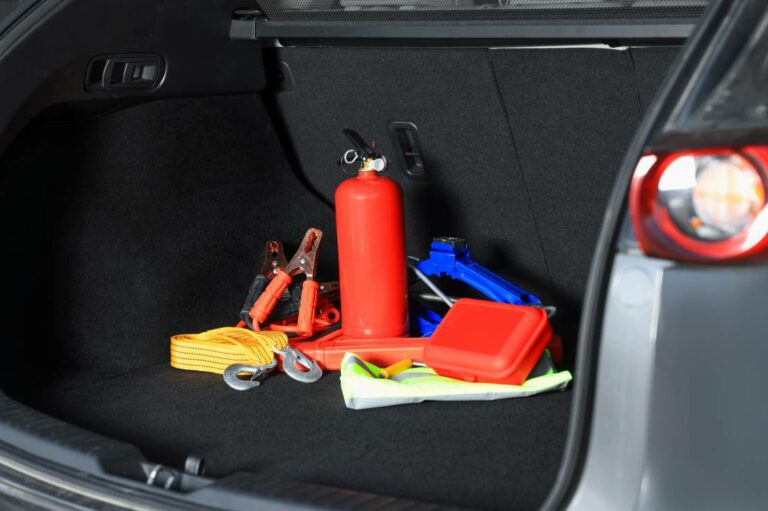
Drivers will need a car jack, lug wrench, spare tire, and the car owner’s manual to complete the task. Apart from these, drivers may also keep other vital items such as wheel wedges, a pressure gauge, a flathead screwdriver, and a portable tire inflator. One must ensure that these tools are kept together in a box for easy access.
Loosen the lug nuts
The wheel on a tire is held in place by lug nuts. Using a wrench, loosen, but do not remove, the lug nuts while the vehicle is still flat on the ground. The lug nuts are tightly bolted, so drivers will need to use physical force to loosen them. Keep in mind that if the tires have wheel locks, they may require a special adapter to remove them.
In some cases, the lug nuts are not visible on the outside; they are concealed behind a hub cap. Drivers need to unscrew or pry the cap off with a flathead screwdriver or the end of the lug wrench.
Position the jack and raise the car
Find the proper jack point in the owner’s manual before placing the jack securely and raising the vehicle just enough to remove the flat tire and install the spare.
Remove the lug nuts and flat tire
Once the vehicle has been lifted, take off the loosened lug nuts and pull off the flat tire. This task may require physical force. Make sure to keep the nuts somewhere safe so they do not roll away.
Install the spare tire
Align the spare tire with the wheel studs, hand-tighten the lug nuts (although not fully), and ensure that it is seated before lowering the vehicle back to the ground.
Lower the vehicle
Carefully press the jack and turn it to lower the vehicle to the ground. Make sure this is done gently. Take the jack out once the spare tire fully touches the ground.
Tighten the lug nuts
Use the lug wrench to fully tighten the nuts in a crisscross pattern (or as specified in the user manual) to ensure that the wheel is securely fitted into the tire.
Put away tools and check tire pressure
Once the job is complete, check the tire pressure on the spare and the other tires. If necessary, add air to the tires before driving the car again.
Safety tips while changing car tires
Make sure to have solid, flat ground for the jack
The jack must be set under the vehicle to support its full weight. At the same time, it needs to be set on flat, sturdy ground. If the car is jacked up at an angle, it will most likely slip and roll down an inclined road. On a busy road, one may experience catastrophic outcomes.
Make sure to use reflectors
Once a safe location for the tire change is chosen, ensure that road flares or triangle reflectors are used. Place the reflector device behind the car to trigger a warning to oncoming traffic.