Why Wattage Ratings Are Incomplete
When shopping for an e-bike, the motor wattage figure - 250W, 500W, 750W - appears on virtually every spec sheet. The problem is that this number, taken alone, tells you less than you might think. Manufacturers typically list nominal (continuous) wattage, but most motors can briefly draw significantly more power at peak output. A motor rated at 250W continuous may spike to 500W or beyond during hard acceleration or steep climbs.
Understanding the difference between continuous and peak power is the starting point for reading any motor spec honestly. It's a challenge that applies across vehicle categories - as explored in the context of automotive ratings in common horsepower misconceptions.
| Standard EU motor limit | 250W continuous (European Union EN 15194 standard) |
| US legal maximum (most states) | 750W nominal (Consumer Product Safety Commission federal definition) |
| Typical peak-to-nominal ratio | 2x-3x nominal wattage (General industry observation across common motor types) |
| Mid-drive torque range (typical) | 40-90 Nm (Common specification range across mid-drive motor offerings) |
| Hub motor torque range (typical) | 25-60 Nm (Common specification range across rear hub motor offerings) |
What Each Power Tier Typically Delivers
Motor power tiers correspond loosely to use cases, though real-world performance depends heavily on motor type, controller programming, and rider weight.
250W (Nominal)
The 250W rating is the standard ceiling in the European Union and is common on Class 1 and Class 2 e-bikes in the US. These motors provide meaningful assist on flat to moderately hilly terrain for average-weight riders. They are not designed for sustained high-torque loads. On steep grades, a 250W motor will often hit its thermal limits quickly, triggering automatic power reduction to protect the winding.
500W (Nominal)
A 500W motor handles rolling hills and mixed terrain more confidently. It offers a wider operating range before thermal throttling becomes a factor, making it practical for cargo e-bikes carrying moderate loads or riders in hilly regions. Peak output on these motors can reach 750W-1,000W in short bursts.
750W (Nominal)
750W is the legal maximum for e-bikes on public roads in most US states without requiring vehicle registration. These motors provide strong torque for cargo hauling, sustained climbs, and heavier riders. Peak draw can exceed 1,200W momentarily. Motor choice also affects battery drain - higher continuous draw shortens range, a dynamic covered in detail in our guide to e-bike battery capacity and range claims.
2×-3×
Peak vs. nominal power on most e-bike motors
Most motors can briefly draw two to three times their rated continuous wattage during acceleration or climbing.
750W
Federal US e-bike power ceiling for road-legal operation
The CPSC defines a low-speed electric bicycle as having a motor under 750W; exceeding this typically requires registration as a motor vehicle.
65-75 Nm
Torque output of a capable 250W mid-drive motor
High-torque mid-drive units can outperform higher-wattage hub motors on steep or technical terrain due to drivetrain integration.
Torque, Motor Type, and the Numbers That Matter More
Wattage is a measure of power - the rate of energy transfer - but torque (measured in Newton-meters, Nm) is often a better predictor of climbing ability and responsive acceleration. Two 250W motors from different manufacturers can deliver substantially different torque figures, leading to very different ride experiences on hills.
Motor type also matters:
- Hub motors (rear or front wheel) are common and affordable. They deliver power directly to the wheel but lack the mechanical advantage of gearing.
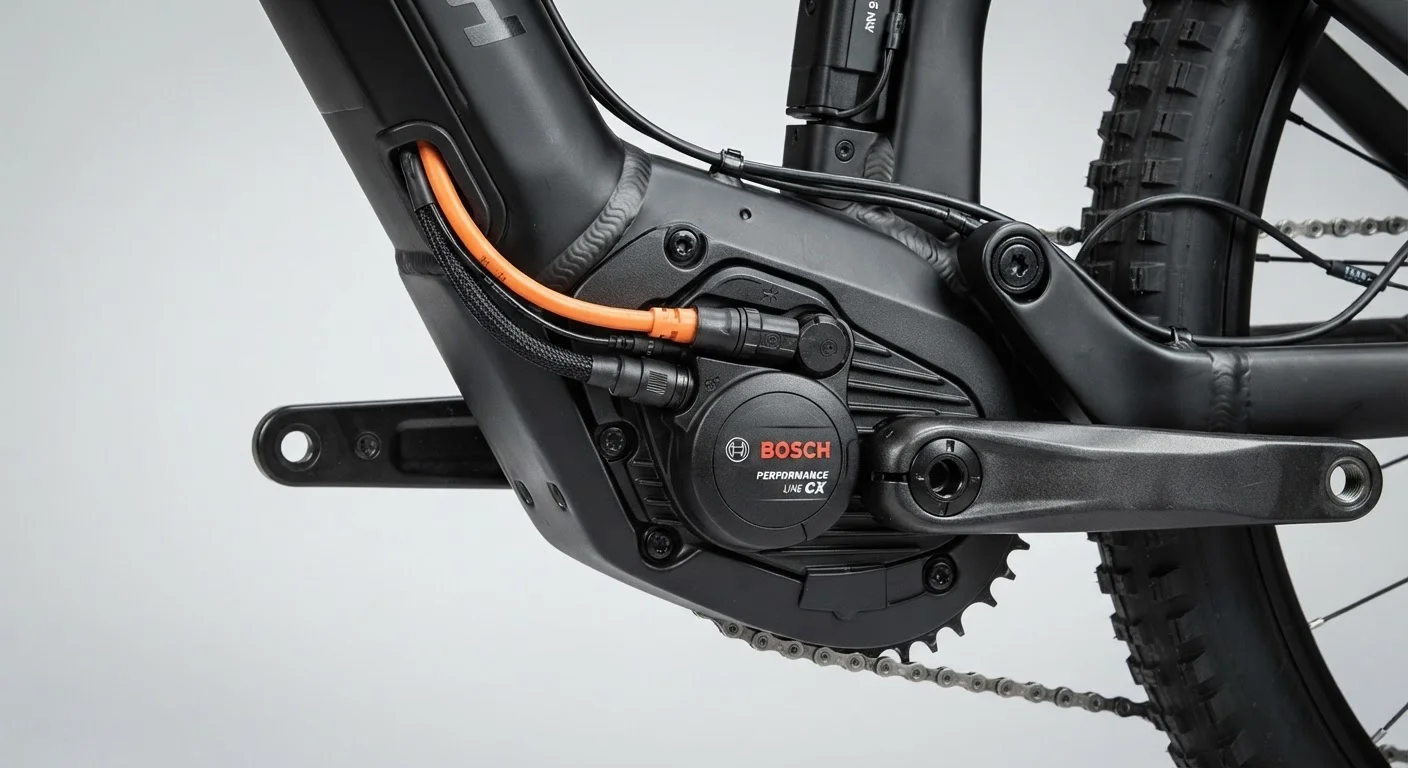
- Mid-drive motors mount at the bottom bracket and work through the bike's existing drivetrain. This allows the motor to leverage gear selection, making them more efficient on varied terrain at any wattage rating.
A 250W mid-drive motor with 65-75 Nm of torque will outperform a 500W hub motor on technical climbs in many real-world conditions. When evaluating motor specs, look for both the wattage and the torque rating together.
Motor power ratings also connect directly to e-bike classification. Legally, power output determines which class a bike falls into and where it can be ridden. See our full breakdown in e-bike classes explained for how these rules apply on trails and public roads.
Nominal wattage
The continuous power output a motor is designed to sustain without overheating under normal operating conditions. This is the figure most commonly listed in e-bike specs.
Peak wattage
The maximum power a motor can draw for brief periods, such as during hard acceleration. Peak wattage is often two to three times the nominal rating and is not always disclosed.
Torque (Nm)
A measure of rotational force, expressed in Newton-meters. Higher torque generally means stronger hill-climbing ability and more responsive low-speed acceleration.
Thermal throttling
An automatic reduction in motor output triggered when the motor reaches a high temperature threshold, protecting internal components from heat damage.
Mid-drive motor
A motor mounted at the bicycle's bottom bracket that drives power through the chain and gears, allowing the rider's gear selection to affect motor efficiency.
Hub motor
A motor integrated into the front or rear wheel hub that drives the wheel directly, independent of the bike's gearing system.