Why Fuel Planning Is a Seamanship Skill, Not Just Math
Running out of fuel on the water is one of the most preventable causes of Coast Guard assistance calls. Unlike a car that coasts safely to the shoulder, a vessel that runs dry in a shipping channel, offshore, or in deteriorating weather presents a genuine safety risk to everyone aboard. Fuel planning bridges the gap between what a vessel is capable of and what conditions actually demand on any given day.
Tank capacity figures found in a spec sheet give a starting point, but range is the product of multiple interacting variables: hull efficiency, engine type, cruise speed, payload, and environmental conditions. A 200-gallon tank on a heavy express cruiser may deliver less range than a 90-gallon tank on a well-designed center console running an efficient four-stroke outboard. Understanding these relationships - rather than relying on a single number - is what separates prepared boaters from those who end up drifting.
What you will need
The steps below walk through a practical, repeatable process for calculating your vessel's realistic range before any outing.
Understanding the Variables That Affect Real-World Range
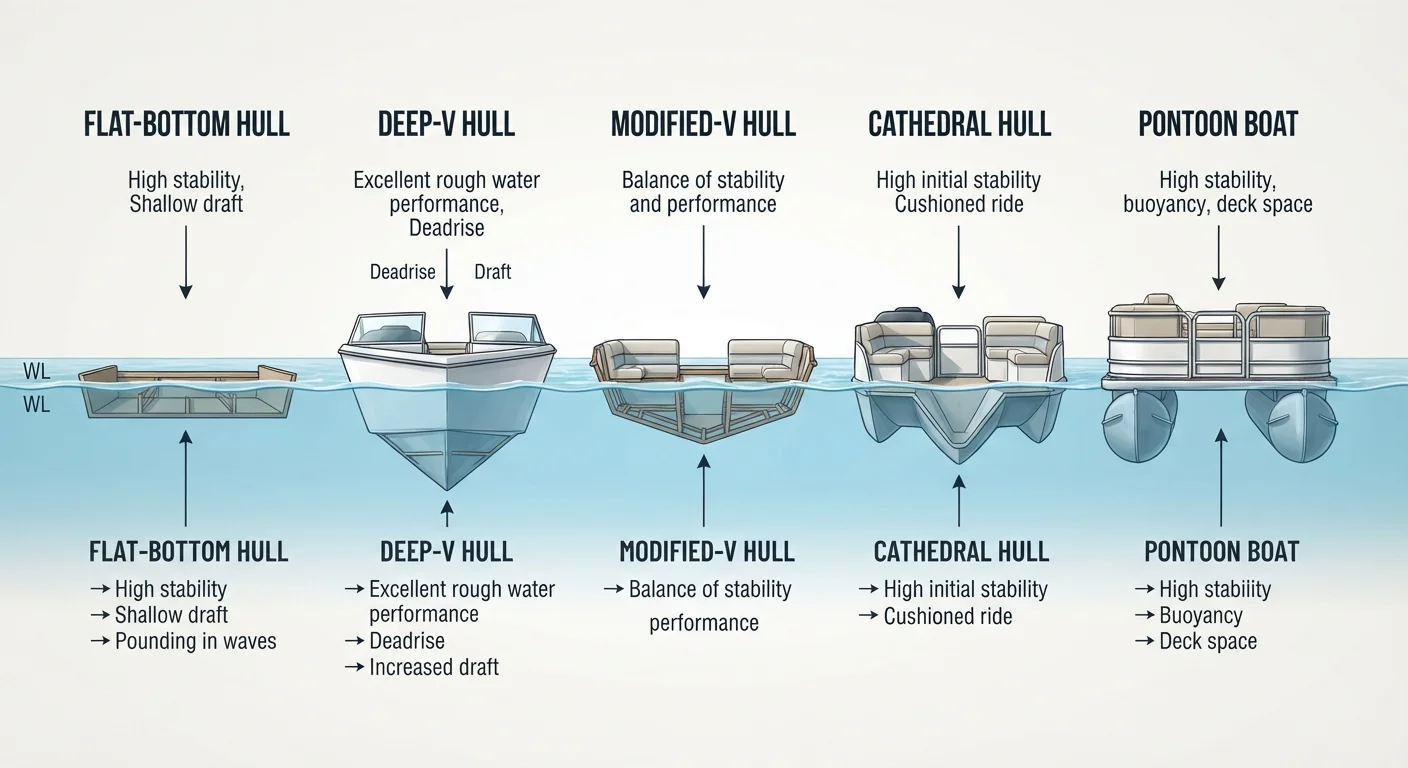
Fuel consumption is rarely constant across a trip. Planing hulls burn disproportionately more fuel during the transition from displacement to planing speed - a phenomenon called hump drag. Once on plane, consumption stabilizes, but any reduction in throttle that drops the hull back into displacement mode resets that burn spike. Displacement hulls avoid this dynamic entirely but are limited in top speed and typically suit different use cases.
Trim Tabs and Propeller Pitch Affect Efficiency
A properly trimmed hull planes more efficiently and burns less fuel than one running bow-heavy or stern-heavy. Similarly, propeller pitch affects the RPM your engine achieves at full throttle - a pitch mismatch can prevent the engine from reaching its rated RPM range, degrading both performance and economy. If your vessel consistently underperforms consumption estimates, a marine technician can assess both trim and prop setup.
Engine technology matters as well. Direct-injected four-stroke outboards and modern common-rail diesel inboards have significantly tighter fuel curves than older carbureted two-strokes. When reviewing a used vessel, confirm engine type and hours, since a high-hour engine may burn fuel less efficiently than manufacturer specs suggest.
Finally, altitude affects naturally aspirated engines - freshwater lakes at elevation will produce modestly different consumption than sea-level saltwater operation, a detail relevant to boaters on high-country reservoirs.
Engine Owner's Manual or Manufacturer Spec Sheet
Provides fuel consumption curves at various RPM settings, which are the foundation of any range calculation.
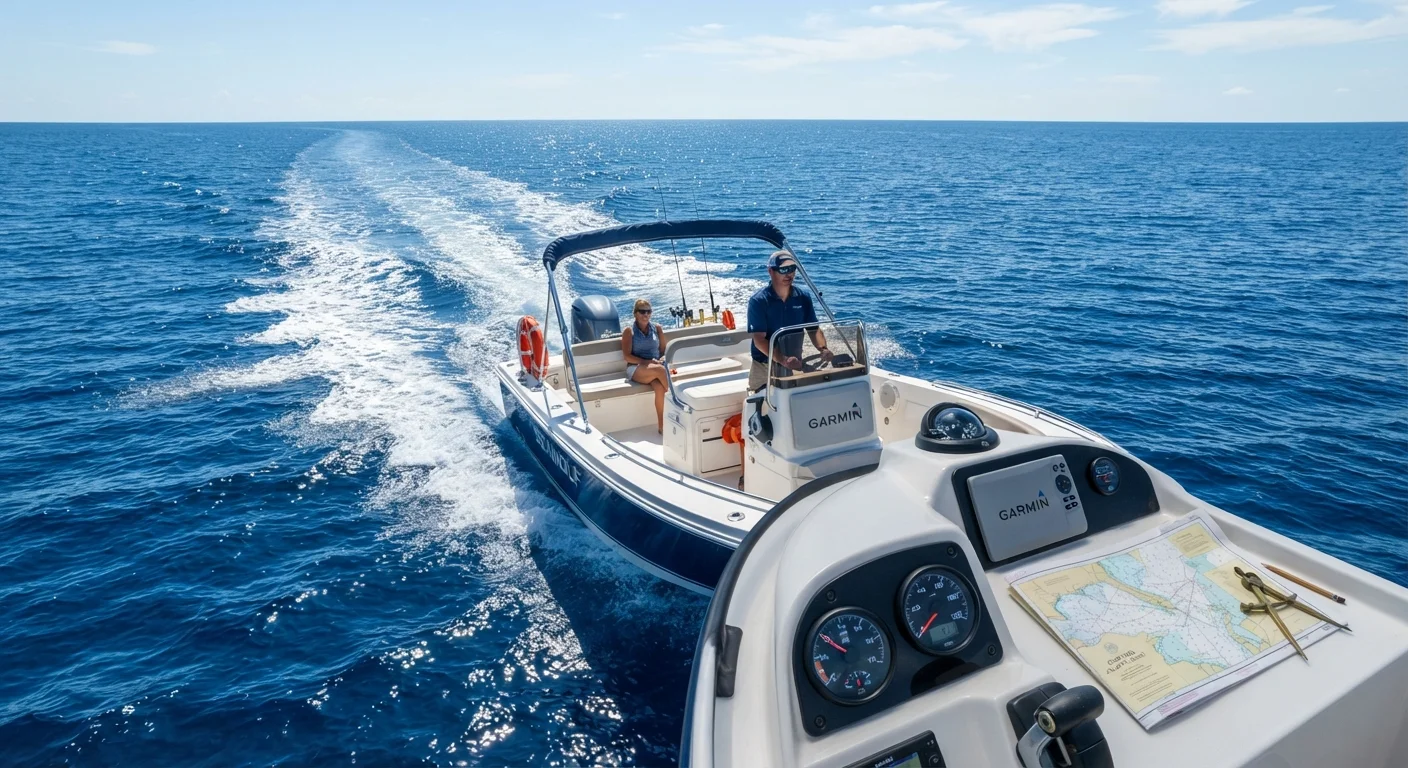
Nautical Chart or Marine GPS App
Allows accurate measurement of planned route distance, including waypoints and return legs.
Handheld Calculator or Smartphone
Used to perform the arithmetic for fuel burn, range, and reserve calculations.
Flow Meter or Fuel Management System
Provides real-time fuel consumption data aboard vessels equipped with one, improving accuracy over manufacturer estimates.