Why This Checklist Exists
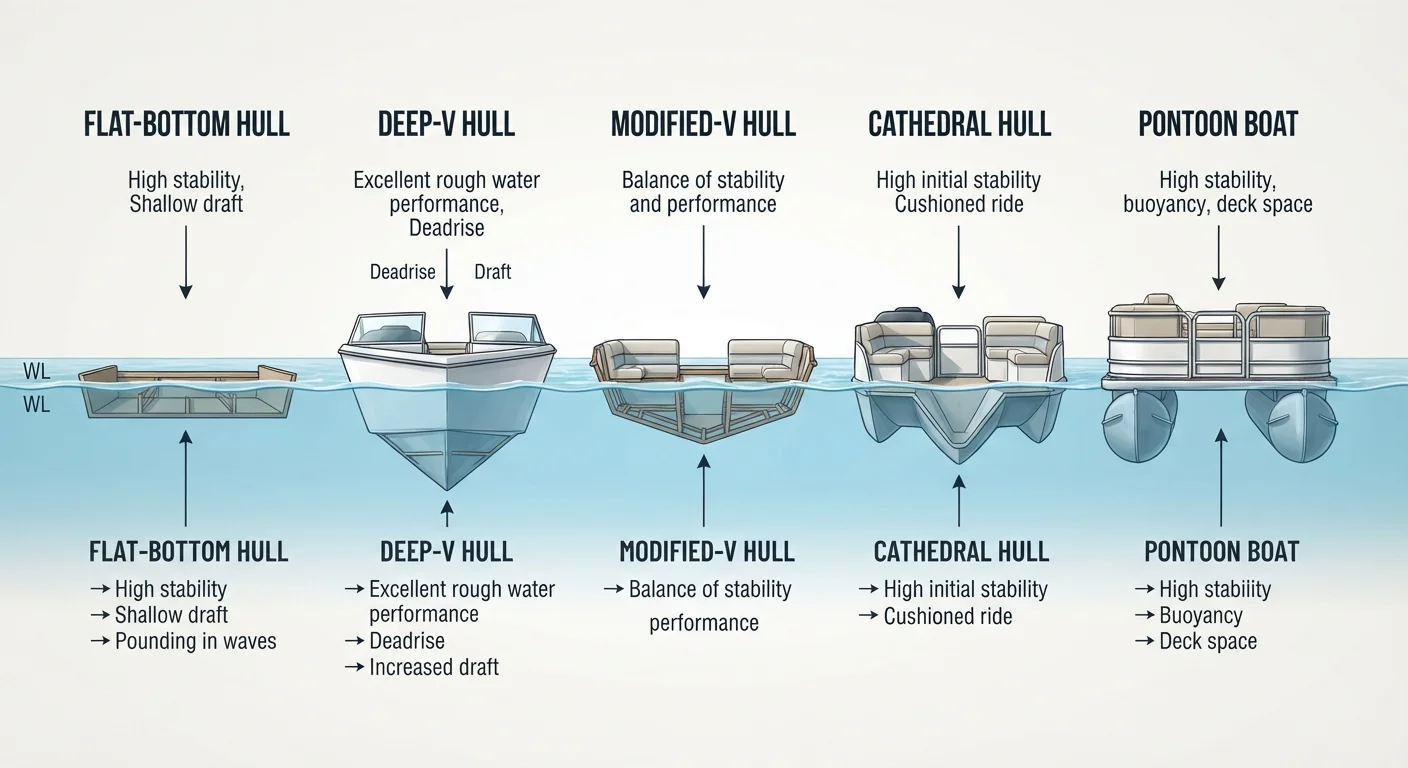
Boat categories are not interchangeable. A center-console built for offshore fishing, a pontoon optimised for calm lake entertaining, and a coastal cruiser designed for overnight passages each involve fundamentally different hull geometry, propulsion requirements, and ownership logistics. Choosing the wrong category - even a well-built example of it - means years of compromises on the water and costs you didn't anticipate off it.
This checklist works through the practical dimensions that matter before you evaluate any specific make or model. If you are still building familiarity with the broader landscape, the New Boater's Map to Boat Categories is a useful starting point, and Eight Distinct Boat Types Worth Knowing Before You Start Looking adds useful context on who each category genuinely serves.
Match the Hull to the Water - Always
A hull designed for protected inland lakes will behave very differently in coastal chop or tidal currents. Selecting a boat category primarily on price, aesthetics, or brand reputation - without first confirming it is rated for your specific waterway type - is one of the most common and costly evaluation errors. The USCG and most manufacturers publish maximum wind and wave conditions for each hull design; treat those limits as non-negotiable starting criteria, not footnotes.
How to Use This Checklist
Work through each group in sequence. The waterway and activity sections come first because they form the filter through which everything else is assessed - storage logistics and cost calculations only make sense once you have established that a category is operationally suitable. Items marked must are non-negotiable evaluation criteria; should items are strongly recommended for most buyers; nice-to-have items add value when time and access allow.
Bring the checklist to any marina visit, boat show walkthrough, or dealer conversation. It is designed to surface the questions that sales environments rarely prompt you to ask.
USCG Boat Capacity Plate Reference
Used to cross-check a vessel's federally rated passenger and weight capacity against your typical crew size.
Tow Vehicle Owner's Manual
Confirms your vehicle's gross trailer weight rating before committing to a trailerable boat category.
State Boating Authority Website
Used to verify operator licensing requirements, registration rules, and any waterway-specific restrictions in your state.
Marina Slip Measurement Tape
Allows you to physically verify slip beam and length against the boat's published dimensions before signing a lease.
Nautical Chart (NOAA or equivalent)
Used to check water depth, bridge clearances, and navigable channels on your primary cruising area.
The Evaluation Checklist
Run through each group below systematically. If a category fails more than one or two must criteria, treat that as a clear signal to reconsider rather than a problem to engineer around.
Your Waterways
Intended Activities
Crew and Passenger Needs
Mooring and Storage
Ongoing Costs and Practicality
Final Fit Verification
For buyers also weighing livability on extended trips, the detailed guidance in Evaluating a Boat's Livability covers what cabin specifications routinely omit. A broader look at hull, propulsion, and electronics considerations is available through Watercraft Features End to End.
After the Checklist: Next Steps
A completed checklist narrows your category decision - it doesn't finalise a purchase. Once you have confirmed that a boat type genuinely fits your waterways, crew, storage situation, and budget, the next layer of due diligence is condition assessment for any specific vessel you consider. The structured approach in our Pre-Purchase Inspection Checklist for Used Vehicles translates well to used boat evaluations, covering the mechanical and structural checks that complement this category-level review.
Weather awareness is also worth building early. Reading the Weather Before You Leave the Dock provides practical guidance on forecast interpretation and go/no-go decisions - skills that apply regardless of which boat category you ultimately choose. For foundational boating knowledge, the Boating Basics hub covers safety essentials worth reviewing before your first season on the water.
Dealer Demos Don't Reflect Real Conditions
Many sea trials are conducted on calm, protected water - far from the chop, tidal current, or wind your boat will actually face. Always request a trial in conditions that reflect your typical operating environment. If that isn't possible, factor the uncertainty into your evaluation and seek out owner accounts from comparable waterways.
Don't Underestimate Total Cost of Ownership
The purchase price is only the starting point. Slip fees, insurance, engine service, haul-outs, and seasonal preparation can add substantially to annual costs and vary widely by boat category and length. Build a realistic annual budget before narrowing your shortlist, not after.