Why the Wrong Boat Feels Right at First
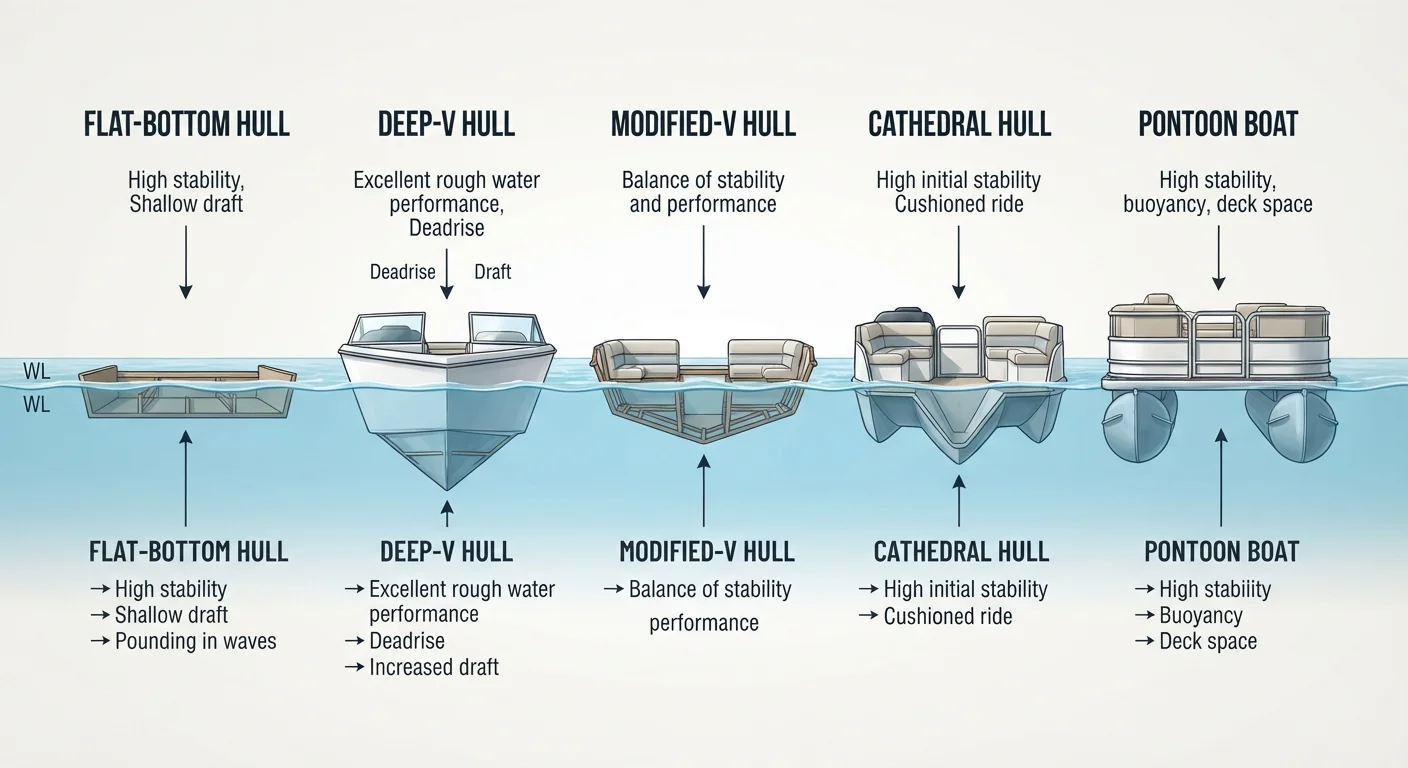
Buying the wrong boat rarely feels like a mistake at the showroom. Fiberglass gleams, specifications sound impressive, and the salesperson's enthusiasm fills in any gaps the buyer hasn't thought to question. The regret surfaces later - on an exposed bay when a flat-bottomed hull pounds through chop, or on a quiet cove when an offshore center console burns fuel faster than expected for a short fishing trip.
The core issue is that boat types are purpose-built. A pontoon boat optimized for lounging on calm lakes carries design compromises that make it unsuitable for coastal inlets with tidal currents. A performance bowrider built for water sports on a reservoir is not the same vessel you want when navigating a narrow river channel. Understanding this before committing is the single most protective step a buyer can take. See the boating fundamentals guide for a foundational overview of how vessel categories differ.
Choosing a boat based on appearance or brand reputation rather than intended use.
Why it happens: Buyers are drawn to aesthetics and familiar names, and showrooms are designed to trigger emotional decisions rather than analytical ones.
Assuming a larger boat is always more capable or safer.
Why it happens: Size feels like an intuitive proxy for quality and safety, but vessel design is about matching hull geometry to operating conditions, not maximizing length.
Underestimating how much primary water type constrains hull selection.
Why it happens: Many buyers think about the boat in isolation rather than as a system that interacts with a specific body of water, weather patterns, and launch infrastructure.
Choosing a multi-purpose vessel to avoid commitment, then finding it excels at nothing.
Why it happens: The appeal of versatility is understandable, but boats designed to do everything tend to be optimized for nothing, leaving owners frustrated across every activity.
Ignoring practical logistics like trailering, slip availability, and storage when selecting a hull size.
Why it happens: Buyers focus on on-water performance during purchase research and discover storage or towing constraints only after completing the transaction.
Matching Vessel to Environment and Use
Once buyers recognize the variety of boat types available, the evaluation framework becomes clearer. The primary questions are where the boat will primarily operate and what activities it will support. These two factors - water environment and use case - should drive the category decision before any other specification is considered.
72%
Boat owners who report underusing their vessel
Industry surveys consistently find that a majority of recreational boat owners use their boats fewer than ten times per year, often citing a mismatch between vessel type and intended activity.
~17M
Registered recreational boats in the US
The National Marine Manufacturers Association has reported approximately 17 million registered recreational boats in the United States, spanning dozens of distinct hull categories.
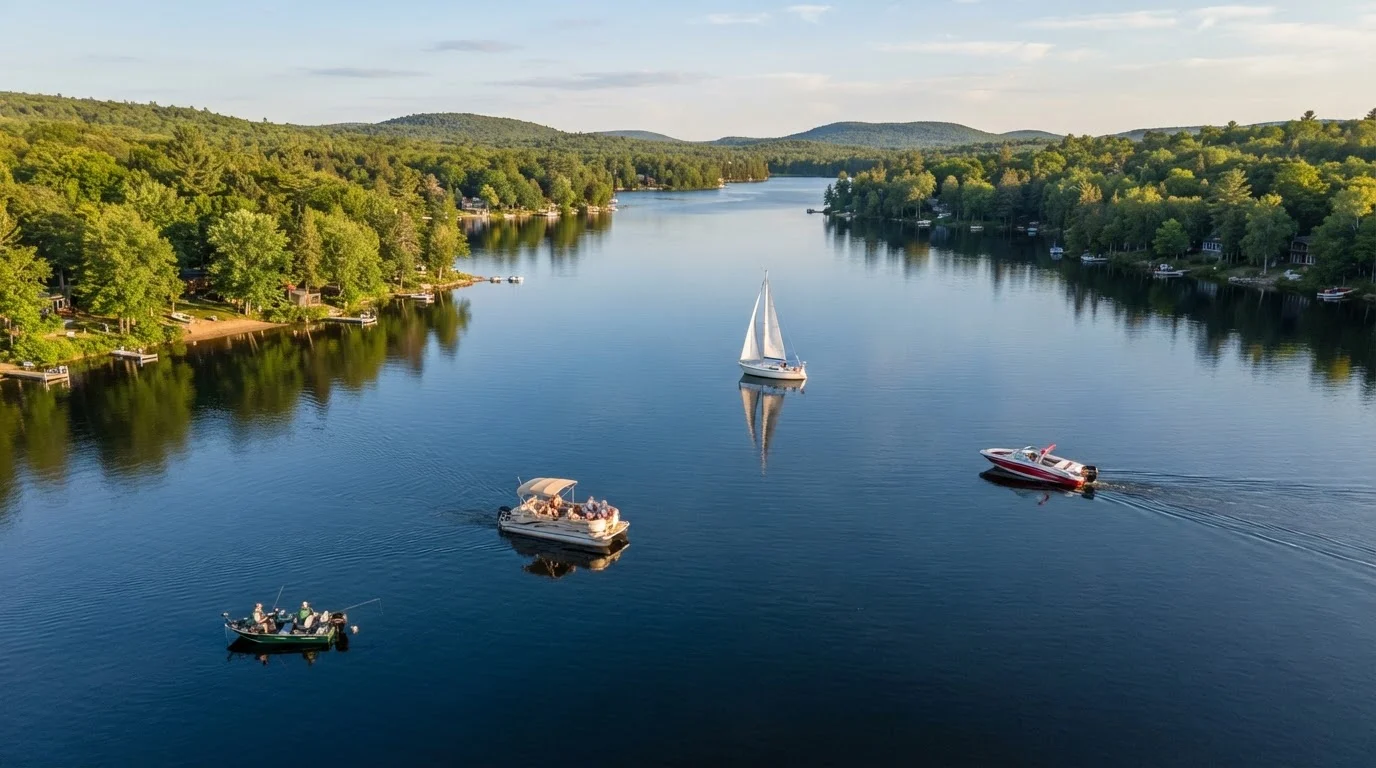
Operating environment is particularly consequential. A boat suited for a calm inland lake can behave dangerously in coastal swells. How water type should drive your boat choice explains how hull depth, beam width, and freeboard interact with wave action in ways that matter far more than horsepower figures. Buyers focused on personal watercraft or compact powerboats can also benefit from understanding when each makes sense.
Use case matters equally. Fishing, watersports, overnight cruising, and casual day-tripping place very different demands on storage layout, seating configuration, hull stability, and engine output. A vessel that compromises all of these in pursuit of versatility often excels at none of them.
Versatility Claims Can Mask Real Tradeoffs
Marketing language describing a boat as 'do-it-all' or 'family versatile' rarely reflects the engineering compromises involved. A hull optimized for watersports sacrifices the stability platform that fishing demands, and vice versa. Before accepting a versatility claim, ask specifically how the hull and seating configuration are configured for each stated activity - and whether that configuration requires reconfiguring the boat between uses.
Before finalizing any category, work through a structured assessment. The pre-purchase evaluation checklist provides a methodical framework for confirming whether a specific boat category genuinely fits your waterways, activities, and storage situation. And to build fluency across the full landscape of options, eight distinct boat types worth knowing offers grounded context on the major categories from jon boats to expedition vessels.
Hull Type Determines Safety Limits
Every vessel carries a capacity plate specifying maximum persons, weight, and horsepower based on its hull design. Operating a boat in conditions beyond its rated design parameters - not just beyond the capacity plate - creates genuine safety risk. A flat-bottomed jon boat operating in offshore swells, or a narrow-beam sailboat in powerboat wakes, can reach stability thresholds that no amount of skill fully compensates for. Match the hull to the environment first; everything else follows from that decision.
Finally, buyers focused on day-to-day usability should pay close attention to features that rarely generate excitement in brochures. Features first-time boat shoppers overlook covers practical elements like bilge pump access and storage layout that shape how a boat actually lives on the water.