Why the Horsepower-Speed Myth Persists
Walk any boat show and you'll hear buyers fixating on engine horsepower as though it's the single variable separating a sluggish vessel from a thrilling one. That intuition is understandable - in automotive culture, more horsepower reliably translates to quicker acceleration. On water, the relationship is far more complicated, and acting on these oversimplifications can lead to mismatched rigs, wasted money, and genuine safety concerns.
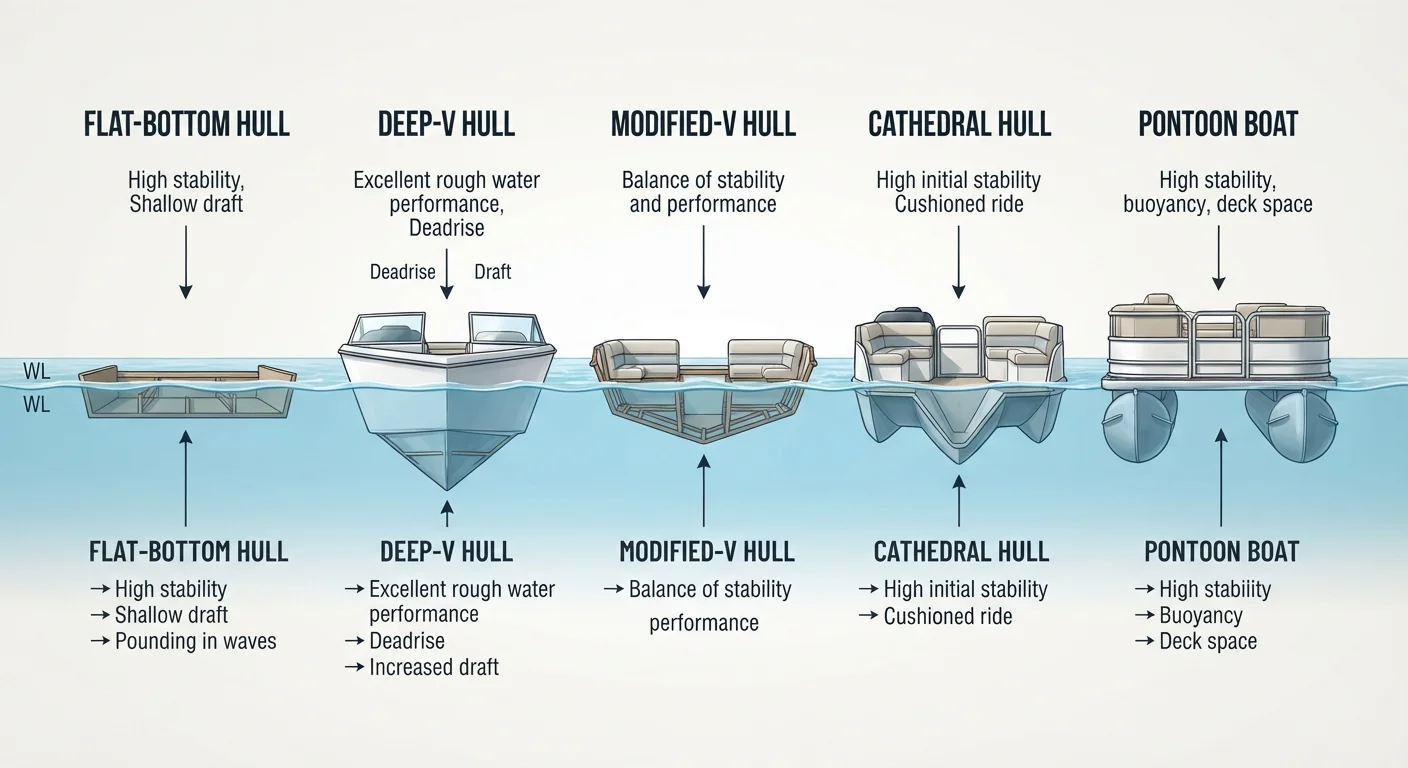
Marine performance is governed by a combination of hull design, displacement, propeller selection, gear ratio, and engine output working together. Isolating any one factor - especially horsepower - produces an incomplete picture. The myths below are among the most persistent, and correcting them is essential for any informed boat buyer or owner. For a broader look at how hull geometry shapes real-world performance, see our breakdown of hull shape misconceptions.
Myth
More horsepower always means a faster boat.
Fact
Speed depends on hull design, weight, and propeller match - horsepower is just one input in a complex equation.
A lightweight 18-foot center console with a correctly matched 150 hp outboard can outrun a heavier 21-foot boat fitted with a 250 hp engine if the heavier boat's hull generates substantially more drag. Hull resistance increases with displacement and wetted surface area, and no amount of additional horsepower can fully compensate for poor hull efficiency at a given speed range. Buyers who chase horsepower numbers without accounting for hull form often end up with boats that perform below expectations.
Myth
Horsepower ratings printed on an engine reflect what actually reaches the propeller.
Fact
Manufacturer horsepower figures are typically measured at the crankshaft under controlled conditions; real-world thrust at the propeller is meaningfully lower.
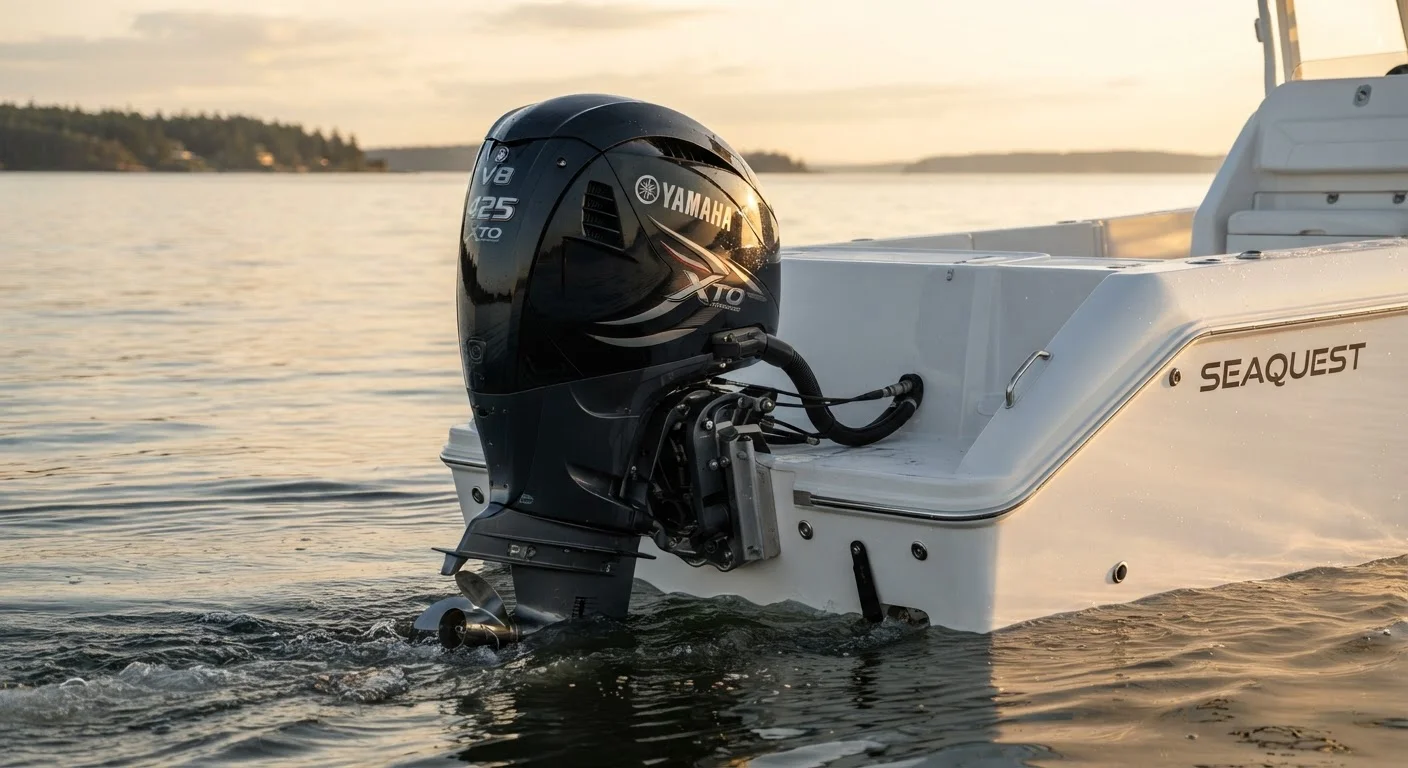
Mechanical losses through gearboxes, shaft systems, and the propeller hub itself reduce effective output. Outboard engines generally deliver power more efficiently to the propeller than inboard shaft-drive systems, partly because the drivetrain is more direct. Environmental variables - altitude, water temperature, air density, and fuel quality - further affect actual output. Comparing raw horsepower numbers across different engine architectures without accounting for drivetrain losses can produce misleading conclusions.
Myth
Doubling the horsepower will double a boat's top speed.
Fact
Due to the cubic relationship between speed and power in water, doubling horsepower produces far less than a doubling of top speed.
In displacement mode, the power required to increase speed rises approximately as the cube of velocity - meaning that to double speed, you would need roughly eight times the power, not two times. Planing hulls break from this rule once they climb onto plane, but even then the relationship between added horsepower and added speed flattens significantly at higher velocities. This is why gains from large engine upgrades often disappoint owners who expect proportional speed improvements.
Myth
A bigger engine is always a safe upgrade for any boat.
Fact
Every boat hull has a Coast Guard-rated maximum horsepower limit, and exceeding it is both illegal and dangerous.
In the United States, most powerboats under 20 feet are required to carry a capacity plate specifying the maximum horsepower the hull is certified to handle safely. Exceeding this rating can compromise steering control, increase swamping risk, and void manufacturer warranties. Even boats not subject to mandatory capacity plates are engineered to a structural and stability envelope - over-powering any hull risks catastrophic failure at speed. Always consult the vessel's documentation before considering an engine upgrade.
Myth
Two-stroke outboards are always faster than four-stroke outboards at the same horsepower rating.
Fact
Modern four-stroke outboards produce competitive power-to-weight ratios and often match or exceed two-stroke performance across typical speed ranges.
Older two-stroke designs were lighter and produced strong peak power, lending them a speed advantage. Contemporary four-stroke outboard technology has closed that gap substantially, and many current four-stroke models weigh comparably to their two-stroke counterparts at equivalent displacements. Fuel efficiency, emissions compliance, and low-end torque often favor four-stroke designs, making the blanket performance claim in favor of two-strokes outdated. Engine weight relative to boat displacement remains a more useful metric than combustion cycle alone.
What Actually Drives Boat Speed and Performance
Once the myths are set aside, a clearer framework for evaluating marine performance emerges. Speed on water is primarily limited by resistance - specifically, the drag forces acting on the hull as it moves through a fluid far denser than air. Engine horsepower only determines how effectively a vessel can overcome that resistance, not the resistance itself.
~8x
Power increase needed to double displacement hull speed
The cube law of water resistance means speed gains from added horsepower diminish rapidly as hull velocity increases.
15-20%
Typical drivetrain power loss, inboard shaft drive
Marine engineers generally estimate 15-20% of crankshaft power is lost through inboard shaft and gearbox systems before reaching the propeller.
20 ft
Threshold for mandatory USCG capacity plate requirements
U.S. Coast Guard regulations require most monohull powerboats under 20 feet to display a capacity plate specifying maximum horsepower and load.
Propeller selection is one of the most underappreciated performance variables. A propeller that is pitched too high will lug the engine below its optimal RPM range, reducing both speed and fuel economy. One pitched too low allows the engine to over-rev, potentially causing mechanical damage while still falling short of hull speed. Most marine engine manufacturers publish recommended wide-open-throttle RPM ranges, and propeller selection should be dialed in to keep the engine comfortably within that band at full load.
Weight management matters just as much. Every additional 100 pounds aboard raises the wetted surface area of the hull and increases the power required to maintain a given speed. This is particularly pronounced on planing hulls, which need to climb up onto a plane before they can achieve their design speed. A boat that planes easily at 200 hp with two passengers may struggle to plane at all when loaded with gear, passengers, and a full fuel tank - regardless of what the engine sticker says.
Buyers comparing powerboat options across different hull types will also find this dynamic plays out differently between vessel categories. The comparison between personal watercraft and small powerboats illustrates how hull form changes the performance conversation entirely, even when engine output is similar. For a parallel look at how horsepower myths translate to four-wheel performance vehicles, our automotive horsepower myth breakdown covers similar misconceptions in a road context.
Never Exceed Your Hull's Rated Maximum Horsepower
Installing an engine that exceeds your boat's maximum horsepower rating creates serious stability and structural risks, particularly at speed or in rough conditions. This is a regulatory violation for boats subject to USCG capacity plate rules, and it can void your vessel's insurance coverage. If you're considering an engine upgrade, verify your hull's rated limits first and consult a qualified marine technician before proceeding.