What Separates These Two Platforms
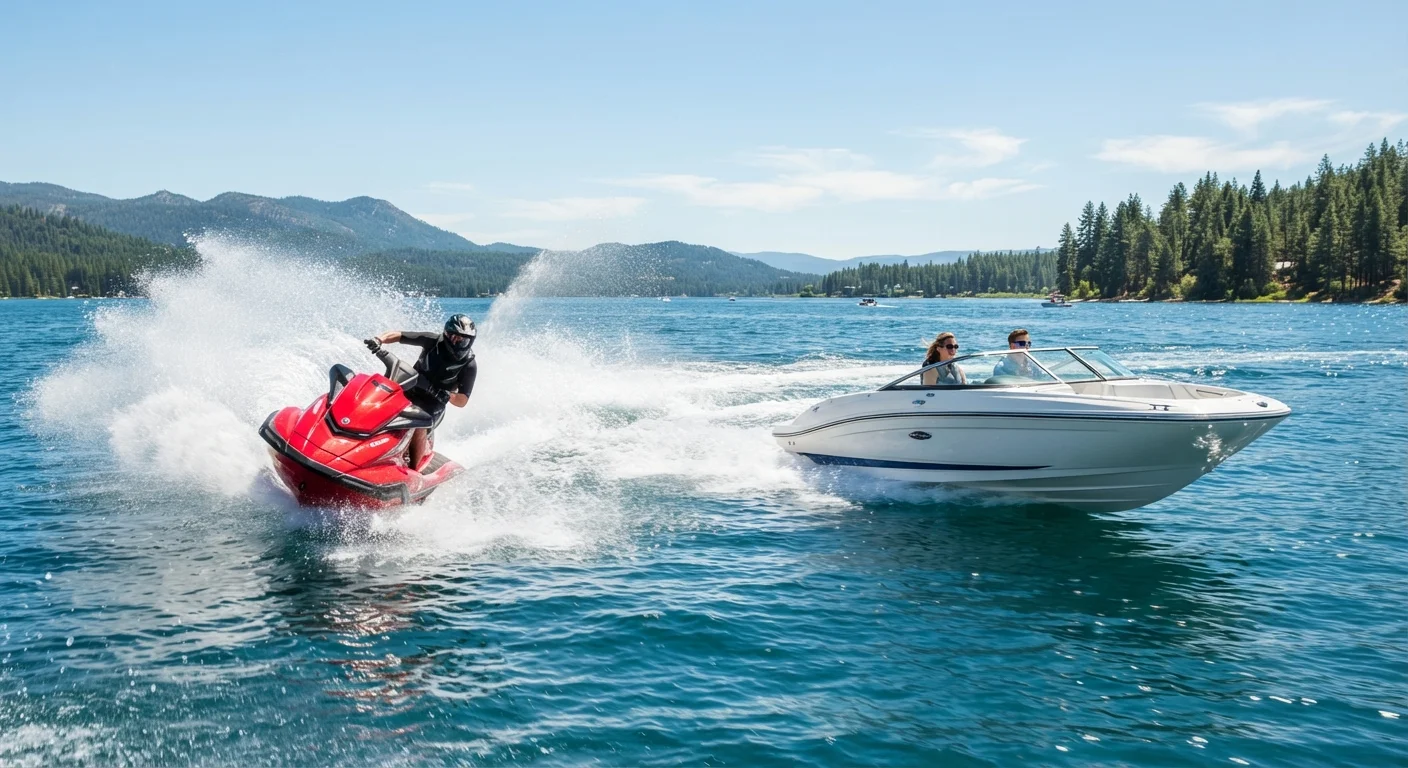
A personal watercraft (PWC) - the category that includes stand-up and sit-down jet-propelled craft - uses a jet pump rather than a traditional propeller, delivering quick acceleration and near-instant directional response. Most seat one to three riders and are engineered for dynamic maneuvering. A small powerboat covers a wide range of hull types - runabouts, bowriders, center consoles, jon boats - typically ranging from 14 to 22 feet and powered by outboard or sterndrive engines.
The design philosophies diverge from the outset. PWCs are built around the rider experience: lean into a turn, feel the spray, run at speed. Small powerboats are built around utility and carrying capacity - they're platforms that happen to go fast, rather than speed machines that occasionally haul cargo.
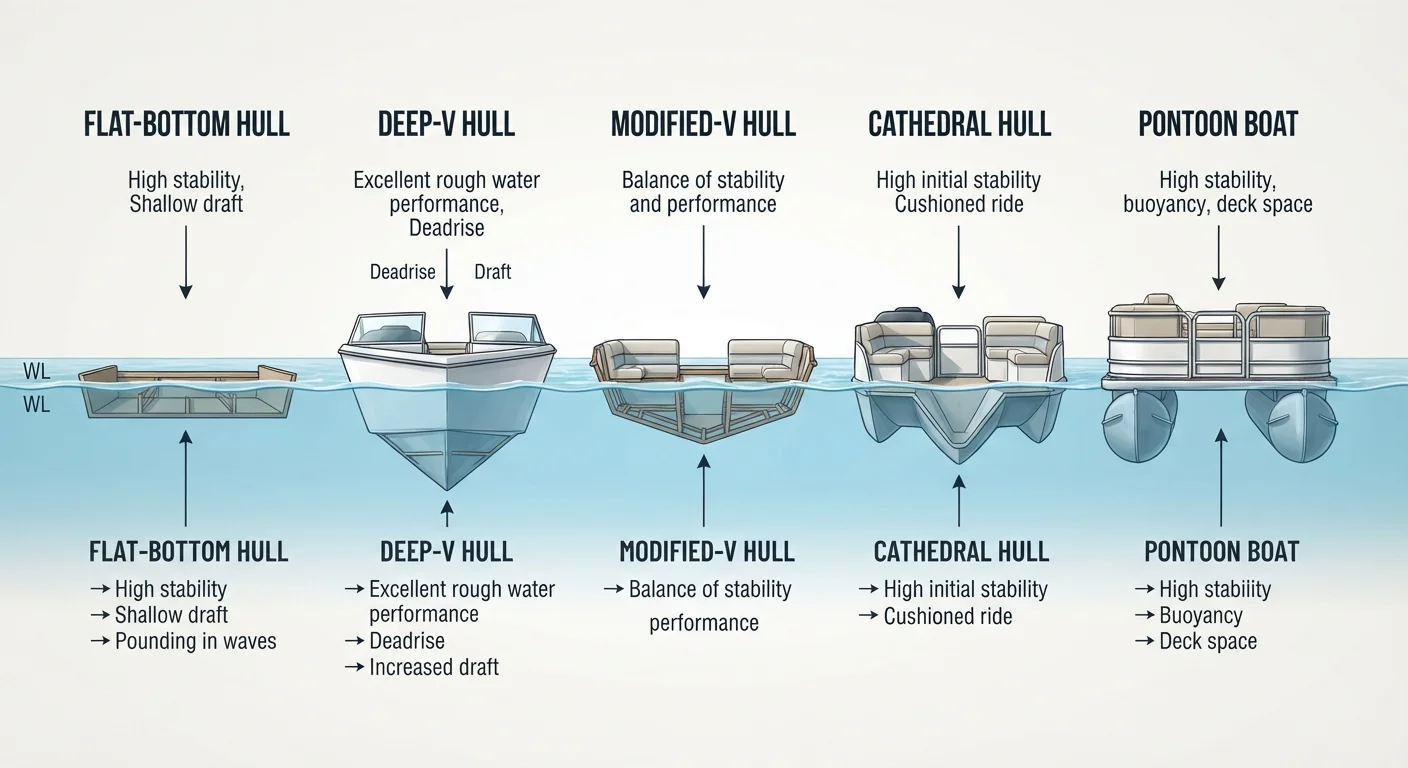
For a broader look at how hull design drives capability, see our guide to recreational hull types.
| Criterion | Personal Watercraft (PWC) | Small Powerboat |
|---|---|---|
| Typical capacity | 1-3 riders | 4-8 passengers |
| Propulsion type | Jet pump (no exposed prop) | Outboard or sterndrive propeller |
| Storage space | Very limited (1-2 small compartments) | Moderate to generous |
| Rough water capability | Limited - low freeboard | Better - especially deep-V hulls |
| Trailering weight | Light (under 1,000 lbs typical) | Varies widely; often 2,000-5,000+ lbs |
| Typical use cases | Recreation, watersports, solo riding | Family outings, fishing, towing, cruising |
| Age/licensing restrictions | State-specific age minimums common | Fewer restrictions; education encouraged |
| Overnight or extended range | Not practical | Possible with appropriate model |
How Water Type and Environment Shape the Decision
Operating environment is one of the most consequential factors in this comparison. PWCs are highly capable on calm lakes, protected bays, and mild coastal conditions, but their low freeboard (hull height above the waterline) and open-rider design make them more exposure-prone in rough chop or offshore swells. Many experienced riders find that once wave heights consistently exceed two to three feet, a PWC becomes physically demanding and potentially hazardous.
Small powerboats - particularly deep-V hulls designed for choppier water - can handle a broader range of conditions. A center console or a cuddy cabin in the 18-22 ft range offers meaningful protection and stability in coastal or Great Lakes environments where conditions can shift quickly.
Our editorial team has covered this dimension in depth in how water type should drive your boat choice. The core principle applies directly here: match the platform to the body of water, not just to your preferred activity.
State Regulations Vary Significantly
PWC rules differ substantially from state to state - covering minimum operator age, required safety courses, hours of operation, and no-wake zones. Before purchasing or operating a PWC, consult your state's boating authority or the National Association of State Boating Law Administrators (NASBLA) for current requirements. Assuming federal minimums are sufficient can lead to compliance issues on your home waters.
Practicality, Costs, and Ownership Realities
PWCs are generally less expensive to acquire and maintain than small powerboats of comparable capability. They're lighter (most fall under 1,000 lbs), require smaller trailers, and fit in a standard garage stall. Fuel consumption is moderate to high for performance models, but their smaller tanks mean shorter range is a practical ceiling regardless.
Small powerboats vary enormously in cost depending on hull type, size, and engine configuration. A basic aluminum fishing boat with a small outboard can be quite affordable, while a fully equipped bowrider in the 20-foot range represents a meaningfully larger investment in purchase price, fuel, insurance, and storage. For a technical look at engine setup trade-offs, single vs twin engine configurations is worth reviewing.
One often-overlooked distinction: storage capacity. Even a modest small powerboat offers dry storage compartments, a cooler well, and a place to stow safety gear out of the weather. PWCs have minimal storage - typically a small bow compartment and perhaps a small rear compartment. If a day on the water involves sunscreen, lunch, life jackets, anchor gear, and fishing tackle, a PWC requires careful prioritization.
~900 lbs
Typical PWC wet weight
Most sit-down PWC models fall well under 1,000 lbs fully fueled, making them among the lightest trailerable powercraft available.
3
Max PWC passenger capacity (most models)
US Coast Guard capacity ratings for most recreational PWCs are limited to three persons, compared to four to eight for typical small powerboats.
16+
Common minimum operator age for PWCs
Many US states set a minimum operating age of 16 for PWCs; requirements vary and are enforced by individual state boating authorities.
Regulations, Safety, and Who Should Be Aboard
PWC operation carries a distinct regulatory profile in the US. Most states require operators under a certain age (commonly 16, though this varies) to complete a boater education course before operating a PWC. Some states also impose hours-of-operation restrictions - no PWC use after sunset is a common rule - and minimum distance requirements from shorelines, docks, and other vessels. Always verify your state's specific requirements through your state's boating authority or the US Coast Guard's reference materials.
Both PWCs and small powerboats require Coast Guard-approved personal flotation devices (PFDs) for every person aboard. PWCs additionally require a wrist-mounted engine cut-off lanyard for the operator in many jurisdictions - a safety feature that cuts the engine if the rider falls off. Small powerboats are subject to additional equipment requirements depending on length: fire extinguishers, visual distress signals, and navigation lights become mandatory at specific size thresholds.
If you're new to evaluating watercraft features and safety systems, the complete watercraft features guide provides a thorough starting point. And for a broader perspective on choosing the right vessel type to avoid buyer's remorse, why mismatched vessel choices frustrate owners is directly relevant to this decision.