How the Cooling System Keeps Your Engine Alive
Your engine generates enormous heat through combustion - enough to destroy itself without active temperature management. The cooling system is the primary safeguard. It circulates a coolant mixture through passages in the engine block and cylinder head, absorbing heat and carrying it to the radiator, where airflow dissipates it.
Key components in this system include the radiator, water pump, thermostat, radiator cap, overflow reservoir, cooling fans, and a network of hoses. Each plays a specific role, and a failure in any one of them can disrupt the entire loop. The thermostat, for example, regulates how quickly coolant flows based on engine temperature. If it sticks in the closed position, coolant can't circulate - and the engine overheats rapidly even if coolant levels are perfectly fine.
Understanding this interdependency is important: overheating is rarely caused by one isolated element failing in a vacuum. As explored in our article on how deferred maintenance compounds into major repairs, neglecting routine cooling system services - such as periodic coolant flushes - accelerates component wear across the entire system.
Minor Causes: Recoverable With Prompt Action
Not every temperature spike signals catastrophe. Several common causes are manageable if caught early and addressed correctly.
- Low coolant level: Gradual evaporation or a small, slow leak can reduce coolant over time. The fix may be as simple as a top-off - but you should investigate why the level dropped before driving on.
- Stuck thermostat: A thermostat that fails in the closed position is inexpensive to replace and is a very common cause of overheating in vehicles with otherwise healthy cooling systems.
- Clogged radiator: Debris, mineral deposits, or deteriorated coolant can restrict flow through the radiator core. A professional flush often resolves this.
- Loose or leaking hose: A visual inspection of radiator and heater hoses can reveal cracks, soft spots, or loose clamps - all fixable before serious damage occurs.
- Cooling fan failure: Electric cooling fans that stop running at idle (when there's no ram air through the grille) cause overheating in stop-and-go traffic specifically. This is another targeted repair rather than an engine-wide problem.
Use the Heater as a Diagnostic Clue
If your temperature gauge climbs but returns to normal when you turn on the heater (which pulls heat away from the engine), a stuck thermostat or low coolant is a likely culprit. This behavior can help narrow your diagnosis before a mechanic's inspection.
If your temperature gauge climbs but returns to normal when you turn on the heater (which pulls heat away from the engine), a stuck thermostat or low coolant is a likely culprit. This behavior can help narrow your diagnosis before a mechanic's inspection.
Serious Failures: When the Damage Is Already Done
If overheating is not caught quickly - or if the underlying cause is more severe - the consequences escalate significantly.
~$1,500-$3,000+
Typical head gasket repair cost range
Industry repair estimates vary by vehicle, but head gasket jobs are consistently among the most labor-intensive engine repairs, often requiring partial engine disassembly.
195°F-220°F
Normal engine operating temperature range
Most passenger vehicle engines are designed to run efficiently within this range; sustained temperatures above 240°F risk component damage.
2 years / 30,000 mi
Common coolant flush interval (conventional coolant)
Service intervals vary by coolant type and manufacturer specification; extended-life coolants may allow longer intervals - always consult your owner's manual.
Head gasket failure is one of the most feared outcomes of sustained overheating. The head gasket seals the combustion chamber and coolant passages in the cylinder head. When excessive heat warps the cylinder head, the gasket can no longer maintain that seal. Symptoms include white smoke from the exhaust (coolant burning in the combustion chamber), a milky or frothy appearance to the oil on the dipstick, unexplained coolant loss with no visible external leak, and persistent overheating even after refilling the coolant.
A cracked engine block or cylinder head represents an even more serious outcome - one that can make repair costs exceed the vehicle's value.
Water pump failure sits on the boundary between minor and major. The pump itself is a moderate repair, but if a failing pump is ignored long enough, the resulting overheating can cause the secondary damage described above.
If you notice unusual sounds accompanying these symptoms, our guide to decoding engine noises under the hood can help you identify additional clues about what's failing.
What To Do When the Gauge Enters the Red
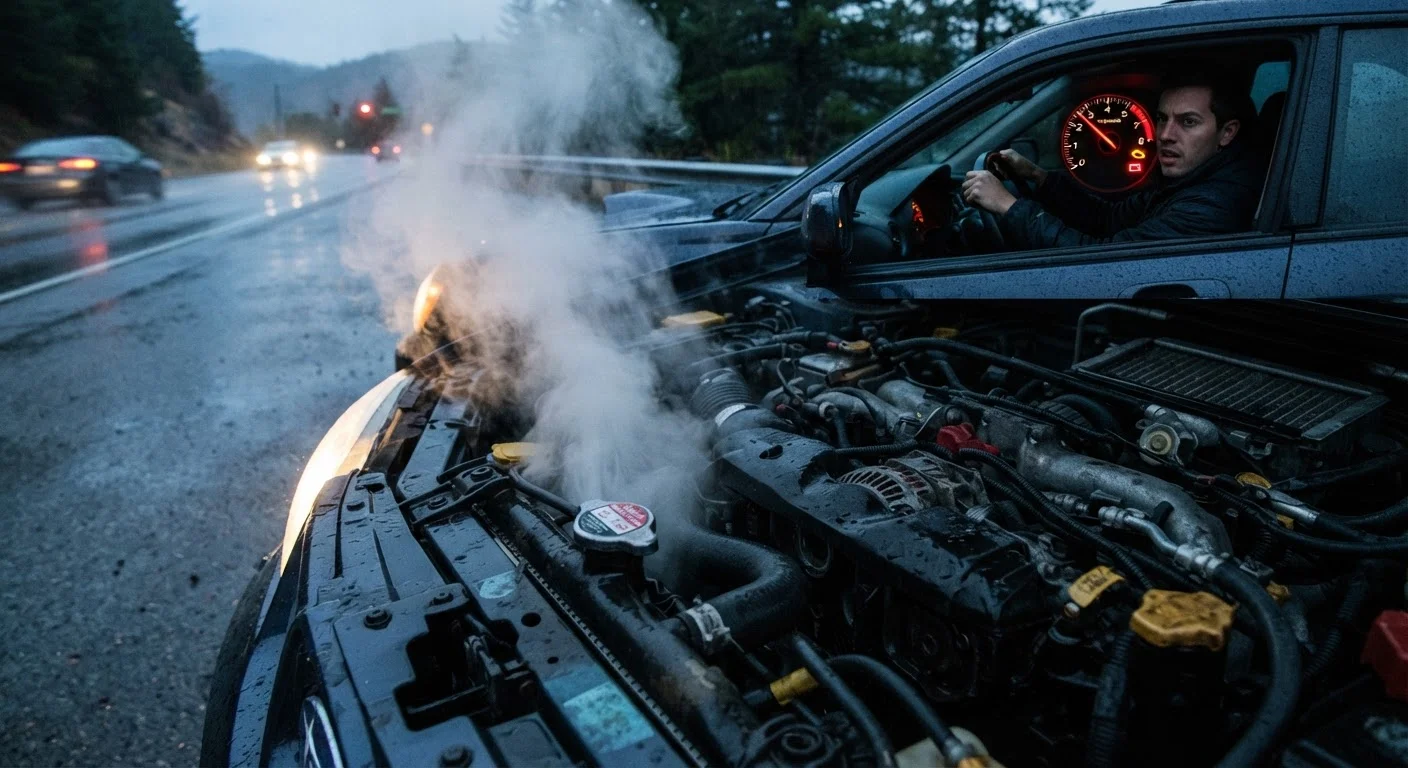
How you respond in the first few minutes of an overheating event determines whether you're facing a minor repair or an engine replacement.
- Turn off the air conditioning immediately - it adds load to the engine. If the gauge continues to rise, turn the heater on full blast to pull heat away from the engine core.
- Pull over safely as soon as possible. Do not attempt to drive further than necessary.
- Shut off the engine. Let it cool for at least 30 minutes before opening the hood.
- Never open the radiator cap on a hot engine. Pressurized coolant can cause severe burns. Wait until the system is fully cool.
- Check the coolant reservoir once cool. If it's empty, you may have a leak that needs professional diagnosis before driving further.
- Call for assistance if you're uncertain about the cause. Driving an overheating vehicle - even a short distance - risks turning a fixable problem into a total engine failure.
Don't Rely on Symptoms Alone
It's worth noting that some vehicles may not show obvious external signs of overheating - such as steam or a burning smell - before the gauge is already deep in the red. Make a habit of glancing at your temperature gauge periodically during normal driving, not just when something feels wrong.
It's worth noting that some vehicles may not show obvious external signs of overheating (steam, smell) before the gauge is already deep in the red. Make a habit of glancing at your temperature gauge periodically during normal driving, not just when something feels wrong.