The Core Principle: Reclaiming Wasted Energy
Every internal combustion engine expels hot, high-pressure exhaust gases after combustion. In a naturally aspirated engine, that energy exits through the exhaust pipe and is essentially lost. A turbocharger intercepts that energy before it escapes.
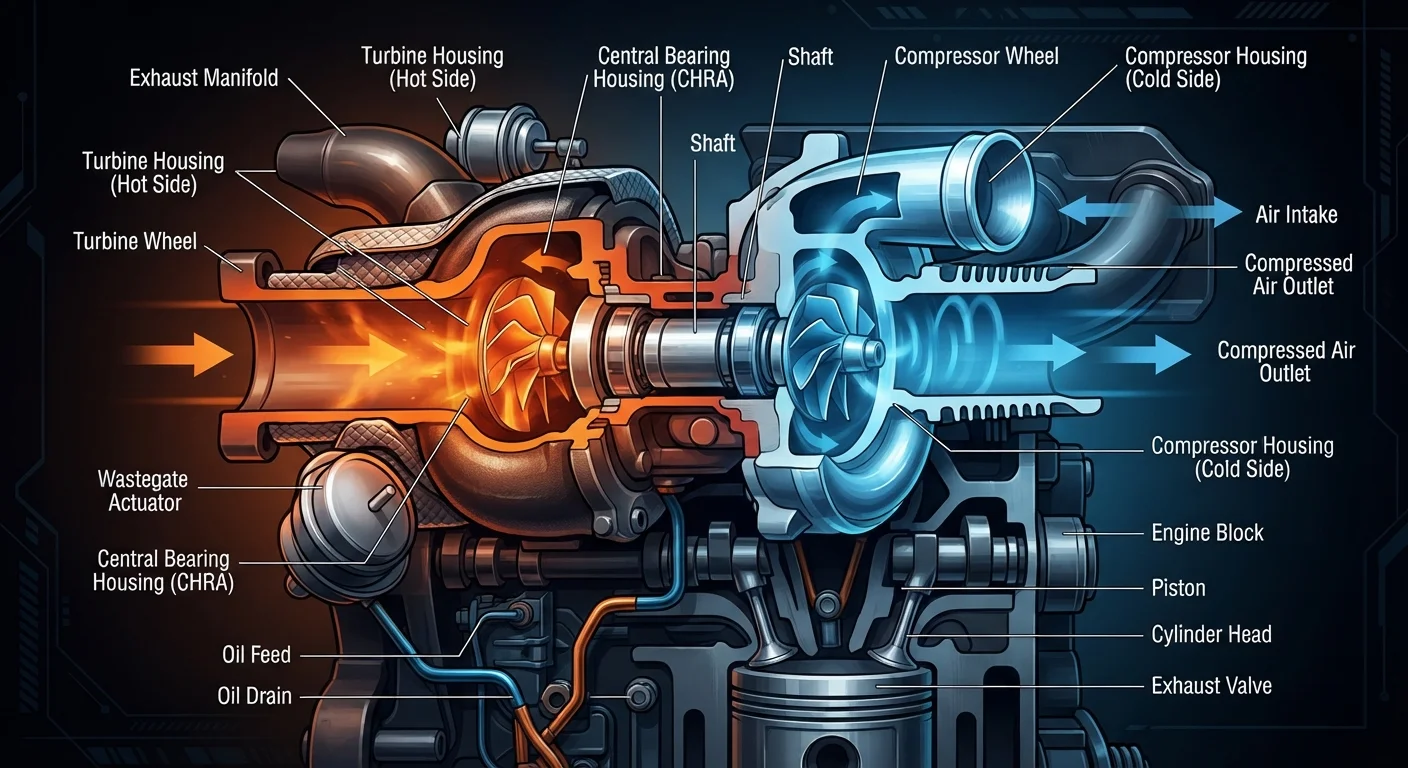
The turbo consists of two linked sections housed in a single unit: a turbine on the exhaust side and a compressor on the intake side. Exhaust gases spin the turbine wheel; because both wheels share a rigid central shaft, the compressor wheel spins simultaneously. The spinning compressor draws in fresh ambient air, compresses it, and pushes it into the engine at above-atmospheric pressure - a condition referred to as boost.
Denser, compressed air contains more oxygen molecules per cubic inch. When the engine's fuel injection system delivers a proportionally larger fuel charge to match, the combustion event releases more energy. The result is greater power output from the same cylinder displacement - which is why a modern turbocharged 2.0-liter four-cylinder can match or exceed the output of older 3.0-liter or larger naturally aspirated engines. For a deeper look at how forced induction fits into overall engine architecture, see The Anatomy of a High-Performance Engine.
40%+
Potential power increase from turbocharging
Industry engineering references consistently cite 40-50% power gains as achievable through turbocharging without changing engine displacement.
150,000 RPM
Typical turbocharger shaft speed
Automotive engineering literature documents turbocharger shaft speeds commonly ranging between 100,000 and 200,000 RPM under full boost.
10-15%
Efficiency gain from intercooling
Engineering studies on charge air cooling indicate that effective intercooling can improve volumetric efficiency by roughly 10-15% compared to non-intercooled systems.
Boost, Wastegates, and Pressure Control
Boost pressure - measured in pounds per square inch (psi) or bar - is the primary indicator of how hard the turbo is working. Factory turbocharged vehicles typically run between 6 and 20 psi of boost depending on the application. More boost generally means more power, but there are firm limits tied to the engine's compression ratio, fuel quality, and structural integrity.
Without regulation, a turbocharger would continue building pressure as engine RPM rises, eventually exceeding safe limits. The wastegate prevents this. It is a valve - either internal to the turbo housing or mounted externally - that opens when boost reaches the target threshold, diverting a portion of exhaust gas around the turbine. This effectively limits turbine speed and caps boost pressure at the calibrated maximum.
On modern vehicles, the wastegate is controlled electronically by the engine control unit (ECU), allowing precise boost management across varying load and temperature conditions. This integration also enables some turbocharged engines to briefly exceed their nominal boost limit for short-duration performance bursts - a strategy sometimes called overboost.
Monitor Boost Pressure on Modified Vehicles
If your vehicle has been tuned or modified for higher boost output, a boost gauge provides valuable real-time feedback on how the turbo is performing. Unexpected drops in boost pressure can signal a boost leak from a cracked intercooler pipe or failing hose clamp - issues that are inexpensive to fix if caught early but can cause poor performance and richer fuel trims if ignored.
Turbo Lag and How Engineers Address It
Turbo lag is the brief hesitation between pressing the accelerator and feeling the surge of boosted power. It exists because the turbine must accelerate from idle speed to tens of thousands of RPM before the compressor can generate meaningful pressure. During this spool-up window, the engine behaves much like a naturally aspirated unit.
Engineers have developed several approaches to minimize lag. Twin-scroll turbos divide the exhaust manifold into two separate channels that feed the turbine at different timing intervals, maintaining exhaust pulse energy more efficiently across the RPM range. Variable-geometry turbines (VGT) use adjustable vanes to alter the angle and velocity of exhaust gases hitting the turbine wheel, optimizing spool speed at low RPM. Some performance applications use two turbos of different sizes in sequence (sequential twin-turbo setups), with the smaller unit handling low-RPM response while the larger takes over at higher speeds.
For a side-by-side comparison of how turbo power delivery differs from supercharger setups, Turbocharger vs. Supercharger: Understanding the Power Delivery Difference is a useful companion read.
Intercooling: Managing Heat After Compression
Compressing air generates heat - a fundamental principle of thermodynamics. When the turbocharger compresses intake air, its temperature rises significantly, sometimes exceeding 300°F (149°C) before it even reaches the engine. Hot air is less dense than cool air, which partially offsets the compression benefit. It also increases the risk of detonation (uncontrolled combustion, also called knock), which can cause serious engine damage.
The intercooler - more precisely, a charge air cooler - addresses this by routing compressed air through a heat exchanger before it enters the intake manifold. Most automotive intercoolers are air-to-air units mounted in front of the radiator, transferring heat to ambient air passing through the fins. Some performance and compact applications use air-to-water intercoolers, which circulate coolant through the heat exchanger for more efficient heat removal in tighter packaging.
Cooling compressed air back toward ambient temperature restores much of its density gain, allowing the engine to receive the full benefit of forced induction without the thermal penalties. For readers interested in how intake air temperature interacts with other airflow components, Cold Air Intake vs. Short Ram Intake covers intake system fundamentals in detail.
Maintenance Considerations for Turbocharged Engines
The turbocharger's demanding operating environment - extreme heat, very high shaft speeds, and reliance on pressurized oil - means that standard maintenance discipline directly affects its service life. A few practices are especially important.
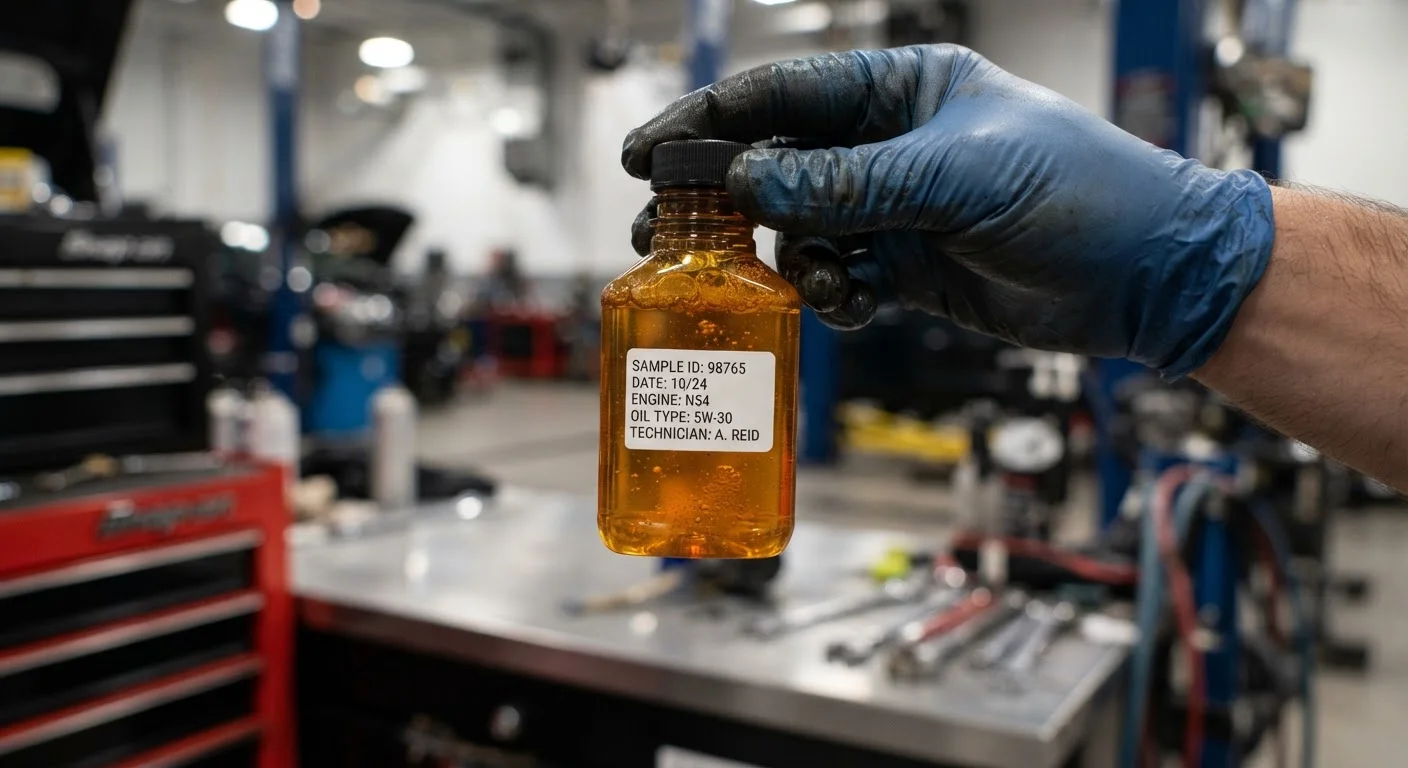
- Oil changes on schedule: Degraded oil loses viscosity and lubrication quality under heat, accelerating wear on the turbo's journal bearings or ball bearings. Follow the manufacturer's oil change interval, and use the specified synthetic oil grade.
- Cool-down time: After hard or sustained driving, idling for 60-90 seconds before shutting off allows oil to continue circulating and cool the turbo shaft. Cutting the ignition immediately while the turbo is hot can cause oil to bake onto the shaft (known as coking), leading to premature bearing failure.
- Watch for oil consumption: A failing turbo seal can allow oil to enter the intake or exhaust stream. Blue smoke on startup or under boost, or unexplained oil loss, warrants inspection by a qualified mechanic.
For broader context on how turbocharged and naturally aspirated engines compare in everyday ownership and performance character, see Naturally Aspirated vs. Turbocharged: Two Philosophies of Performance.
“The turbocharger is one of the most thermodynamically elegant devices on a modern engine - it converts energy that would otherwise be thrown away into useful compression work, at no direct cost to the crankshaft.”
— Automotive Engineering Fundamentals - SAE International, Reference text published by the Society of Automotive Engineers