Engine Air Filter: Protecting Combustion from Contaminants
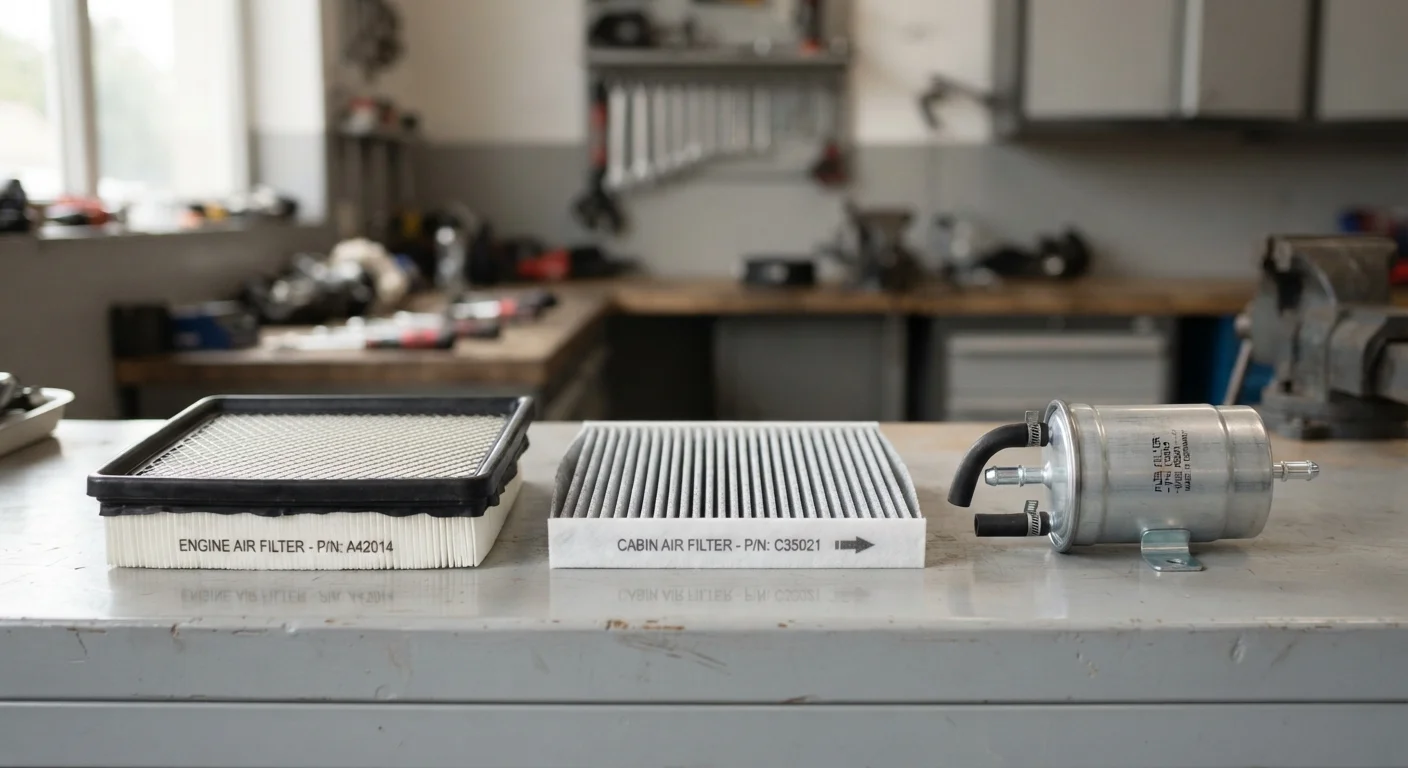
The engine air filter sits between the outside air intake and the engine's intake manifold. Its job is straightforward: trap airborne particulates - dust, pollen, road debris - before they can enter the combustion chamber. Without it, abrasive particles would accelerate wear on cylinder walls, pistons, and valves.
Most engine air filters use pleated paper or synthetic media housed in a plastic airbox. As the filter loads up with debris over time, airflow to the engine becomes increasingly restricted. This lean-air condition forces the engine management system to compensate, which can reduce throttle response and, in more severe cases, affect fuel economy.
Typical replacement intervals fall between 15,000 and 30,000 miles, though vehicles driven in dusty or unpaved conditions may need more frequent changes. Visual inspection is a useful guide - a heavily discolored, packed filter is overdue. See the Parts hub for related component guides.
Check the Filter at Every Oil Change
A quick visual inspection of both the engine air filter and cabin filter during each oil change interval costs nothing and takes seconds. Hold the engine air filter up to a light source - if you can't see light through the media, it's likely due for replacement. Catching a loaded filter early prevents the gradual performance loss that makes degradation hard to notice day-to-day.
Cabin Air Filter: Your HVAC System's First Line of Defense
The cabin air filter (sometimes called a pollen filter or HVAC filter) screens the air that flows through your vehicle's heating, ventilation, and air conditioning system before it enters the passenger compartment. It captures pollen, dust, mold spores, and fine particulates - a meaningful benefit for occupants with allergies or respiratory sensitivities.
Unlike the engine air filter, the cabin filter has no bearing on engine performance whatsoever. Its effects are felt entirely inside the cabin: a clogged cabin filter reduces airflow from your vents, makes the blower motor work harder, and can allow odors to accumulate. In humid climates, a saturated filter may even promote mold growth within the HVAC housing.
Most manufacturers recommend replacement every 12,000 to 15,000 miles, or roughly once a year for average drivers. The filter is typically located behind the glove box or under the dashboard - access varies by vehicle. Many owners can handle this swap themselves. If you're new to DIY maintenance, review the key steps before starting.
| Engine Air Filter | Cabin Air Filter | Fuel Filter | |
|---|---|---|---|
| Primary function | Protects engine from airborne debris | Cleans air entering passenger cabin | Removes fuel-line contaminants |
| System affected | Engine / combustion | HVAC / passenger comfort | Fuel delivery / injectors |
| Typical replacement interval | 15,000-30,000 miles | 12,000-15,000 miles | 20,000-40,000 miles (varies) |
| DIY-friendly | Generally yes | Generally yes | Inline: sometimes; in-tank: typically professional |
| Symptom of neglect | Reduced airflow, possible efficiency loss | Weak HVAC airflow, odors | Hard starting, hesitation, pump strain |
| Impact if skipped | Increased engine wear risk | Poor cabin air quality | Fuel pump stress, delivery issues |
Fuel Filter: Keeping the Fuel System Clean Under Pressure
The fuel filter removes contaminants - rust particles, sediment, and microscopic debris - from the fuel before it reaches the injectors or carburetor. Clean fuel is essential for proper atomization during combustion and for protecting the precision-machined components of the fuel system.
Fuel filters are found in two common configurations: inline (mounted along the fuel line, external to the tank) and in-tank (integrated into the fuel pump module inside the fuel tank). In-tank filters are increasingly common on modern vehicles and are often replaced as part of the fuel pump assembly rather than independently.
A partially blocked fuel filter forces the fuel pump to work harder to maintain adequate pressure and flow. Over time, this can shorten pump life. Symptoms of a deteriorating fuel filter may include hard starting, hesitation under load, or poor performance at highway speeds - though these symptoms overlap with many other issues, making diagnosis important before replacing parts.
Replacement intervals vary widely - often between 20,000 and 40,000 miles for inline filters, or as the manufacturer specifies. Because fuel system work involves pressurized flammable liquid, inline fuel filter replacement is a task where many owners wisely defer to a qualified mechanic. Skipping this service can eventually stress the fuel pump to the point of failure - a far more expensive repair.
15K-30K
Miles between engine air filter changes
Interval guidance commonly cited by vehicle manufacturers; dusty driving conditions may shorten this significantly.
~1 Year
Typical cabin filter service interval
Many manufacturers tie the cabin filter to an annual service or 12,000-15,000-mile interval, whichever comes first.