The Physics Behind the Pressure Change
Air behaves predictably under temperature change: heat it, and it expands; cool it, and it contracts. Inside a sealed tyre, the volume stays essentially constant, so when temperature falls, the air molecules slow down and exert less force on the tyre walls - which registers as lower pressure on your gauge.
The practical consequence is significant. A tyre correctly inflated to 35 PSI during a 75°F summer day could read closer to 30-31 PSI when temperatures drop to 25°F. That's a loss of 4-5 PSI without a single molecule of air escaping the tyre. The reverse happens in summer: highway driving and hot pavement can temporarily push pressures 4-6 PSI above the cold reading.
This is normal physics - not a fault with your tyres. The issue arises when drivers check pressure infrequently and unknowingly operate on under- or over-inflated tyres for weeks at a time.
TPMS Is a Warning System, Not a Substitute for Checking
Many modern vehicles include a Tyre Pressure Monitoring System (TPMS) that illuminates a dashboard warning light when pressure drops significantly below the recommended level - typically 25% or more. However, TPMS alerts are triggered after a meaningful pressure loss has already occurred. Regular manual checks catch gradual seasonal drift that falls below the TPMS threshold but is still enough to affect tyre wear and handling.
Reading the Right Number: Door Jamb vs. Tyre Sidewall
One of the most common pressure mistakes is inflating to the number moulded into the tyre sidewall. That figure - typically printed as "Max. Press. XX PSI" - is the tyre's maximum structural limit, not the recommended operating pressure. Running at that number almost always means overinflation for normal use.
The correct target is the vehicle manufacturer's recommended PSI, found on the sticker inside the driver's door jamb or in the owner's manual. That figure is calibrated to the vehicle's weight, suspension geometry, and tyre size. Front and rear recommendations often differ, so check both axles.
For vehicles with different tyre sizes front and rear - common on performance vehicles - this distinction matters even more. See how tyre technology shapes performance vehicle capability for a deeper look at how tyre setup interacts with vehicle dynamics.
Check Pressure Before Your Morning Drive
The best time for a seasonal pressure check is early morning before the vehicle has been driven. Overnight cooling means the tyre temperature is as close to true ambient as it will get, giving you the most accurate cold reading. This is especially important during autumn, when overnight temperatures can drop 20°F or more below afternoon highs.
How to Check Pressure Correctly Across Seasons
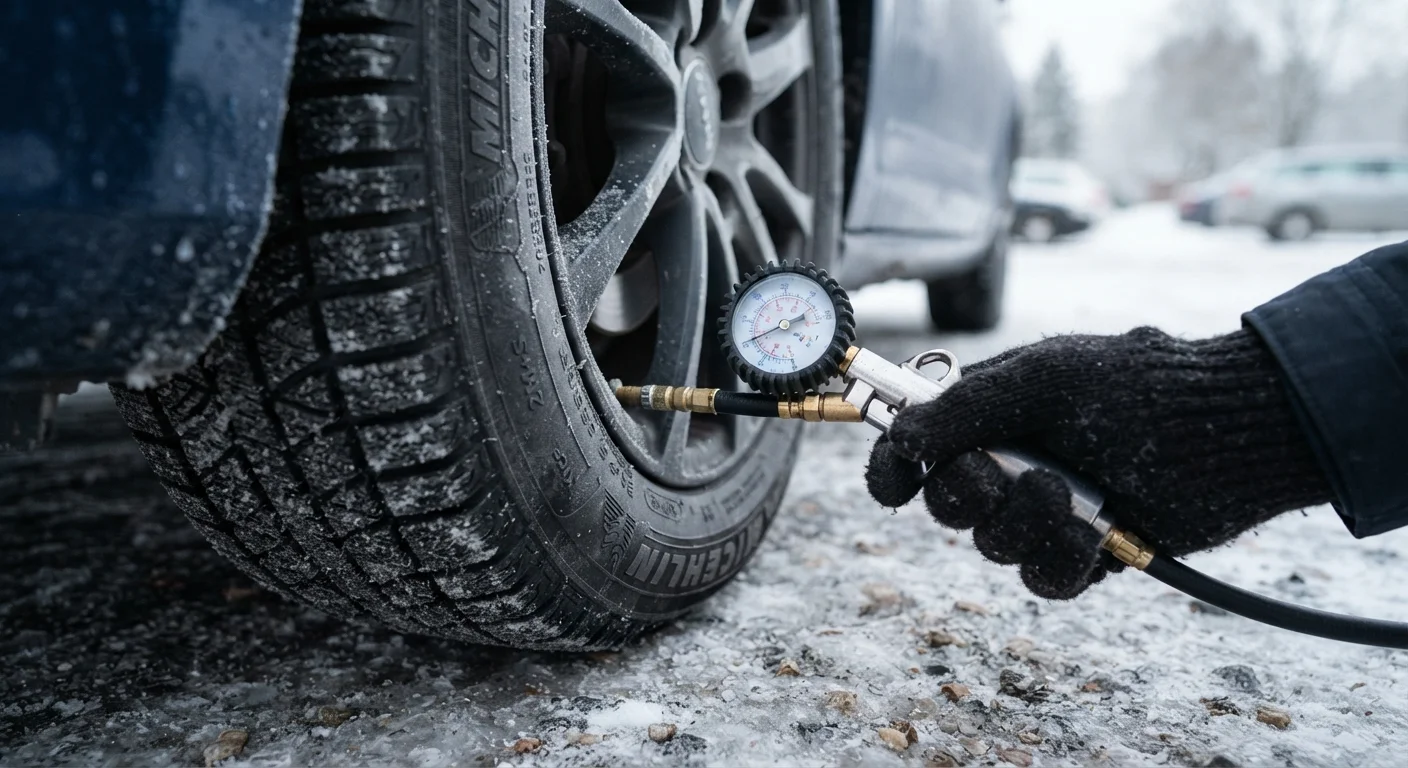
Accurate pressure checks depend on tyre temperature at the time of measurement. Always check when tyres are cold - meaning the vehicle has been parked for at least three hours or driven less than one mile at low speed. Driving generates heat that temporarily inflates readings by several PSI, making mid-trip checks unreliable for adjustment purposes.
- Gather your tools. Use a quality dial or digital gauge. Built-in gas station gauges can be inaccurate.
- Remove the valve cap and press the gauge squarely onto the valve stem.
- Read the PSI and compare it to the door jamb sticker recommendation.
- Adjust as needed. Add air if under the target; release small amounts using the gauge's bleed valve if over.
- Replace valve caps to protect stems from dirt and moisture.
In winter, build this check into your monthly routine - not just after a hard freeze. Gradual seasonal temperature drops can quietly push pressures below safe operating thresholds. This habit aligns well with the broader tasks covered in pre-winter vehicle preparation.
1 PSI
Pressure drop per 10°F temperature decrease
This is a widely cited industry rule of thumb used by tyre manufacturers and automotive engineers to illustrate seasonal pressure change.
~25%
Pressure drop that triggers most TPMS warnings
US Federal Motor Vehicle Safety Standard 138 requires TPMS systems to alert drivers when pressure falls 25% below the vehicle placard value.
4-6 PSI
Typical pressure rise after highway driving
Tyre industry guidance notes that driving-generated heat can raise tyre pressure several PSI above the cold reading, which is normal and expected.
What Incorrect Pressure Actually Does to Your Tyres
Underinflation is the more common and more damaging condition. When a tyre runs low, its contact patch - the area touching the road - widens and the tyre's sidewalls flex more than they should. This generates excess heat, accelerates wear on the tyre's outer edges, reduces fuel efficiency, and compromises steering response. In severe cases, sustained underinflation can lead to tyre failure.
Overinflation creates the opposite problem: the contact patch shrinks to the centre, concentrating wear in the middle of the tread. The tyre also becomes stiffer, reducing its ability to absorb road imperfections and potentially making the vehicle harder to control on rough or slippery surfaces.
Neither condition announces itself loudly in day-to-day driving, which is why the monthly check habit is essential. Drivers interested in how tyre construction affects these dynamics can explore tyre compound and construction choices for additional context.
Always consult your vehicle's owner's manual for model-specific tyre pressure guidance, and have a qualified mechanic inspect any tyre that shows unusual wear patterns, bulging, or cracking.