Why the Cockpit Matters
When riders talk about how a bike 'feels,' they're often describing what the cockpit communicates. The handlebar and stem set your posture, your leverage over the front wheel, and the angle at which forces travel from rough pavement into your hands, wrists, and shoulders. Get the cockpit wrong and even a well-fitted frame can leave you fatigued, uncomfortable, or struggling to steer precisely.
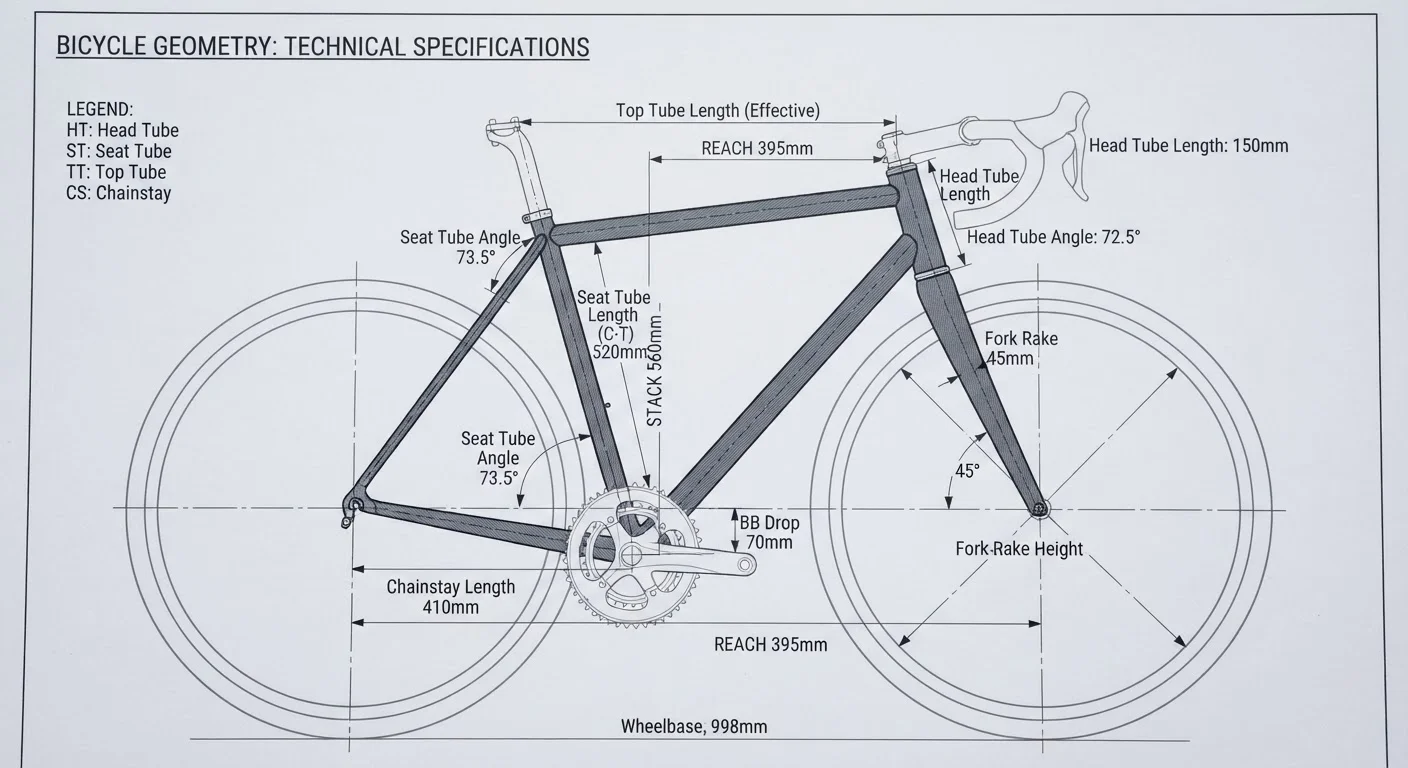
Understanding cockpit components is a foundational step in understanding how a bicycle works as a whole system. For a broader look at how every part fits together, see our complete bicycle anatomy guide. The cockpit is also closely connected to frame geometry - stack and reach measurements on the frame interact directly with stem length and bar height to produce your final riding position. Our bicycle geometry glossary explains those frame numbers in plain language.
Handlebars: Shape, Width, and Rise
Handlebars come in several distinct shapes, each suited to different riding styles and body positions.
- Flat bars run straight across, placing hands in a neutral, upright position. Common on mountain bikes, hybrids, and urban commuters, they offer wide leverage and intuitive steering.
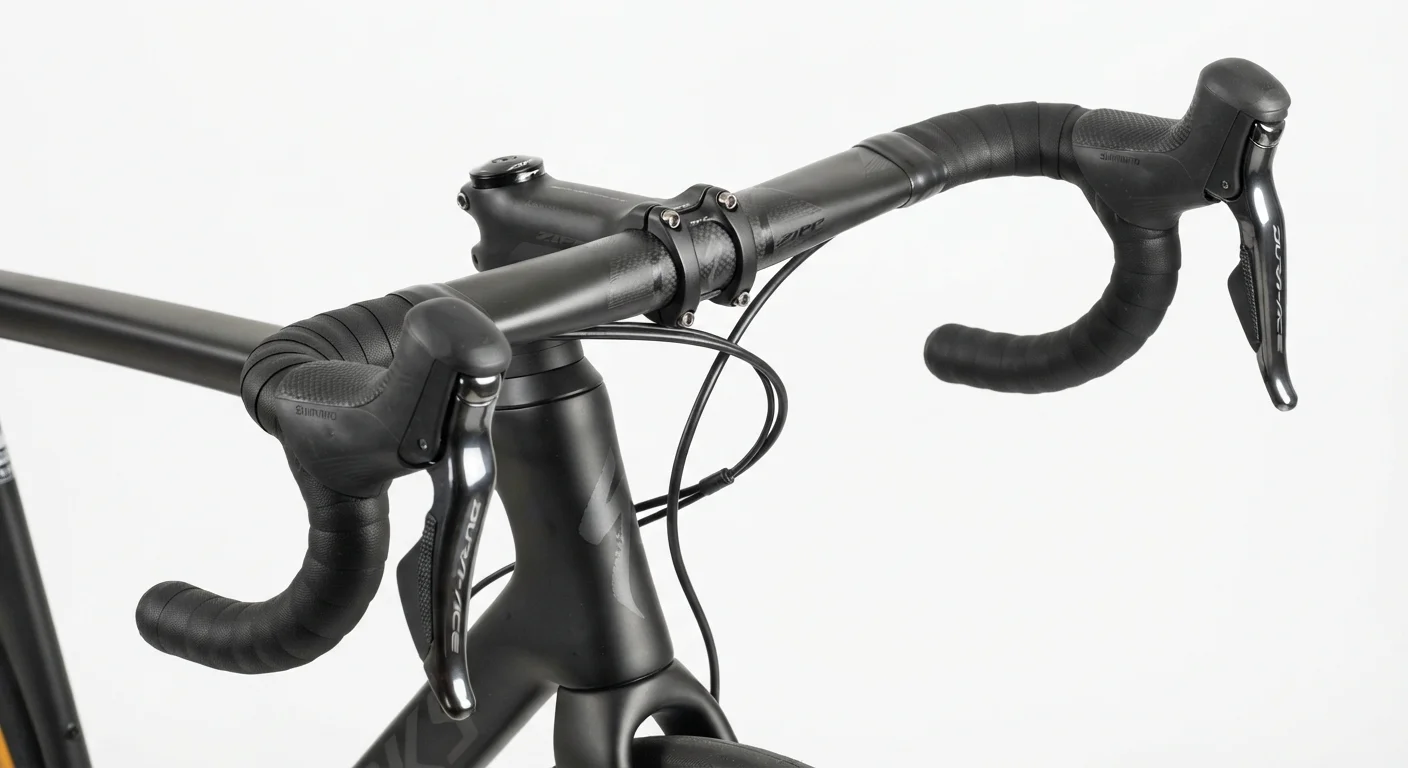
- Drop bars curve downward and forward, giving riders multiple hand positions - hoods, drops, and tops. They favor an aerodynamic posture and are standard on road and gravel bikes.
- Riser bars sweep upward from the stem clamp, moving grips higher than the clamp point. Popular on trail and enduro mountain bikes, they promote an upright, controlled stance over technical terrain.
- Butterfly or trekking bars wrap in a looping shape, providing a wide range of hand positions for long-distance touring.
Width is equally important. Wider bars increase leverage and stability - valuable when navigating rough singletrack - while narrower bars reduce aerodynamic drag for road riding. As a practical starting point, bar width is often matched to shoulder width, though individual preference and riding style will refine that further. For a head-to-head comparison of the two most common types, our drop bars vs. flat bars comparison covers posture, control, and use-case differences in depth.
Start With Width, Then Adjust Reach
When evaluating cockpit fit, first confirm that handlebar width suits your shoulder width and riding style. Once width is dialed in, use stem length and angle to fine-tune reach and bar height. Adjusting in this order prevents conflating two separate fit variables and makes it easier to isolate the effect of each change.
Stems: Length, Angle, and Stack Height
The stem connects the handlebar to the fork's steerer tube and is the most direct lever for adjusting reach - how far forward your hands sit relative to your body. Stems are measured by three key specifications:
- Length - measured in millimeters from the steerer tube centerline to the bar clamp centerline, typically ranging from 60 mm to 130 mm for road bikes and 50 mm to 80 mm for mountain bikes. Shorter stems quicken steering response; longer stems stretch the rider out and stabilize handling at speed.
- Rise angle - the degree to which the stem angles upward or downward from horizontal. A positive rise (e.g., +6° or +17°) lifts the bars; a negative rise lowers them. Many stems are reversible, offering two angles in one component.
- Clamp diameter - the bore size that grips the steerer tube, most commonly 1-1/8 inch on modern bikes, though tapered and 1.5-inch steerers exist on some frames.
Headset spacers - small rings stacked on the steerer tube below the stem - raise bar height without changing the stem itself. This is often the first adjustment a bike fitter makes when a rider feels too stretched or compressed. The total height adjustment available is limited by the steerer tube's cut length, so there's a ceiling to how much you can raise the bars this way.
Steerer Tube Length Is a Hard Limit
When adding spacers or switching to a taller stem, the amount of upward adjustment available is capped by how much steerer tube extends above the headset. If the steerer has already been cut short by a previous owner or mechanic, your spacer options may be limited. Always measure available steerer length before purchasing taller stems or planning a significant bar-height increase.
How Cockpit Changes Affect Different Riding Styles
Cockpit setup is not universal - the ideal configuration varies significantly depending on the type of riding you do. Riders exploring the range of bicycle styles will notice that each category comes with its own cockpit conventions for good reason.
Small, targeted cockpit changes are often more effective than replacing a frame when a bike doesn't quite fit. A qualified bike fitter can measure reach, drop, and shoulder width to recommend specific stem and bar dimensions. For mechanical adjustments beyond basic spacer swaps or stem swaps - particularly if the steerer tube needs cutting - consulting a professional mechanic is advisable to avoid damaging the fork or compromising steering integrity.
~20 mm
Typical stem length change per fit adjustment
Bike fitting practitioners commonly report that stem length adjustments are made in 10-20 mm increments to meaningfully shift rider reach without overcompensating.
31.8 mm
Most common modern handlebar clamp diameter
The 31.8 mm oversize clamp standard became widely adopted across road and mountain cycling and is found on the majority of contemporary stems and bars.