The Frame: Foundation of Every Bicycle
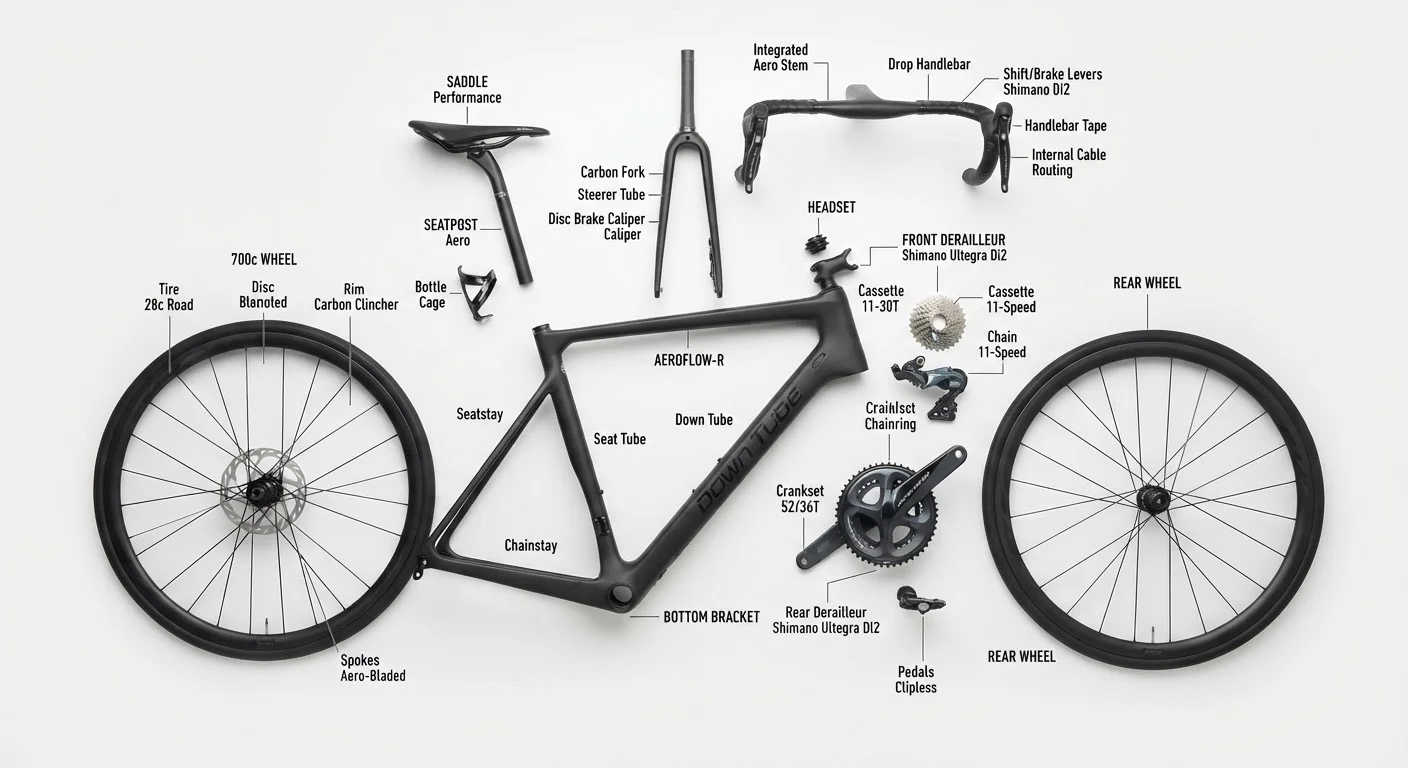
The frame is the structural core of any bicycle - every other component attaches to it directly or indirectly. Modern frames are built around several interconnected tubes: the top tube runs roughly horizontally from the head tube to the seat tube, the down tube angles from the head tube down to the bottom bracket shell, and the seat tube runs vertically from the bottom bracket to the saddle clamp. Rear triangles are formed by the chainstays and seatstays, which bracket the rear wheel.
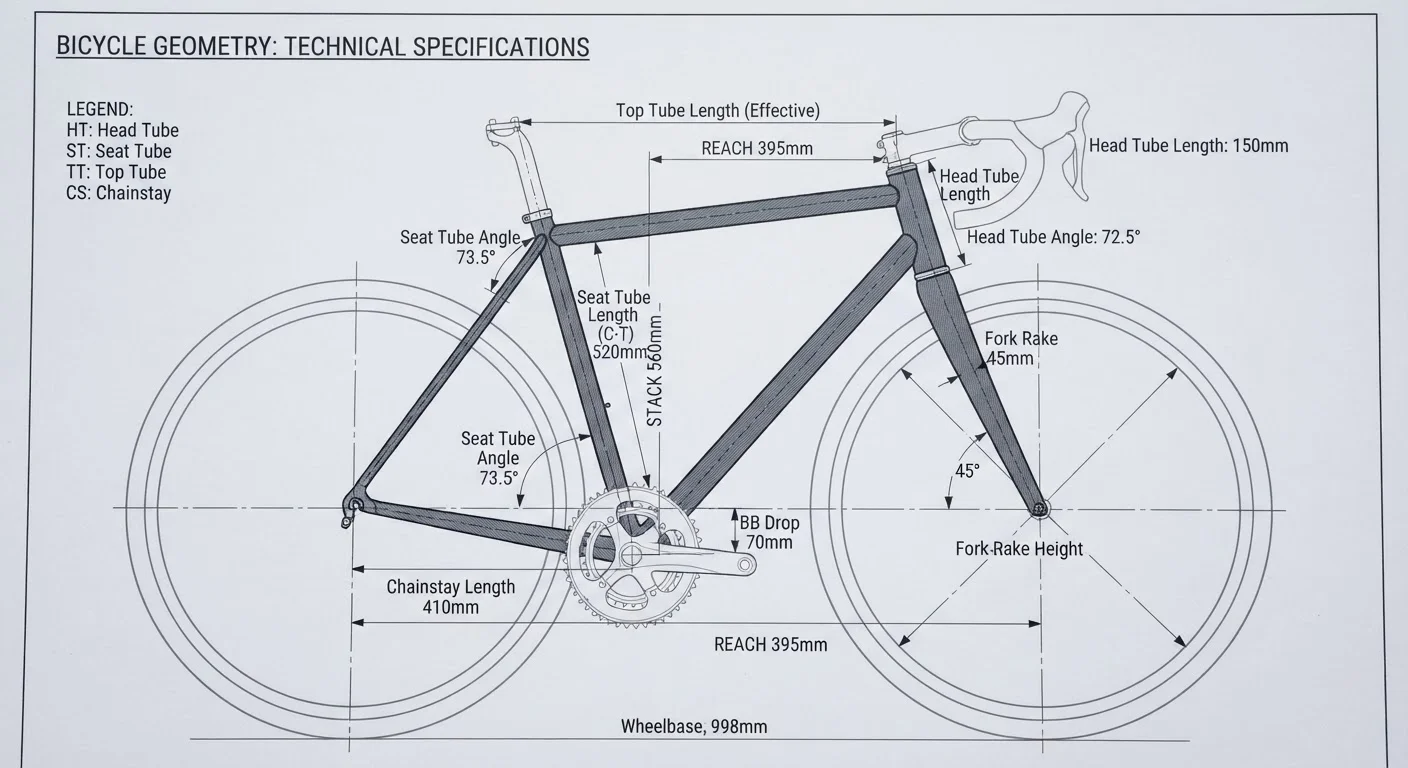
Frame geometry - the precise angles and lengths of these tubes - determines how a bike handles and fits the rider. Geometry terms like stack and reach are worth understanding when evaluating any frame. Materials range from aluminum and steel to carbon fiber and titanium, each with distinct trade-offs in weight, stiffness, and ride character.
| Primary frame materials | Aluminum, steel, carbon fiber, titanium |
| Standard drivetrain speeds (rear) | 7-13 sprockets depending on groupset |
| Common brake systems | Rim (caliper/V-brake) and disc (mechanical/hydraulic) |
| Headset types | Threaded, threadless, integrated/semi-integrated |
| Wheel sizes in common use | 26", 27.5" (650b), 29", 700c |
Cockpit Components: Steering and Control
The cockpit refers collectively to the handlebar, stem, and headset - the components that translate rider input into steering. The headset is a bearing assembly housed in the head tube that allows the fork to rotate smoothly. Headsets are available in threaded and threadless standards, with press-fit variations common on modern frames.
The fork connects the front wheel to the frame via the steerer tube and drops. On road bikes, forks are typically rigid; on mountain bikes, suspension forks absorb trail impacts using spring and damper systems. The stem clamps onto the steerer tube and holds the handlebar. Stem length and rise affect reach and handling responsiveness significantly.
Handlebars come in several forms - flat bars favor upright positioning, drop bars offer multiple hand positions for road riding, and riser bars provide control leverage on technical terrain.
Stem and Handlebar Compatibility
Not all stems and handlebars are interchangeable. The two most common handlebar clamp diameters are 25.4 mm (older standard) and 31.8 mm (modern oversized). Always verify clamp diameter before purchasing a replacement stem or bar. Steerer tube diameter - typically 1-1/8" or tapered - must also match the stem's steerer clamp bore.
The Drivetrain: Power Transfer
The drivetrain converts pedaling effort into forward motion. Its core components are the crankset (including one or more chainrings), the chain, and the cassette or freewheel mounted to the rear hub. The bottom bracket is the bearing assembly that allows the crankset to spin; it sits at the heart of the drivetrain and is often overlooked until it wears out.
Gear shifting is handled by derailleurs - front and rear - which move the chain across chainrings and cassette sprockets. Shifters at the handlebar control derailleur movement via cables or electronic signals. For a deeper understanding of how these interact, a complete introduction to bicycle gearing systems covers gear ratios and cassette selection in detail.
Bottom Bracket
A bearing assembly housed in the bottom bracket shell of the frame that supports the crankset axle, allowing the cranks to spin smoothly. Standards vary and must match both the frame shell and crankset spindle.
Headset
The bearing system installed in the head tube that allows the fork's steerer tube to rotate freely for steering. It exists in threaded, threadless, and integrated varieties.
Cassette
A stack of sprockets of varying sizes mounted to the rear hub's freehub body. Different sprocket counts and tooth ranges determine the gear spread available to the rider.
Derailleur
A mechanical arm that moves the chain laterally between sprockets or chainrings when the rider operates a shifter. Front and rear derailleurs work together to provide a range of gear ratios.
Chainstay
The frame tube that runs horizontally from the bottom bracket shell to the rear dropout, forming the lower part of the rear triangle. Chainstay length influences handling agility and pedaling efficiency.
Dropout
The slotted or precision-machined portion of the frame or fork where the wheel axle seats and is secured. Dropout design varies between quick-release and thru-axle systems.
Wheels, Brakes, and Contact Points
Each wheel consists of a hub, spokes, and a rim. The hub contains bearings and, on the rear, an interface for the cassette. Spokes tension-load the rim into a true, round shape. Rim width has grown considerably in recent years, influencing compatible tire width and ride quality.
Tires are the sole contact between rider and road or trail. They vary in tread pattern, casing construction, and whether they use an inner tube (clincher), a tubeless setup, or a glued tubular. Tire pressure, width, and tread all affect grip, rolling resistance, and comfort.
Braking systems are either rim brakes - which clamp brake pads against the rim sidewall - or disc brakes, which use a rotor mounted to the hub and a caliper to stop the wheel. Hydraulic disc brakes offer consistent modulation in wet conditions; mechanical disc and rim brakes are simpler to service at home.
The saddle and seatpost form the primary rider contact point below the waist. Seatpost diameter must match the seat tube inner diameter, and saddle width should correspond to sit bone spacing for comfort on longer rides. For riders curious about electric assist systems layered onto these same components, the anatomy of an e-bike explains how a motor and battery integrate with a conventional drivetrain.