What Drop Bars and Flat Bars Actually Do
Handlebars do far more than give you something to hold. They set your torso angle, determine how your weight is distributed between arms and saddle, and define what hand positions are available over the course of a ride. Understanding those mechanical effects is the starting point for any meaningful comparison.
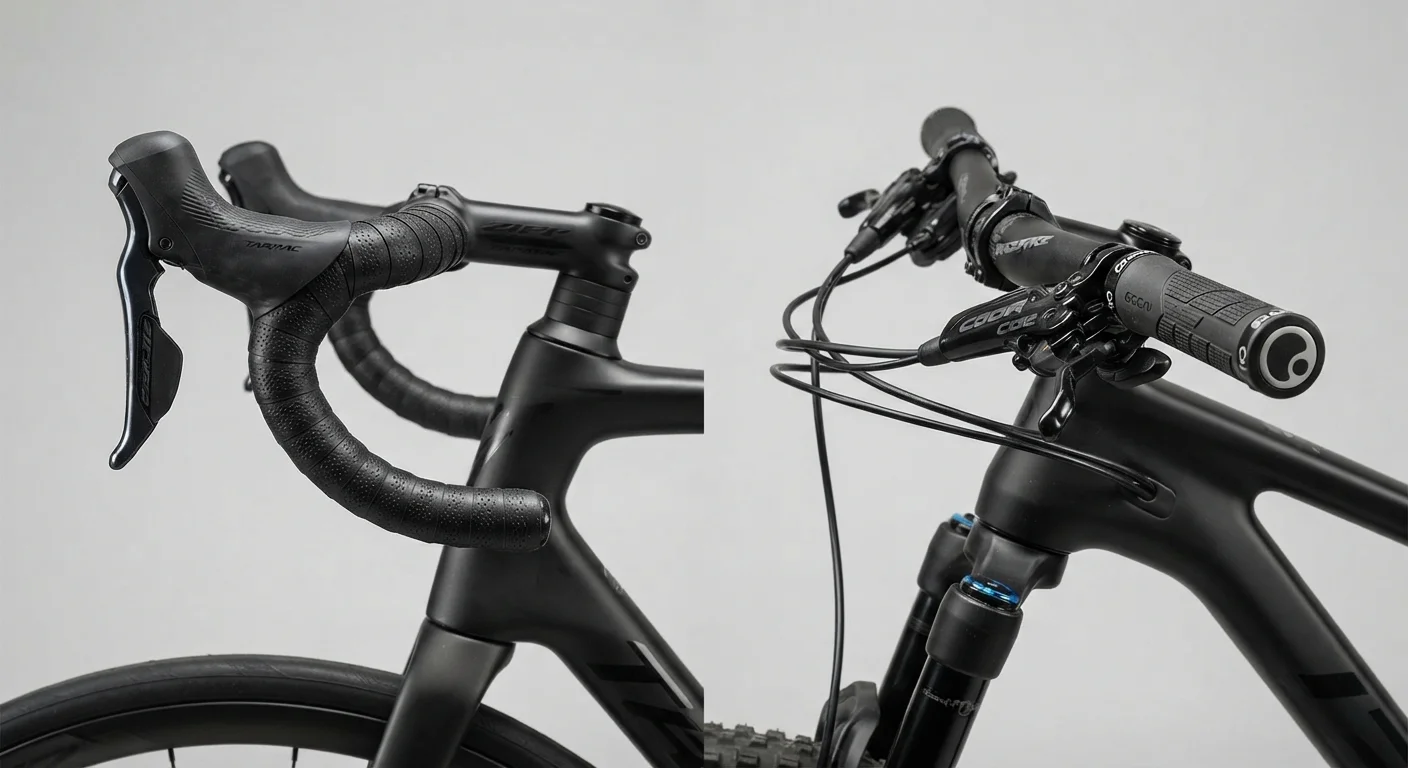
Drop bars curve forward and down from the stem clamp, creating a shape with three distinct grip zones: the flat tops near the stem, the curved hoods where brake levers mount, and the lower drops at the bottom of the curve. This variety lets riders shift positions to manage fatigue, reduce wind resistance, or generate power on climbs.
Flat bars run perpendicular to the bike's direction of travel in a straight or very slightly swept line. Grips sit at roughly the same height as the stem, promoting a more upright torso. The single grip zone is simpler but limits how much you can adjust your position without adding bar ends or ergonomic grips.
For a deeper look at how stem length and bar shape interact to influence your overall cockpit setup, see our guide to cockpit components.
| Drop Bars | Flat Bars | |
|---|---|---|
| Hand positions | Three distinct zones (tops, hoods, drops) | One primary zone (grips only) |
| Rider posture | Forward lean, aerodynamic | Upright, relaxed |
| Aerodynamic efficiency | High - reduced frontal area | Lower - upright profile |
| Technical terrain control | Moderate - narrower stance | High - wider leverage advantage |
| Typical use case | Road, gravel, cyclocross, touring | Mountain biking, commuting, casual riding |
| Long-distance comfort | Good with positional variety | Limited without bar ends or ergonomic grips |
| Component complexity | Higher - integrated brake/shift levers | Lower - simpler lever and shifter setup |
Riding Position, Comfort, and Long-Distance Performance
The forward lean of drop bars reduces frontal area, which meaningfully lowers aerodynamic drag at higher speeds - a genuine advantage on paved roads and well-groomed gravel. That lean also shifts more weight onto the hands and arms, which can cause discomfort on rough surfaces unless the rider builds supporting core strength or chooses a more relaxed geometry.
Flat bars keep the rider upright, reducing strain on the lower back and neck during shorter or more casual outings. However, the fixed hand position becomes a liability over long distances: with nowhere to shift your grip, pressure builds at the same contact points hour after hour. Many flat-bar riders address this with ergonomic lock-on grips or bar ends, which introduce some positional variety.
Test Both Bar Styles Before Deciding
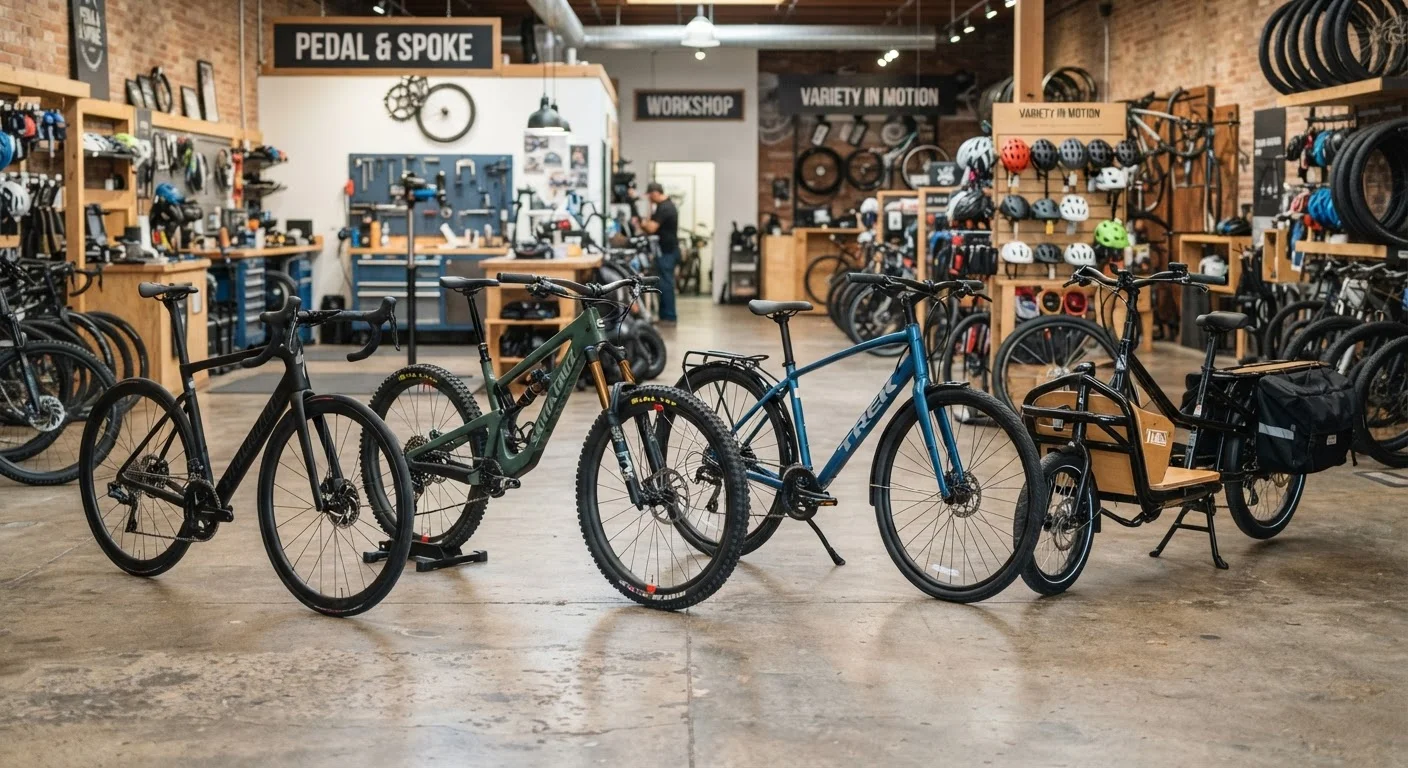
If possible, ride bikes equipped with each bar type on terrain similar to your regular routes before committing. Even a short test ride reveals how posture, reach, and hand comfort differ in practice. Many bike shops offer demo programs or will allow test rides on floor models - take advantage of that before making a final choice.
Handlebar width also plays a significant role. Flat bars for mountain bikes often measure 760-800mm wide, providing leverage and control. Road drop bars typically run 380-440mm center-to-center, measured at the drops. Choosing a width that matches your shoulder width is a foundational fit principle regardless of bar style.
Control, Handling, and Terrain Suitability
On technical terrain - loose dirt, roots, drops, and tight switchbacks - flat bars give riders a mechanical advantage. The wider stance increases leverage through the steering axis, making it easier to weight and unweight the front wheel precisely. Mountain bikes almost universally use flat or riser bars for this reason.
Drop bars, by contrast, excel when control demands are moderate and efficiency is paramount. Riding the hoods provides a comfortable, relatively upright position with quick access to brakes, while descending in the drops lowers the center of gravity and improves stability at speed on roads. Gravel and adventure cyclists have found drop bars handle surprisingly well on rough surfaces when paired with wider tires and appropriate geometry - see how cyclocross, gravel, and adventure bikes differ for context.
Urban commuters sit in an interesting middle ground. Flat bars suit stop-and-go traffic well, offering upright sightlines and responsive steering. Drop-bar bikes work equally well for commuters who cover longer distances on roads and want the option to tuck in on open stretches.
If you're still deciding what type of bike fits your routes and habits, a structured checklist of questions to ask before choosing a bike style can help clarify priorities before you commit to a handlebar type.
Making the Right Call for Your Riding
Neither handlebar style is objectively superior. The decision comes down to terrain, distance, and the kind of riding experience you value. Riders who spend most of their time on pavement or graded gravel, covering meaningful distances, tend to appreciate the efficiency and positional variety drop bars provide. Riders navigating technical trails, mixed urban environments, or simply preferring a more relaxed posture often find flat bars more natural and confidence-inspiring.
It's worth noting that switching handlebars is a real option - many frames are compatible with both styles given the right stem and component choices. However, the shift involves more than swapping bars; brake levers, shifters, and sometimes cables all need to be changed. Consider this a rebuild-level decision rather than a casual upgrade.
For riders navigating terrain that doesn't fit neatly into one category, our guide to picking a bike style for mixed terrain offers a practical framework for weighing those variables together.