Why Bike Categories Get Misunderstood
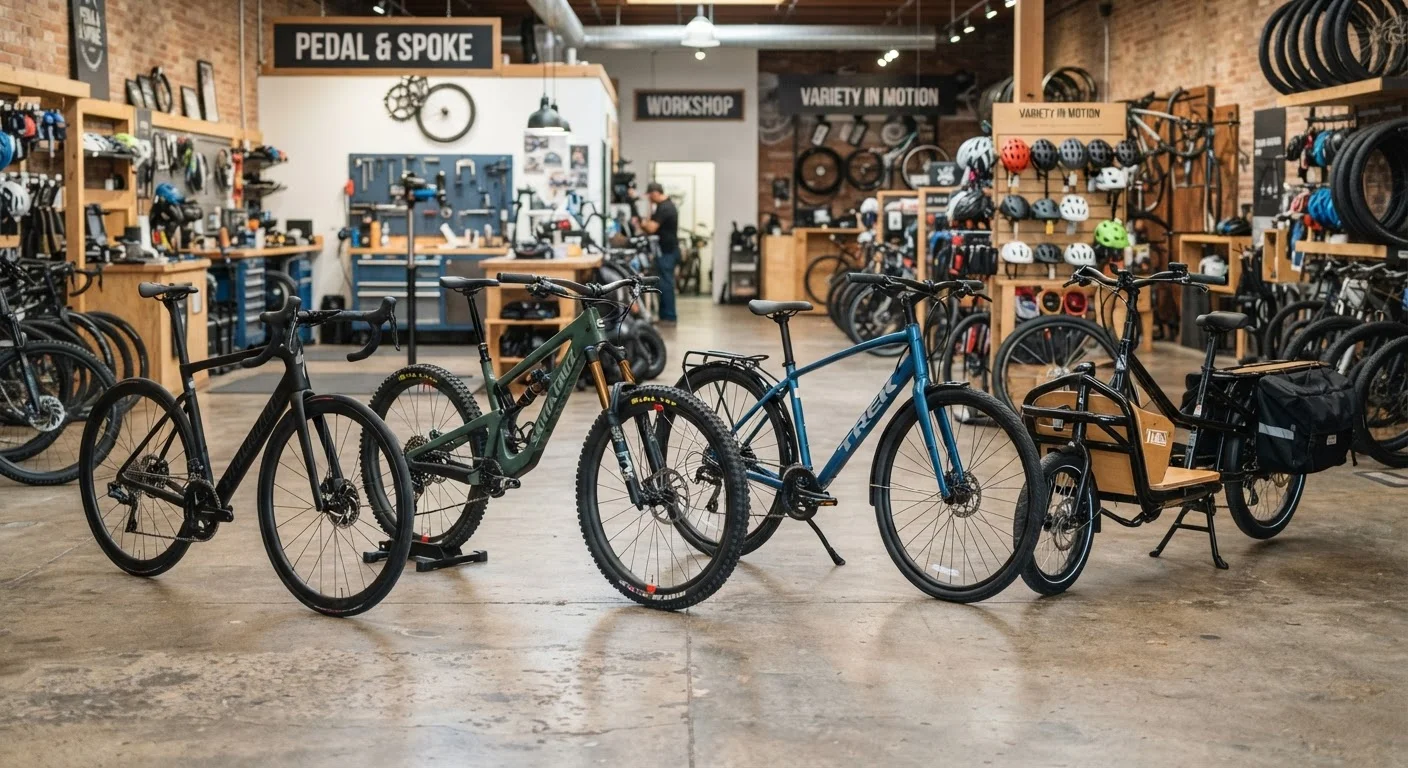
Bicycle marketing has a habit of blurring category lines — 'adventure-ready road bikes,' 'trail-capable hybrids,' and 'all-surface gravel machines' all suggest that one bike can do everything equally well. In practice, every category reflects a set of engineering decisions that favour specific terrain, riding position, and use case at the expense of others.
These misconceptions matter because choosing the wrong category is one of the most common reasons riders end up frustrated, whether they're grinding through gravel on a road bike or battling wind resistance on a mountain bike during a daily commute. If you're still narrowing down your needs, Questions to Ask Before Settling on a Bike Style provides a structured starting framework.
Myth
A gravel bike is just a road bike fitted with wider tyres.
Fact
Gravel bikes feature distinct geometry, longer wheelbases, and reinforced framesets designed specifically for mixed-surface riding.
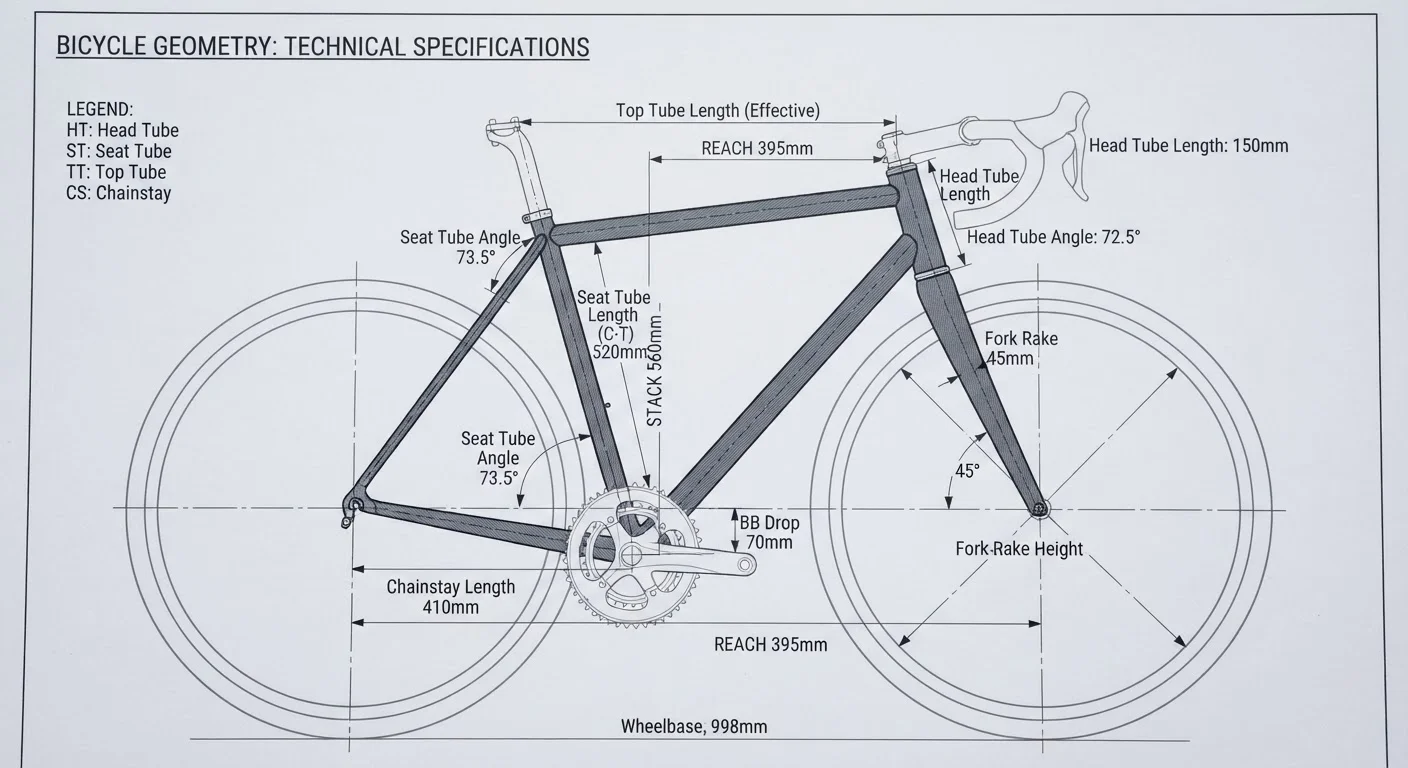
While gravel and road bikes share drop handlebars, the similarities diverge quickly. A gravel bike typically runs a more relaxed head-tube angle, a longer wheelbase for stability on loose surfaces, and significantly more tyre clearance — often accommodating tyres 40mm wide or beyond. The frame is also built to absorb vibration over extended rough terrain. Swapping tyres on a road bike does not replicate these handling characteristics. For a detailed side-by-side breakdown, see Road Bikes vs. Gravel Bikes.
Myth
A hybrid bike is always the sensible, compromise-free choice for any rider.
Fact
Hybrid bikes make deliberate trade-offs that suit some riders well and leave others underserved depending on their primary terrain.
Hybrids blend upright geometry and flat handlebars with medium-width tyres, which works well for paved commuting and light paths. However, they sacrifice the efficiency of a road bike on sustained pavement rides and lack the suspension travel and tyre knobbing needed for serious off-road use. Calling a hybrid universally 'safe' or 'good enough' ignores those trade-offs. Hybrid Bikes Explained covers exactly where these compromises land for different rider types.
Myth
Mountain bikes work fine as everyday city commuters because they are tough and reliable.
Fact
Mountain bike geometry, gearing, and tyre tread are optimised for off-road traction, making them noticeably inefficient on smooth pavement.
Knobby tyres create rolling resistance on tarmac, suspension forks absorb pedalling energy on flat surfaces, and the wide-ratio gearing is calibrated for climbs and descents rather than steady urban speeds. Riders who commute on a full-suspension mountain bike often find themselves working harder for less distance covered. The engineering that makes a mountain bike capable off-road actively works against it on pavement — see What Makes a Mountain Bike a Mountain Bike for the full picture.
Myth
All e-bikes belong to a single category — they are just regular bikes with a motor added.
Fact
E-bikes span every bicycle category, with motor and battery integration tailored to each style's intended use.
There are e-road bikes, e-mountain bikes, e-cargo bikes, e-commuters, and e-gravel bikes — each with motor placement, assist tuning, and frame geometry specific to that riding context. A mid-drive motor on a hardtail e-MTB is engineered very differently from a hub-drive motor on a folding commuter. Treating e-bikes as one monolithic category leads to mismatched expectations. The E-Bikes hub provides a fuller overview of how the category divides.
Myth
A more expensive bike in any category will automatically suit you better than a cheaper one.
Fact
Price reflects component quality and weight savings, but the wrong category at any price point will still underserve your riding needs.
Spending more within a category generally yields lighter frames, more precise shifting, and better braking. However, a premium road bike remains a poor tool for gravel adventures, regardless of cost. Category fit comes before component quality — a point explored in depth in Why Bike Category Shortcuts Backfire.
Matching Category to Terrain — Not Just Appearance
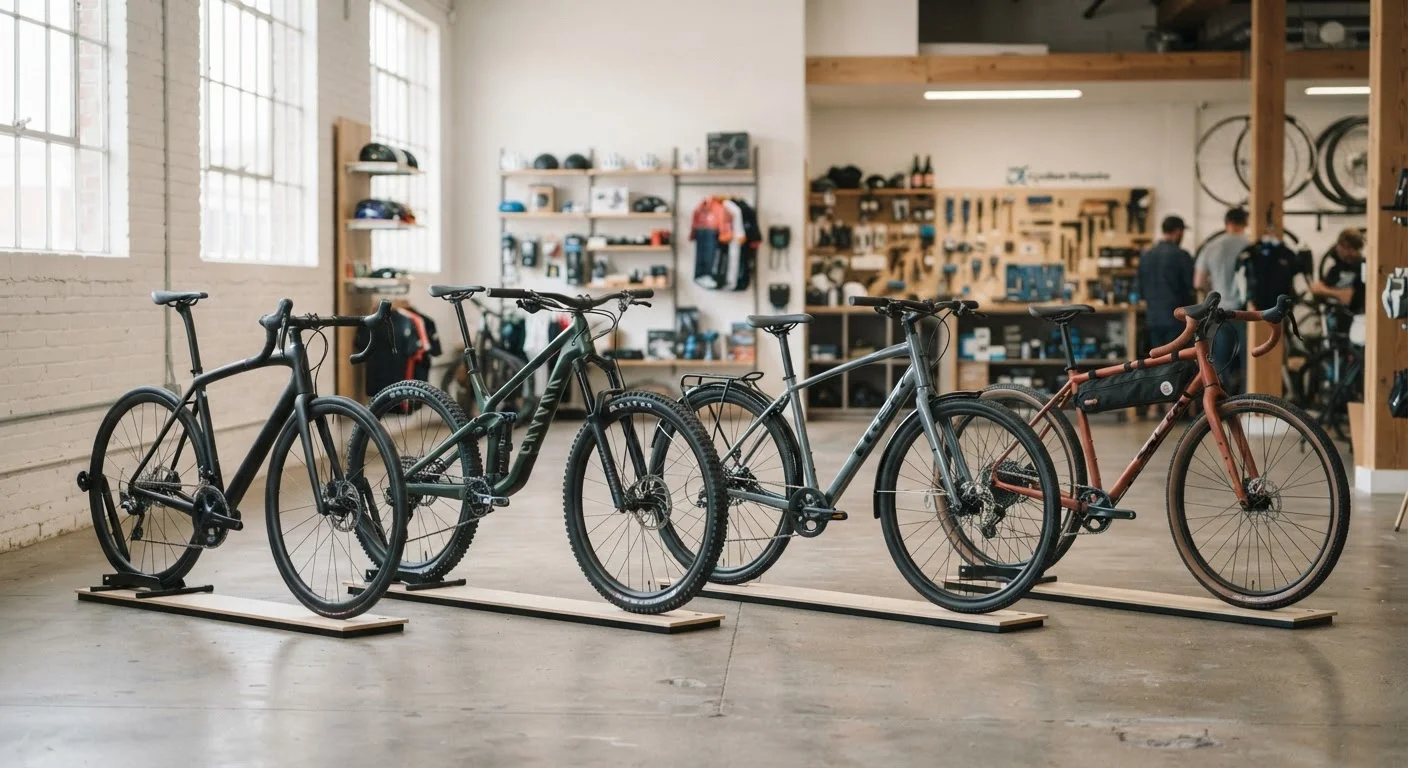
Most category confusion starts with visual similarity. Gravel and road bikes both use drop bars; hybrids and flat-bar road bikes look nearly identical at a glance; hardtail mountain bikes and rugged hybrids can share a silhouette. Appearance is a poor guide.
The more reliable lens is terrain and riding frequency. Riders who cover varied surfaces — pavement on weekdays, gravel paths on weekends — benefit from understanding exactly where each category's capabilities begin and end. Picking a Bike Style When You Ride Mixed Terrain offers a practical framework for exactly that scenario.
40mm+
Typical gravel bike maximum tyre width
Many gravel-specific framesets accommodate tyres 40–50mm wide, compared to 25–32mm on most road bikes — a structural difference, not just a tyre swap.
100–180mm
Suspension travel range on mountain bikes
Full-suspension mountain bikes commonly offer 130–180mm of travel front and rear — engineered for trail absorption, not pavement efficiency.
Component choices also reinforce category identity in ways that aren't immediately visible — drivetrain range, brake type, and even handlebar width are each calibrated to the bike's intended environment. For a deeper look at how components define performance within a category, the Components hub is a useful reference.