Why Range Anxiety Persists Despite the Evidence
Range anxiety - the fear of an electric vehicle running out of charge before reaching a destination - ranks consistently as the top concern among shoppers who haven't yet purchased an EV. Yet when researchers examine how people actually drive, the gap between perceived risk and statistical reality is striking. Understanding what's driving that fear matters more than dismissing it, because some concerns are rooted in genuine uncertainty while others are straightforward misconceptions.
This article applies a myth-vs-fact framework to the most common beliefs about electric SUV range, drawing on publicly available driving data, EPA testing methodology, and real-world ownership patterns. For a broader look at how electric SUVs compare on dimensions beyond range, see our comparison of SUV and sedan trade-offs.
Myth
Electric SUVs don't have enough range for real-world daily driving.
Fact
The majority of U.S. drivers travel far fewer miles each day than the range available on most current electric SUVs.
As of recent model years, electric SUVs from multiple manufacturers offer EPA-rated ranges between 250 and 330 miles on a full charge. The median U.S. daily driving distance sits around 37 miles. Even accounting for factors that reduce range - highway speeds, climate control use, cargo load - most drivers would need to charge far less frequently than they refuel a gasoline vehicle.
Myth
You'll constantly have to stop and charge on any road trip.
Fact
With route planning and DC fast-charging, long trips are manageable for most destinations with stops comparable to normal rest breaks.
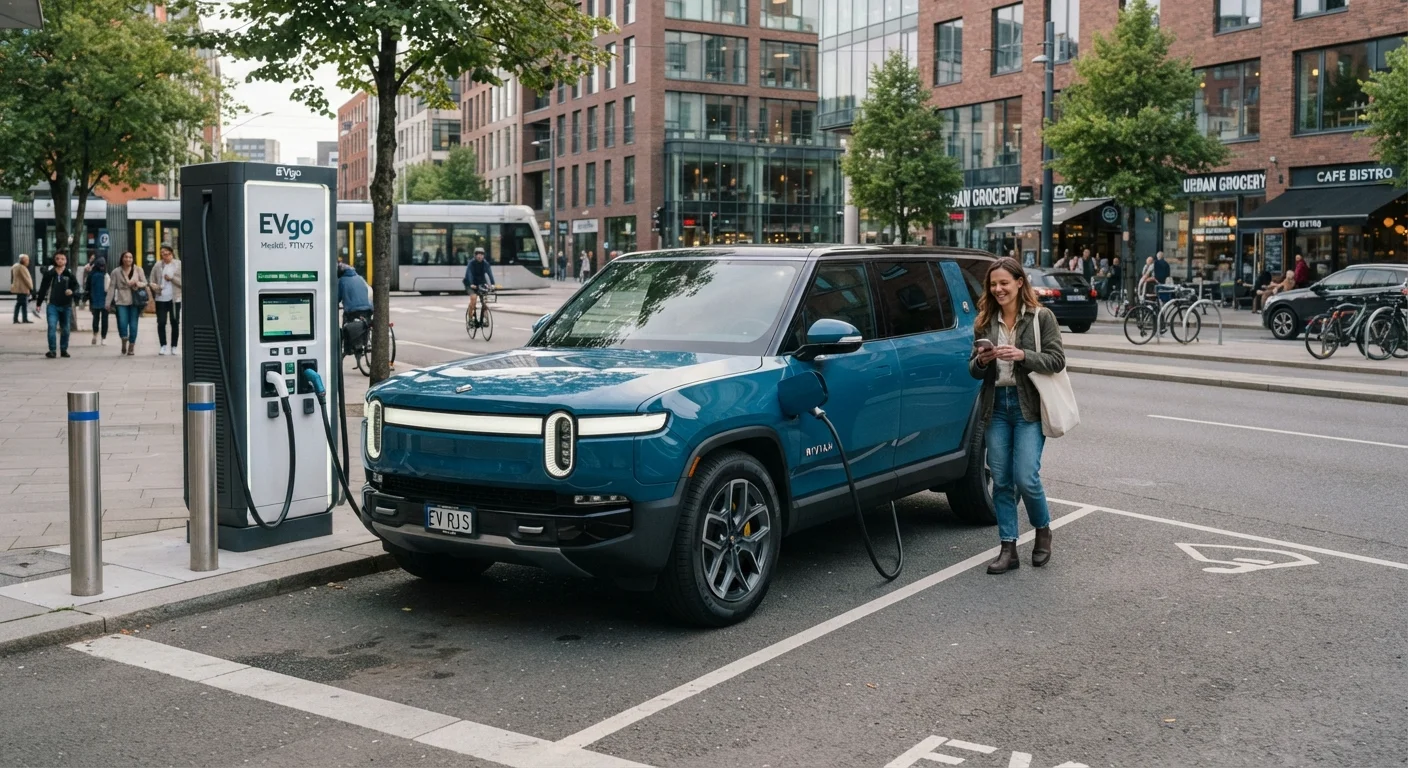
DC fast-chargers - which can add 100-200 miles of range in approximately 20-30 minutes depending on the vehicle and charger output - are now available at thousands of locations along major U.S. highway corridors. Apps and in-vehicle navigation systems can plan charging stops automatically. The experience requires more intentionality than gasoline travel, but frequent unplanned stops are not the norm for well-prepared drivers.
Myth
Cold weather makes electric SUVs unreliable in winter climates.
Fact
Cold temperatures reduce EV range by a measurable but predictable amount - typically 15-30% in severe cold - which can be planned around.
Battery preconditioning (warming the battery before departure, often while still plugged in) reduces the cold-weather efficiency penalty significantly. Many electric SUVs offer scheduled departure features that handle this automatically. Drivers in northern states do need to adjust their range expectations seasonally, but the reduction is consistent, not random, making it a manageable variable rather than an unreliable one.
Myth
Public charging infrastructure is too sparse to rely on outside major cities.
Fact
The U.S. public charging network has grown substantially, though coverage is uneven and rural gaps still exist in some regions.
The U.S. Department of Energy tracks public charging stations, and the count of DC fast-charging locations has grown significantly year over year. Interstate corridors are well-served in most regions. Rural coverage remains thinner, and shoppers in remote areas should research local infrastructure before purchase. The landscape is improving, but representing it as uniformly adequate or uniformly inadequate would both be inaccurate.
Myth
EPA range ratings accurately predict what you'll get in everyday driving.
Fact
EPA estimates are standardized test-cycle figures - a useful comparative baseline, but not a guarantee of real-world range under all conditions.
EPA testing follows a standardized protocol designed to allow model-to-model comparison, not to simulate every driver's specific conditions. Sustained highway speeds above 70 mph, running heat or air conditioning, heavy cargo, and hilly terrain all reduce range relative to the rated figure. Drivers who primarily use surface streets at moderate speeds may approach or occasionally exceed EPA estimates. Treating the figure as a ceiling rather than a guarantee is the most accurate framing.
What the Numbers Actually Show
Aggregate driving data from the U.S. Department of Transportation's National Household Travel Survey consistently shows that the median American driver covers roughly 37 miles on a typical day. That figure sits well below the rated range of virtually every electric SUV currently on the market. The practical implication: for the majority of households, a full charge in the morning is more than enough for daily use.
~37 miles
Median U.S. daily driving distance
Per the U.S. Department of Transportation's National Household Travel Survey, the median American driver travels roughly 37 miles on a typical day.
15-30%
Range reduction in severe cold
Studies by AAA and others have found that very cold temperatures (around 20°F) can reduce EV range by roughly 15-30% compared to moderate-weather performance.
250-330 mi
Typical EPA range for current electric SUVs
Many mainstream electric SUVs available in recent model years carry EPA-rated ranges in the 250-330 mile band on a full charge, depending on trim and configuration.
Long-distance travel is the scenario where range planning genuinely matters. On road trips, charging stop frequency and duration become real variables. However, DC fast-charging - capable of adding substantial range in roughly 20-30 minutes - has become far more widely available, and most drivers already take rest stops of similar length. The experience is different from a 5-minute gas fill-up, but it isn't the crisis that range anxiety framing implies.
Cold-weather range reduction is the most legitimate concern in this space. Lithium-ion battery chemistry loses efficiency at low temperatures, and HVAC energy draw compounds the effect. Owners in colder climates should treat advertised range figures as warm-weather baselines. That said, this effect is consistent and predictable - it can be planned around, especially for routine routes. It's worth noting that the same factors that affect electric SUV range also influence e-bike range in real-world conditions - ideal-condition testing rarely reflects everyday use.
Don't Ignore Regional Infrastructure Gaps
Public fast-charging coverage varies significantly by region. Drivers in densely populated corridors will find charging more accessible than those in rural or remote areas. Before purchasing an electric SUV, research the availability of charging infrastructure along your most frequent routes - including any areas without reliable home charging access. Assuming national coverage averages apply to your specific region can lead to unpleasant surprises.
Ownership costs for electric SUVs carry their own nuances beyond energy expenses. If you're weighing the full financial picture, our overview of unexpected SUV ownership costs is worth reviewing before committing.