The Gap Between Purchase Price and True Cost
Walking into a dealership focused on monthly payment figures is one of the most common ways first-time SUV buyers end up financially surprised. The sticker price and financing terms dominate the conversation, but the ongoing costs of owning an SUV can diverge sharply from what buyers experienced with a previous sedan or compact car. SUVs are heavier, taller, and mechanically more complex - and those traits show up on every invoice from a tyre shop or service bay.
Understanding these costs in advance doesn't make ownership less worthwhile; it makes it more sustainable. The seven items below represent the line items most likely to catch new owners off guard. For a broader view of how these costs evolve over a vehicle's lifespan, see our SUV lifecycle and ownership cost analysis.
Tyre Replacement Costs
SUVs ride on larger-diameter wheels and wider tyres than most passenger cars, and replacement costs reflect that. A set of four all-season tyres for a mid-size SUV can cost substantially more than equivalent fitments for a sedan - and performance-oriented or all-terrain variants command even higher prices. Buyers who downsize their tyre size to save money risk voiding warranty coverage or compromising load ratings.
Larger SUV tyres can cost two to three times more per set than comparable sedan fitments.
AWD and 4WD Drivetrain Servicing
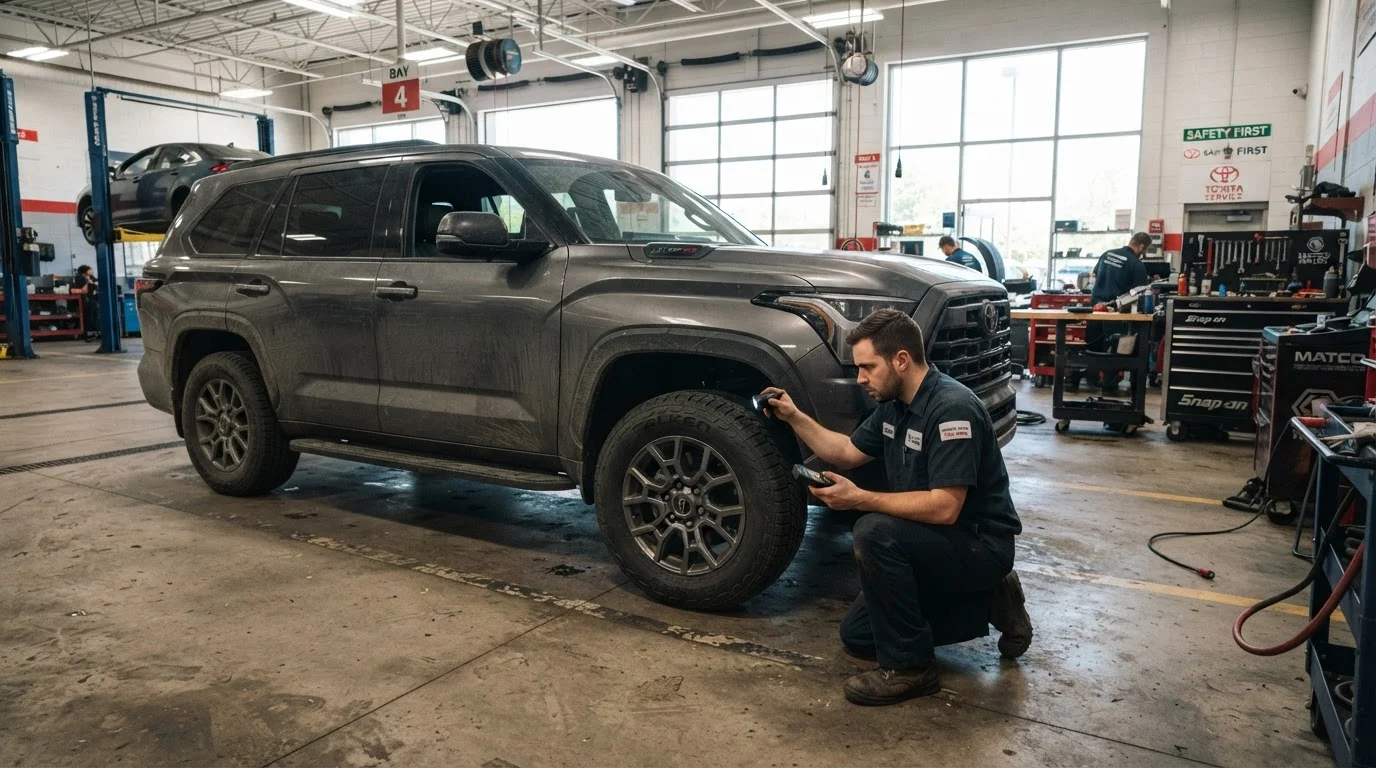
All-wheel-drive and four-wheel-drive systems include transfer cases, front and rear differentials, and in some cases electronic coupling units - all of which require periodic fluid changes. Many owners are unaware these intervals exist until a warning light appears or a service adviser flags the item at a routine oil change. Skipping these services can lead to premature component wear that is expensive to address.
Transfer case and differential fluids have set change intervals that are easy to miss and costly to ignore.
Accelerated Brake Wear
Heavier vehicles require more braking force to slow down, which places greater thermal and mechanical stress on pads and rotors. Many full-size and body-on-frame SUVs go through brake components noticeably faster than lighter vehicles, particularly in stop-and-go urban driving or when towing. Rotor replacement - not just pad swaps - becomes a routine line item rather than an occasional one.
Greater kerb weight means SUV braking components wear faster, turning rotor replacement into a recurring cost.
Real-World Fuel Consumption
EPA fuel economy estimates are produced under controlled conditions and tend to be optimistic relative to real-world mixed driving - a gap that is proportionally larger for SUVs due to their aerodynamic profile and weight. Buyers accustomed to a compact car often find their fuel budget increases by a meaningful margin, even with similarly-priced fuel. Models with a turbocharged engine can also require premium-grade fuel, compounding the cost at the pump.
Real-world SUV fuel costs consistently exceed EPA estimates, especially for turbocharged and larger-displacement engines.
Collision Repair Premiums
An SUV's wider stance, longer wheelbase, and higher body panels mean that even a minor parking lot scrape can involve more surface area and more expensive body panels than the same incident would on a sedan. Luxury SUV trim levels add radar sensors, cameras, and active grille shutters embedded in bumper fascias - components that can cost hundreds of dollars each to replace after even a low-speed impact.
Sensor-packed bumpers and larger body panels make even minor SUV collision repairs disproportionately expensive.
Scheduled Maintenance at Higher Labour Rates
Many SUVs - particularly those with turbocharged engines, diesel powertrains, or complex air suspension systems - have manufacturer-recommended service intervals that involve more labour time than simpler powertrains. Diesel SUV variants in particular carry higher servicing costs due to fuel system maintenance requirements. Owners who assume servicing costs will mirror those of a basic four-cylinder sedan are often caught off guard by the first major service invoice.
Turbocharged and diesel SUV variants carry maintenance schedules that are more complex and labour-intensive than most buyers anticipate.
Depreciation Rate by Segment
Depreciation is an ownership cost even when it's invisible - it represents the value lost between purchase and eventual sale or trade-in. Luxury SUVs are widely observed to depreciate more steeply in their first three years than mainstream models, meaning the total cost of ownership extends well beyond what shows up on a service receipt. Understanding how your specific model and trim level typically holds value helps calibrate whether a lower sticker price on a luxury badge actually saves money over a five-year ownership window.
Luxury SUVs often shed value faster in early years, making depreciation one of the largest hidden ownership costs.
Budgeting Smarter Before You Sign
None of these costs are reasons to avoid SUV ownership - they're reasons to plan for it honestly. Before finalising a purchase, request the manufacturer's recommended maintenance schedule and price out the specific tyre sizes for the model you're considering. If the vehicle has AWD, ask a service adviser what the transfer case and rear differential fluid intervals look like and what that service runs at an independent shop versus the dealership.
Get a Pre-Purchase Service Estimate
Before signing, ask a trusted independent mechanic to price out the first three scheduled service intervals for your shortlisted model. Include tyre replacement, brake inspection, and any AWD fluid changes. This single step can add meaningful accuracy to your annual ownership budget and reveal cost differences between trim levels that the sticker price alone won't show.
First-time SUV buyers aren't alone in underestimating running costs - it's a pattern that appears across vehicle segments. Our guide for performance car newcomers covers similar hidden-cost blind spots from a different angle. The discipline of total-cost thinking pays off regardless of which segment you're shopping. You can also explore the complete guide to SUVs to better understand how body style and segment choice affect ongoing expenses.
Electric SUVs Have a Different Cost Profile
Battery-electric SUVs eliminate many of the drivetrain servicing costs listed here - there are no oil changes, no transmission fluid intervals, and regenerative braking extends brake pad life considerably. However, they introduce their own cost variables, including high-voltage battery warranty terms, charging infrastructure expenses, and tyre wear from increased vehicle weight. Our electric SUV real-world data article covers the practical ownership side of the transition.