Why Preparation Makes or Breaks a Test Drive
Walking into a dealership without a plan is one of the most effective ways to leave with an incomplete picture of a vehicle. Salespeople operate on a schedule; showroom energy can be distracting; and sedans that look similar on paper can feel dramatically different behind the wheel. A structured checklist cuts through the noise.
This guide is particularly relevant if you're weighing sedans against other body styles. If coupes are also on your list, many of the same principles apply - but sedans introduce specific considerations around rear headroom, trunk access, and four-door practicality that deserve dedicated attention. For a broader framework on sedan selection criteria, see Everything That Goes Into Choosing a Sedan.
The checklist below is organized into four stages: research before you leave home, logistics for the day of the visit, what to examine on the vehicle itself, and how to assess the actual driving experience.
Pre-Visit Research
Day-Of Logistics
Static Vehicle Inspection
On-Road Evaluation
Tools to Bring and Resources to Consult
Having the right references on hand keeps your evaluation objective. You don't need specialized equipment - just organized information and a way to record your observations.
Printed or digital comparison sheet
Records specs, feature lists, and your notes for each sedan side-by-side, enabling objective post-visit comparison.
Smartphone with camera
Captures interior and cargo area photos immediately after each test drive to jog your memory when reviewing later.
Tape measure
Verifies trunk depth, rear legroom, and child seat anchor placement against your specific requirements.
NHTSA and IIHS websites (bookmarked)
Provides authoritative crash-test ratings and safety feature data for every model you're considering.
Scoring rubric (1-5 scale)
Standardizes your evaluation of ride quality, ergonomics, visibility, and feature usability across multiple test drives.
Test the Trim You Actually Intend to Buy
Dealerships sometimes present a fully loaded trim for the test drive when the buyer's budget targets a mid-grade configuration. Driving a higher trim can create expectations that the actual purchase won't meet. Always request the specific trim level you're seriously considering, and confirm which features are standard on that grade before the drive begins.
If you're also considering pre-owned sedans, the methodology diverges meaningfully from evaluating new inventory. Our pre-purchase inspection checklist for used vehicles covers mechanical and structural checks that go beyond what this test-drive guide addresses. Similarly, our used SUV inspection guide shows how the process differs across body styles.
After the Drive: Locking In Your Impressions
The window between stepping out of a sedan and moving to the next vehicle is when your sensory memory is most accurate. Most shoppers underestimate how quickly specific details blur together, especially when comparing three or four models in a single afternoon.
Rate each vehicle immediately using consistent criteria: steering feel, cabin noise at highway speed, sight lines over the hood and out the rear window, ease of entry and exit, and how naturally the controls fall to hand. Numeric scoring (1-5 across five criteria) works better than written impressions when you're comparing later.
Record Impressions Before Leaving the Lot
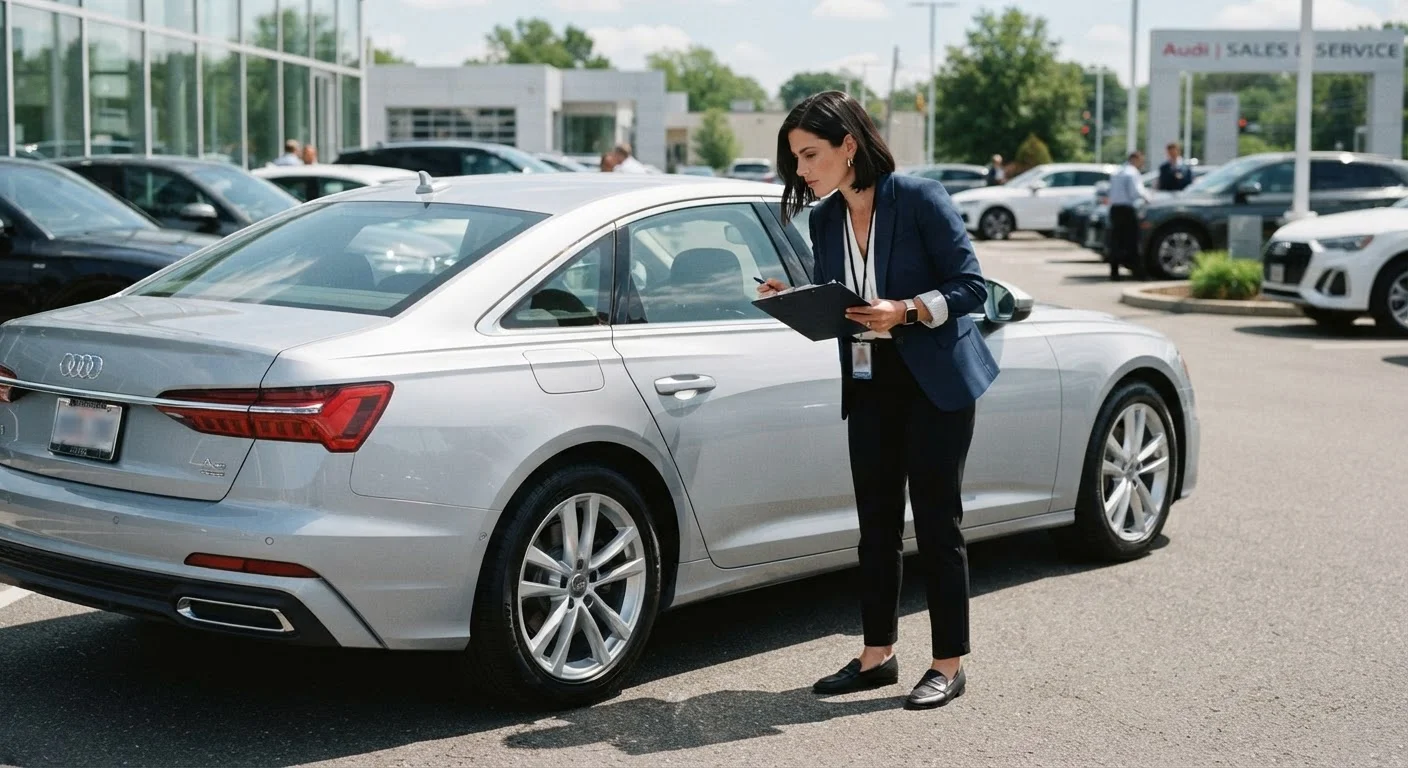
Memory compression is real: after visiting two or three dealerships in a day, specific sensory details - brake pedal feel, wind noise, the firmness of lumbar support - become nearly impossible to reliably attribute to the correct vehicle. Complete your scoring rubric and write at least three specific observations the moment you return the keys, while you are still on the property.
First-time sedan shoppers may benefit from reading our practical introduction to sedan shopping before visiting any dealership - it contextualizes what the specs actually mean in everyday driving conditions.