Two Ratings, Two Different Limits
Truck shoppers frequently encounter payload and towing capacity figures side by side in spec sheets - and just as frequently conflate them. They measure fundamentally different things.
Payload capacity is the total weight the truck itself can support above its own curb weight. That includes every passenger, every pound of cargo in the bed, any equipment mounted to the truck, and the tongue weight transferred down through the hitch from a trailer. If your truck has a payload rating of 1,800 lbs and you're carrying two passengers (approx. 400 lbs combined) plus 600 lbs of bed cargo, you have roughly 800 lbs of remaining payload - which limits how heavy a trailer you can safely hitch.
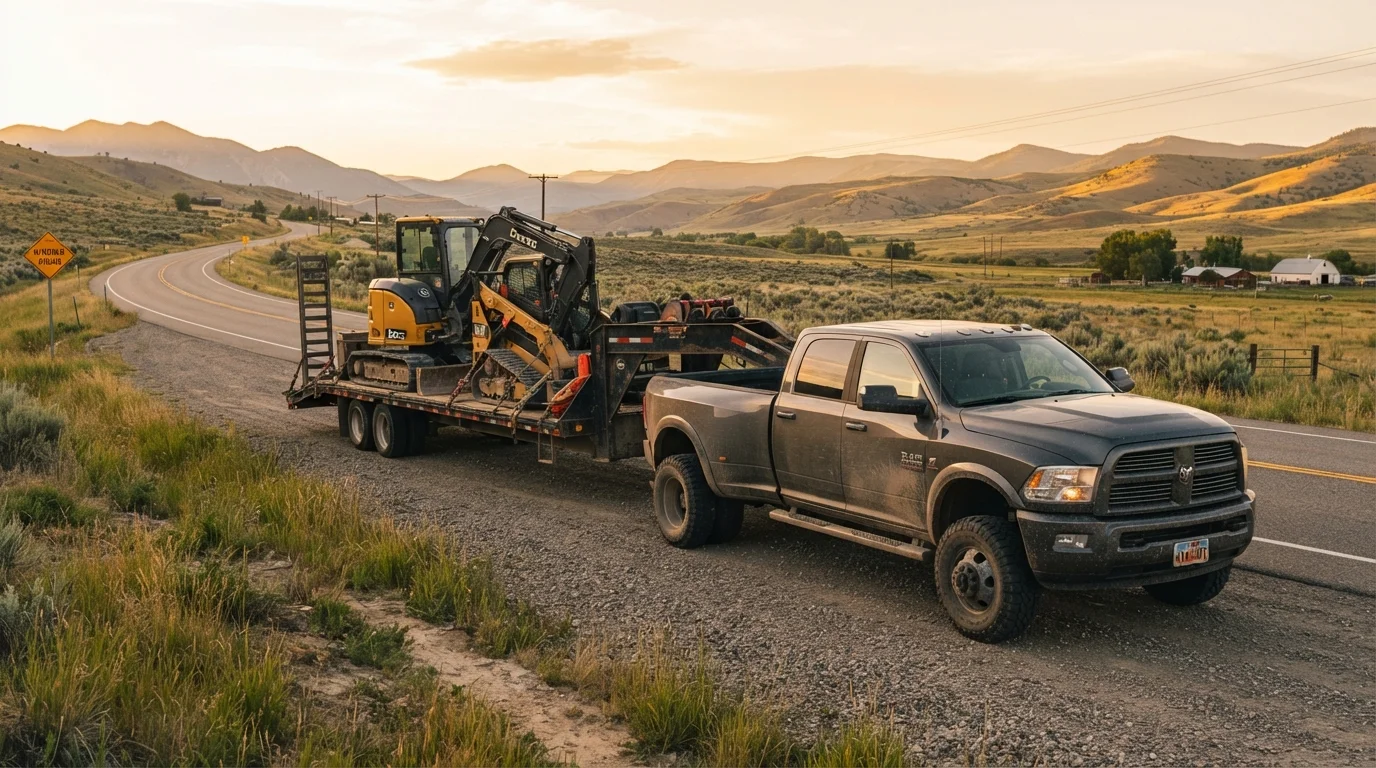
Towing capacity describes how much weight can be pulled behind the vehicle. This number is governed by the truck's powertrain, frame strength, braking system, cooling capacity, and the Gross Combined Weight Rating (GCWR) - the maximum allowable weight of the truck plus everything it's pulling.
GVWR and GCWR: Key Acronyms to Know
Gross Vehicle Weight Rating (GVWR) is the maximum allowable total weight of the truck itself - including passengers, cargo, and fuel. Gross Combined Weight Rating (GCWR) is the maximum for the truck plus any trailer. Both are hard limits set by the manufacturer, and neither should be exceeded under any operating condition.
Why Tongue Weight Is the Hidden Variable
Most drivers focus on towing capacity and forget about tongue weight - the downward force the front of the trailer exerts on the hitch ball. Industry guidelines suggest tongue weight should be 10-15% of the trailer's total weight. For a 7,000-lb trailer, that's 700-1,050 lbs pressing down on the hitch.
That tongue weight comes directly out of your payload budget, not your tow rating. A truck rated to tow 10,000 lbs but carrying a cab full of passengers and tools may not have enough remaining payload to safely handle the tongue weight of a mid-size trailer - even if the trailer is well within the towing limit.
This is one of the most common misunderstandings in truck ownership, and it's why advertised tow ratings can be misleading when evaluated in isolation from payload constraints.
10-15%
Recommended tongue weight as share of trailer weight
SAE and towing industry guidelines consistently recommend tongue weight fall within this range for stable trailer handling.
400+ lbs
Payload reduction from crew cab vs. regular cab
Heavier cab and drivetrain configurations can reduce available payload by several hundred pounds on otherwise identical truck platforms.
How the Numbers Are Set - and What Changes Them
Both ratings are calculated by the manufacturer using the SAE J2807 standard, which defines a consistent testing methodology. Payload is derived by subtracting the truck's curb weight from its Gross Vehicle Weight Rating (GVWR). Towing capacity is bounded by the lower of the powertrain's capability or the GCWR minus the truck's curb weight.
Critically, these numbers shift based on configuration. A crew cab with four-wheel drive weighs more than a regular cab two-wheel-drive version of the same truck. That extra weight reduces available payload - sometimes by several hundred pounds - even though the engine and hitch hardware are identical. Axle ratio also plays a significant role: lower numerical axle ratios (e.g., 3.31) favor fuel economy, while higher ratios (e.g., 4.10) unlock more towing capacity.
Always verify ratings on the door-jamb certification label or in the owner's manual for your exact build. The number on the window sticker often reflects the highest rating available across the model family - not necessarily what your specific truck is rated for.
Always Use the Door-Jamb Sticker
Your truck's actual payload rating is printed on the certification label inside the driver's door jamb. This figure accounts for your truck's exact configuration - cab style, drivetrain, and installed options. The number in a brochure or on a window sticker may reflect a different build with a lighter curb weight, making it irrelevant to your actual vehicle.
Applying These Numbers to Real-World Decisions
Whether you're hauling landscaping materials, towing a boat, or evaluating a van for a work fleet, the process is the same: start with what you plan to carry or pull, then work backward to confirm the truck's ratings cover it with margin to spare.
For towing applications, weigh the loaded trailer - not just its dry weight - and verify the tongue weight falls within your remaining payload. For those planning to tow recreational vehicles, the weight and hitch demands vary significantly by RV class, and selecting the right tow vehicle starts with understanding those specific requirements.
Operating consistently near the upper limits of either rating accelerates wear on brakes, tires, transmission, and suspension. Most experienced truck owners treat published maximums as hard ceilings - not everyday targets.