Why RV Class Determines Tow Vehicle, Not the Other Way Around
One of the most common and costly mistakes new RV buyers make is selecting an RV first and assuming their existing vehicle can handle it. In reality, the towable RV class you choose sets non-negotiable minimums for the vehicle that must pull it. Understanding how RV classes are structured is the essential first step before evaluating any tow vehicle.
Towable RVs fall into several distinct categories: pop-up campers, teardrop trailers, conventional travel trailers, toy haulers, and fifth wheels. Each category occupies a different weight band and requires a different hitch system. The loaded weight - not the manufacturer's advertised dry weight - is the figure that determines whether your tow vehicle is legal and safe for the job.
Motorhomes Have No Tow Vehicle Requirement
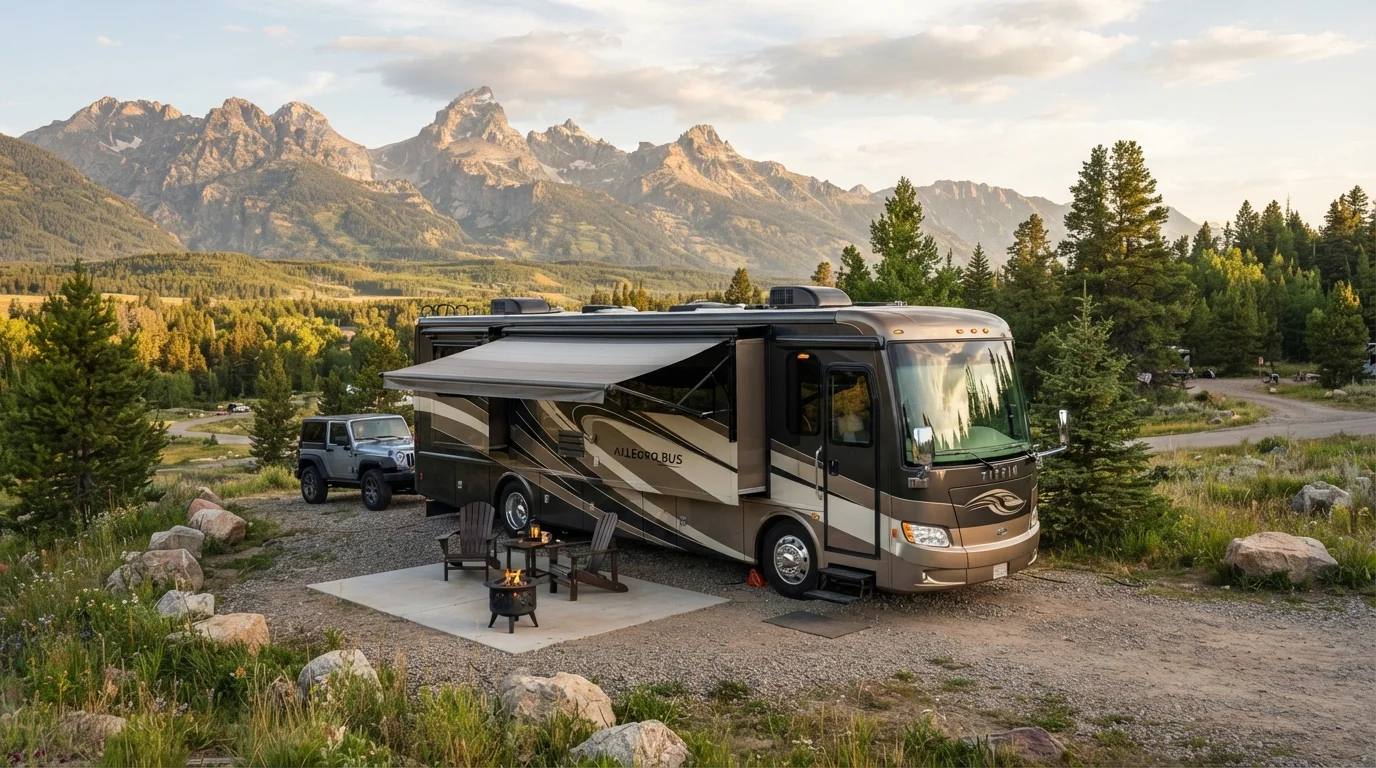
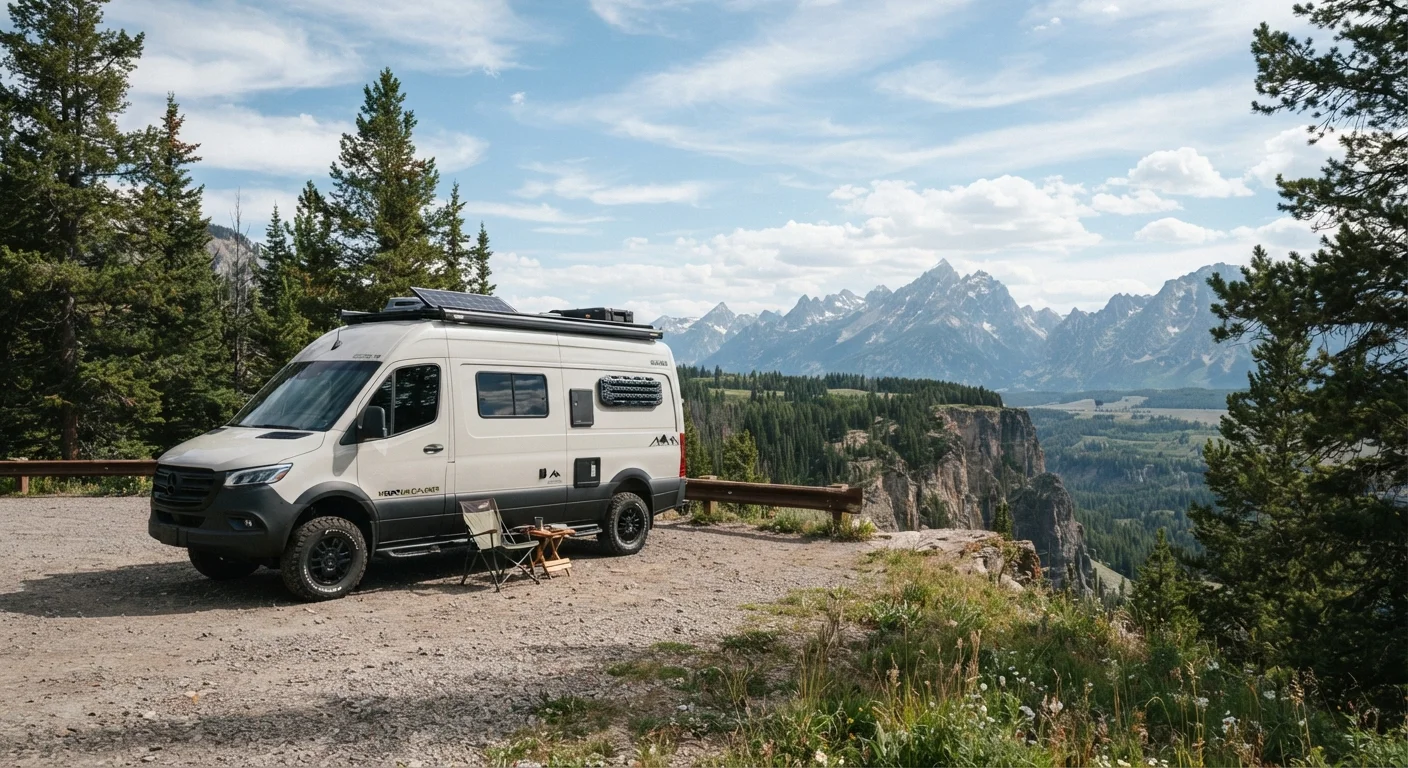
Class A, B, and C motorhomes are self-propelled - they are the vehicle. Tow vehicle matching only applies to the towable RV categories: travel trailers, fifth wheels, pop-ups, and toy haulers. Some motorhome owners tow a secondary vehicle (called a "toad") behind them, which introduces its own weight considerations, but the motorhome itself requires no external tow vehicle.
Pop-Up Campers and Teardrop Trailers: Accessible but Not Weight-Free
Pop-up campers (also called folding camping trailers) typically weigh between 1,500 and 3,500 lbs when loaded. Teardrop trailers generally fall below 3,500 lbs. These are the most accessible towable categories and can be pulled by many crossovers, minivans, and half-ton trucks with a basic Class II or Class III ball hitch.
Even so, owners often underestimate the loaded weight after adding water, gear, and food. A pop-up rated at 2,200 lbs dry can approach its GVWR quickly with full tanks and a full camping kit. Verify both the hitch ball size (typically 1-7/8" or 2") and the tow vehicle's tongue weight rating before assuming any light-duty setup is adequate.
Always Use Loaded Weight, Not Dry Weight
Manufacturer dry weight figures exclude water, fuel, food, clothing, and personal gear. A travel trailer that lists 4,200 lbs dry can easily weigh 5,500-6,000 lbs on an actual trip. Build your tow vehicle comparison around the trailer's GVWR - the maximum it's rated to carry fully loaded - not the marketing sheet's dry weight number.
Conventional Travel Trailers: The Widest Weight Range in Towables
Conventional travel trailers are the most popular towable RV segment and also the most variable. Smaller units start around 3,500 lbs loaded; large luxury models can exceed 12,000-14,000 lbs fully loaded. This single category spans tow vehicle requirements from capable SUVs all the way to one-ton trucks.
For trailers above approximately 6,000 lbs, a weight distribution hitch becomes both a safety necessity and, in many cases, a requirement to maintain the tow vehicle manufacturer's warranty. Sway control - either integrated into the weight distribution system or added as a separate component - is strongly advisable for trailers over 5,000 lbs. For a deeper look at how RV classes compare across real-world usability dimensions, see RV classes compared by space, drivability, and cost.
10-15%
Recommended tongue weight as share of loaded trailer weight
This range is widely cited by hitch manufacturers and RV safety organizations as the target for stable, controlled towing.
18-25%
Pin weight share for fifth-wheel trailers
Fifth wheels transfer a higher proportion of trailer weight onto the tow vehicle's rear axle, increasing payload demands significantly.
~12,000-20,000 lbs
Typical loaded GVWR range for fifth wheels
This range spans most production fifth-wheel models and requires three-quarter-ton or one-ton truck capacity in the majority of cases.
Fifth Wheels: The Most Demanding Towable Class
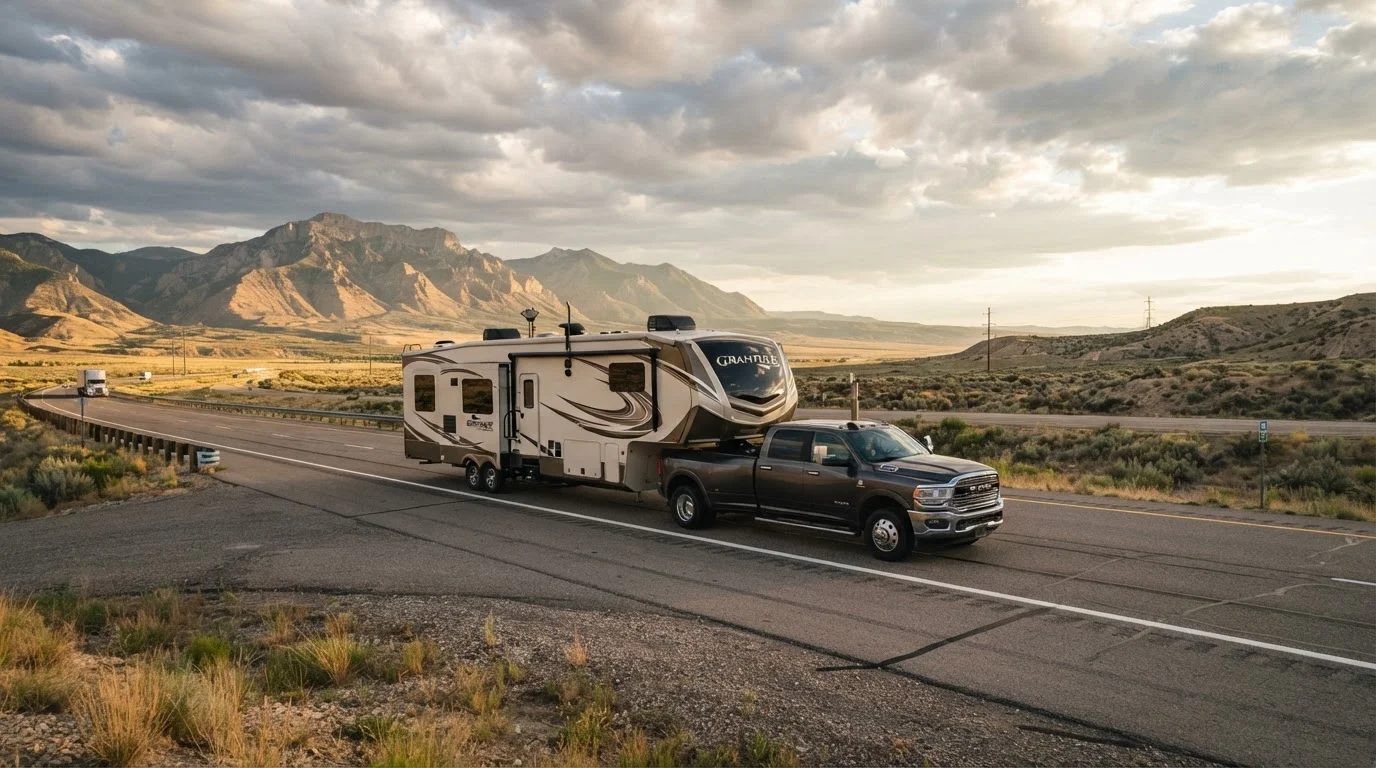
Fifth wheels connect via a kingpin hitch mounted in a pickup truck's bed - there is no alternative attachment point. This design transfers approximately 18-25% of the trailer's weight onto the truck's rear axle as pin weight, rather than the 10-15% tongue weight of a conventional trailer. The result is a more stable tow, but a significantly higher demand on the tow vehicle's payload capacity.
Most fifth wheels have a loaded GVWR between 12,000 and 20,000 lbs. Three-quarter-ton and one-ton trucks are the practical minimum for the majority of units. Critically, the truck's payload rating - how much weight the truck bed and chassis can physically carry - constrains the setup just as much as the tow rating itself. Payload figures can be found on the yellow Tire and Loading Information sticker inside the driver's door jamb, not in general marketing materials.
A full class-by-class RV reference can help you locate the specific specs for any fifth-wheel sub-type you're evaluating.
Toy Haulers: Weight Compounds Quickly
Toy haulers exist in both travel trailer and fifth-wheel configurations. Their defining feature - a rear garage for motorcycles, ATVs, or bikes - adds significant structural weight before any recreational gear is loaded. Understanding how toy haulers work as a hybrid RV class is important because buyers frequently underestimate how much a loaded garage section adds to the actual GVWR.
A toy hauler fifth wheel with two ATVs aboard can easily approach or exceed 20,000 lbs. That requires a one-ton diesel truck - often with an aftermarket hitch upgrade - and demands careful attention to payload limits. The recreational equipment itself has weight, and it must be factored into the loaded trailer calculation, not treated as an afterthought.
Choosing a Tow Vehicle: What to Verify Before You Commit
The tow vehicle decision should be made with four numbers in hand: the RV's GVWR, the vehicle's tow rating, the vehicle's payload capacity, and the expected tongue or pin weight. These must be matched against each other simultaneously - not independently. A truck rated to tow 18,000 lbs may have a payload capacity that limits it to a 15,000 lb fifth wheel in practice once occupants and gear are accounted for.
Pickup trucks - particularly three-quarter-ton and one-ton configurations - remain the most versatile tow vehicles for towable RVs across all classes. For guidance on truck capabilities relevant to RV towing, the trucks overview covers the major configurations in detail. For readers still deciding whether a towable RV fits their lifestyle versus a self-propelled motorhome, see motorhome vs. towable RV ownership models.
“The single most common field complaint we see is buyers who matched tow ratings on paper but ignored payload capacity entirely. Payload is where the math actually breaks down - and where the safety risk actually lives.”
— Technical Staff, RV Industry Association, Published guidance from the RV Industry Association's towing safety resources