Why the Sticker Number Is a Starting Point, Not a Final Answer
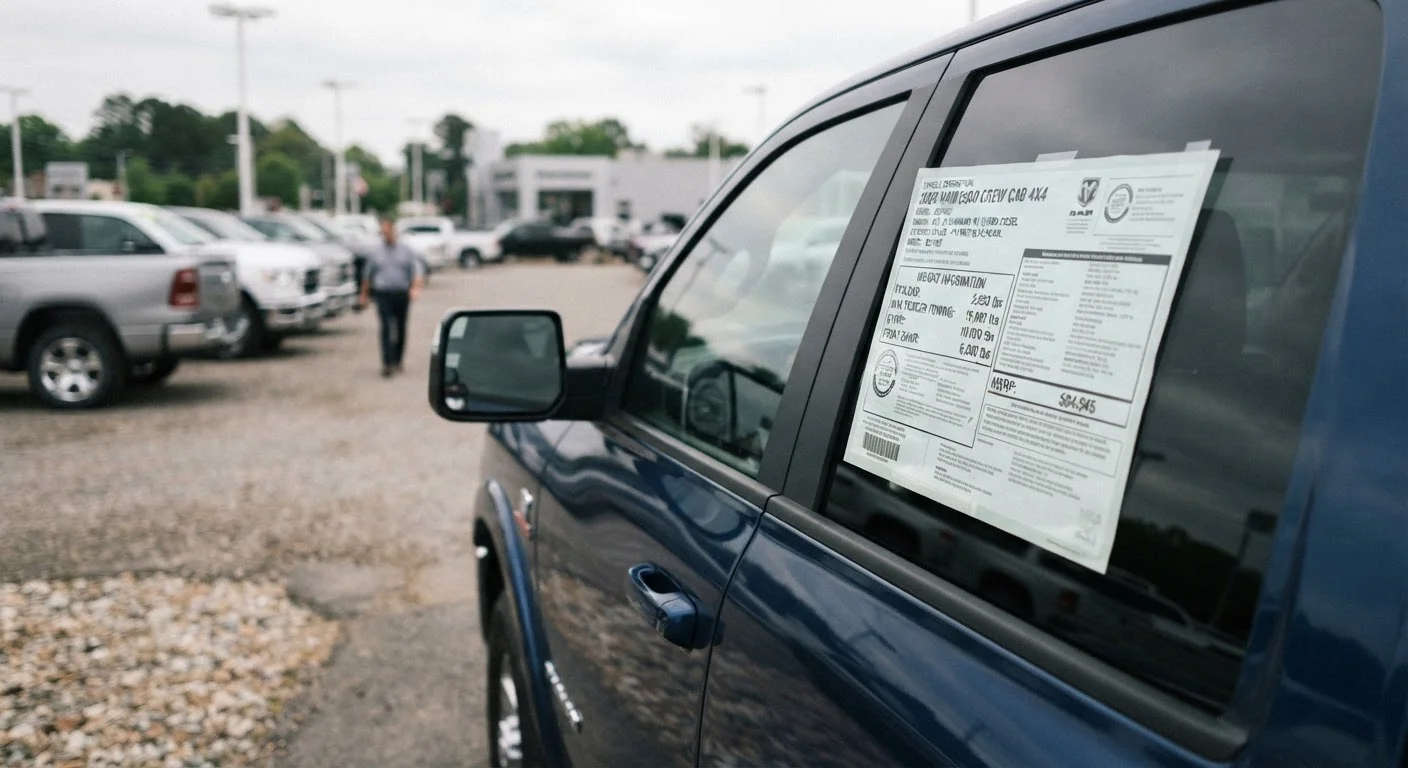
Walk through any truck lot and you'll spot bold figures on window stickers: "Max Towing: 13,000 lbs" or "Max Payload: 2,000 lbs." These numbers are real - but they represent the theoretical ceiling for the best-equipped version of that model, not the specific truck sitting in front of you. Manufacturers test tow ratings using a single-cab, two-wheel-drive, minimum-options configuration with a purpose-built trailer. The crew-cab, 4x4, fully loaded version you're actually buying is a different vehicle in terms of capability.
As we explain in our in-depth breakdown of payload vs. towing capacity, these two figures measure fundamentally different things - and both are trimmed by the real-world choices you make when speccing a truck. Understanding the gap between the sticker and reality is the first step toward choosing a truck that genuinely fits your needs.
Myth
The maximum towing figure on the window sticker applies to the truck I'm buying.
Fact
That figure applies to the highest-rated configuration of that model - usually a stripped-down, lower-cab variant - not necessarily the specific truck on the lot.
Manufacturers advertise the peak number achievable within a model family. A crew-cab, 4x4 version of the same truck can have a tow rating 2,000-4,000 lbs lower than the headline figure. Always request the capability sheet for the exact configuration you're purchasing, or check the door-jamb placard for the GVWR specific to that VIN.
Myth
As long as I don't exceed the listed payload, I'm loading the truck safely.
Fact
Payload is reduced by every option, passenger, and accessory added after the base curb weight - the sticker's maximum doesn't account for your specific build.
The advertised payload figure is calculated from a base curb weight. Every factory option and accessory adds weight that reduces usable payload. To find your actual available payload, subtract the truck's as-delivered curb weight (on the door placard) from its GVWR. This is the only number that applies to your specific vehicle.
Myth
A higher tow rating always means a more capable truck for everyday hauling.
Fact
Towing capacity and payload are separate figures - a truck with an impressive tow rating can still have a relatively modest payload, limiting how much you can carry in the bed while towing.
These two ratings measure different structural and mechanical limits. A truck optimized for high tow ratings (typically through a strong frame and powertrain) may use heavier components that reduce payload. Buyers focused on bed hauling - materials, equipment, livestock - should weigh payload as carefully as tow rating, not assume one implies the other.
Myth
All trucks of the same trim level have identical capability ratings.
Fact
Cab style, bed length, drivetrain, and axle ratio each affect a truck's specific tow and payload ratings, even within the same trim.
A regular-cab, long-bed, rear-wheel-drive truck in a given trim can have meaningfully higher ratings than a crew-cab, short-bed, four-wheel-drive version of the same trim. The heavier the cab and the more complex the drivetrain, the more of the GVWR is consumed by the truck itself - leaving less margin for cargo and passengers. The same pattern applies to SUV tow ratings, as covered in our analysis of SUV towing label limitations.
The Variables That Quietly Reduce Your Real-World Capacity
Several factors erode advertised numbers before you've hooked up a trailer or loaded the bed:
- Options and accessories: Every pound of added equipment - a bed liner, toolbox, running boards, or roof-mounted lighting - counts against payload. A crew cab with a sunroof, premium audio, and a full-size spare can arrive at the dealership already 400-600 lbs into its payload budget.
- Passengers and cargo: The SAE J2807 towing standard accounts for a 150-lb driver. Add three more adults, a dog, and a week's worth of gear, and you've consumed hundreds of additional pounds of payload before the trailer tongue even touches the hitch ball.
- Hitch and brake controller specs: Max tow ratings assume a weight-distributing hitch, trailer brakes, and a properly rated receiver. If your truck's sticker lists a Class III hitch but you need a Class V for your load, the rated capacity may not apply.
10-15%
Tongue weight as share of max tow rating
Industry guidelines and SAE J2807 standards generally place tongue weight limits at 10-15% of a trailer's gross weight, a figure not prominently displayed on window stickers.
400-800 lbs
Typical payload lost to options on a crew-cab truck
Automotive analysts and truck-focused publications commonly estimate that a fully optioned crew-cab configuration can arrive several hundred pounds heavier than the base configuration used for maximum payload certification.
For those using a truck for recreational hauling, matching capability to real-world adventure use involves more than picking the highest number on the sticker.
What to Check That the Sticker Omits
The Monroney label doesn't include the truck's Tire and Loading Information placard (found on the driver's door jamb), which lists the actual Gross Vehicle Weight Rating (GVWR) and maximum combined weight for that specific VIN. Subtract the truck's curb weight from the GVWR, and you have the true payload for that truck - often significantly lower than the advertised maximum.
Similarly, the sticker won't tell you the truck's tongue weight limit (typically 10-15% of max tow rating), whether the transmission cooler is adequate for sustained mountain grades, or whether the factory cooling package was included. These factors critically affect whether a truck can handle a load safely over distance, not just on flat ground. The mechanical and legal consequences of overloading are serious enough that understanding your real limits matters before every haul.
Door-Jamb Placard Overrides the Sticker
The Tire and Loading Information placard on the driver's door jamb provides the GVWR and maximum load ratings for your specific truck - not the model family average. This is the number that matters legally and mechanically. Relying solely on the advertised maximum payload without checking the placard can lead to unknowing overload conditions that stress brakes, tires, and suspension components.
It's also worth noting that cargo vans operate under a similar set of hidden constraints - payload certification and wheelbase choices are equally underweighted by buyers who focus only on advertised figures.
This article is for informational purposes only. Always consult your vehicle's owner's manual and the door-jamb placard for the specific ratings that apply to your truck's configuration. For loads approaching rated limits, consult a qualified mechanic or trailer safety professional.