What Earns a Car Its Place in History
Not every car that sells in the millions earns a place in history - and not every landmark model was a commercial success when it launched. What separates a truly pivotal vehicle from a popular one is the degree to which it changed the conversation: for engineers rethinking packaging and powertrains, for designers challenging what a body could look like, and for drivers discovering a new relationship with the road.
The models profiled here share a defining quality - each one forced everyone else to respond. Whether by democratizing performance, pioneering safety, introducing mass production to a skeptical public, or crystallizing a cultural moment, these are the cars that bent automotive history's arc. For a deeper look at how design philosophy evolved across generations, see The Decades That Defined Classic Car Design.
Ford Model T (1908-1927): The Car That Built an Industry
Before the Model T, automobiles were artisan objects - expensive, unreliable, and built for the privileged few. Henry Ford's introduction of moving-assembly-line production didn't just make the Model T affordable; it invented the template for modern manufacturing. By standardizing components and streamlining production, Ford drove the price from over $800 at launch to under $300 by the mid-1920s, putting personal mobility within reach of ordinary working families for the first time.
The Model T's cultural significance extended beyond its affordability. It redrew the geography of American life, accelerating suburbanization, transforming rural commerce, and creating an entirely new infrastructure of roads, gas stations, and repair shops. No single model has had a more transformative effect on how societies are organized around transportation.
The Model T didn't just build cars - it built the modern automotive industry from the ground up.
Volkswagen Beetle (1938-2003): Democratic Mobility in a Rounded Shell
The Volkswagen Beetle's origins in 1930s Germany are historically complicated, but its post-war legacy is unambiguous: it became one of the best-selling vehicles in history and a global symbol of affordable, practical transportation. Its air-cooled rear engine, distinctive rounded silhouette, and low purchase price made it a practical choice for millions across Europe, Latin America, and North America.
In the United States, the Beetle became something more - a countercultural icon that challenged Detroit's annual model-change philosophy. Its clever advertising campaigns in the 1960s, emphasizing honesty and simplicity over flashy excess, helped redefine automotive marketing. The Beetle proved that a small, foreign car could not only compete in the American market but reshape it.
The Beetle rewrote what affordable could mean - and changed automotive marketing in the process.
Ford Mustang (1964½): The Blueprint for the Pony Car Class
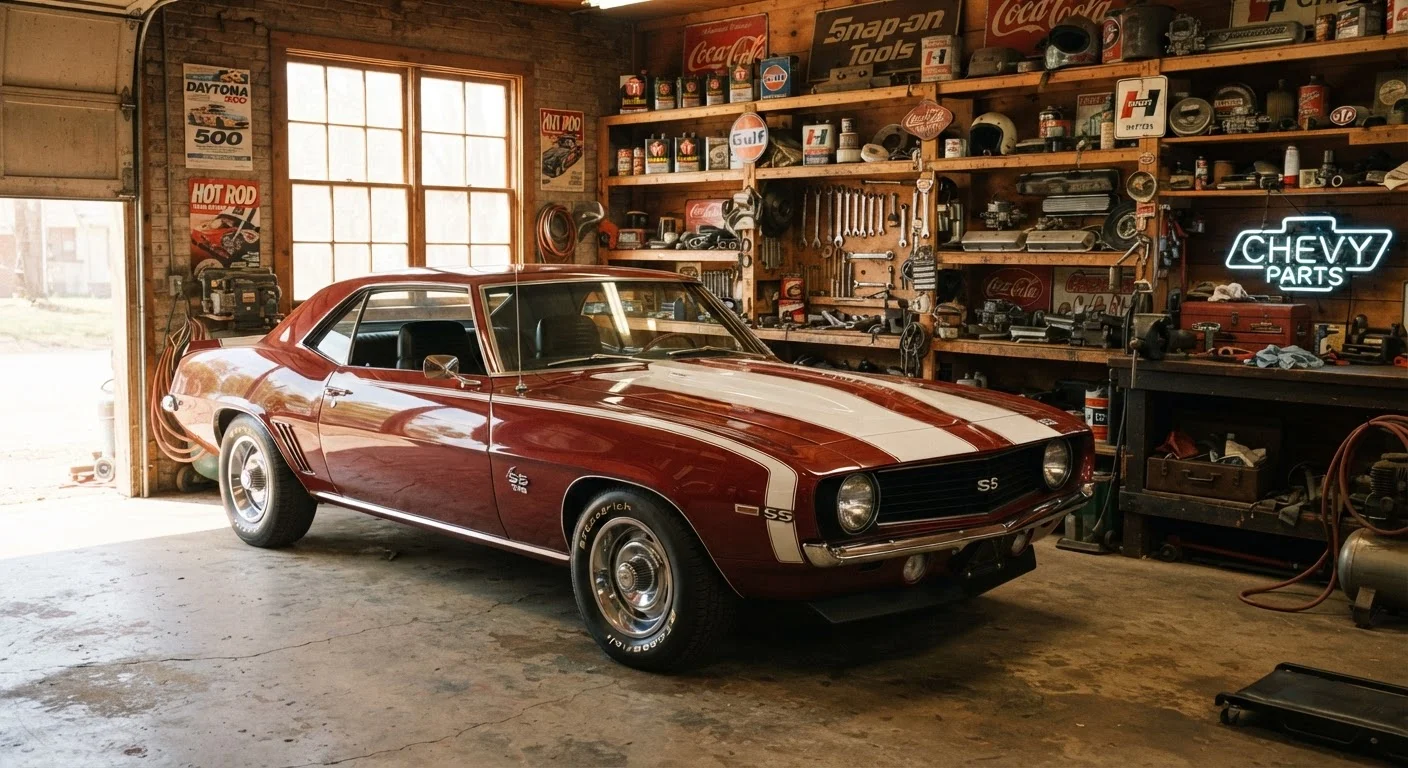
When Ford introduced the Mustang in April 1964, it created an entirely new market segment almost overnight. The pony car - a long-hood, short-deck sports coupe priced for young buyers - had no direct predecessor. Ford sold over 400,000 units in the first year, a figure that stunned the industry and triggered immediate responses from General Motors (the Camaro) and Chrysler (the Barracuda, then the Challenger).
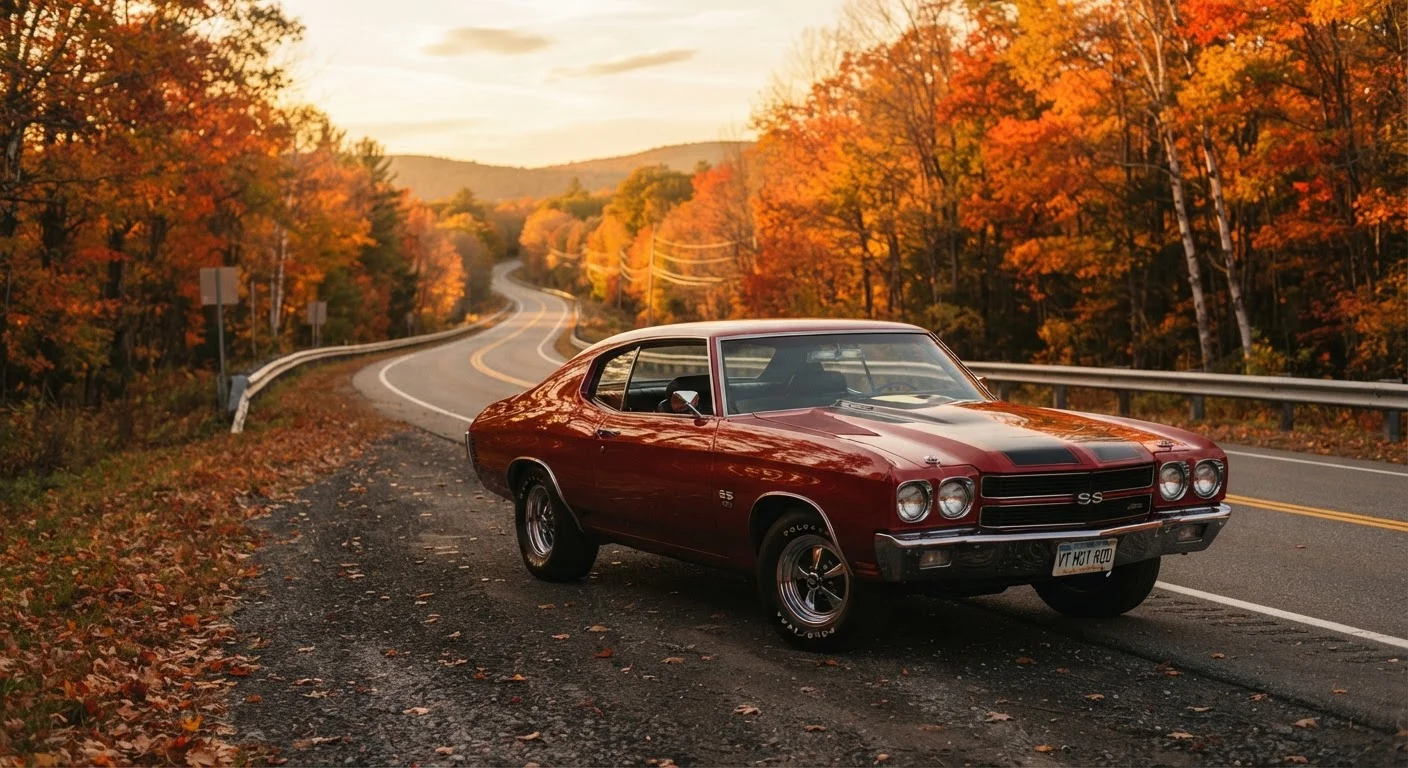
The Mustang's genius lay in its customization architecture. Built on the economical Falcon platform but offered with a wide range of engines, trim levels, and options, it let buyers define their own version of the car. That philosophy - a single nameplate serving wildly different buyers - influenced how manufacturers approached model variants for decades. For more on how the muscle era grew from this moment, see The Rise of the Muscle Car.
The Mustang invented the pony car class and forced every major American manufacturer to respond within two years.
Volvo Amazon / 122S (1956): Advancing the Case for Safety Engineering
While American manufacturers were focused on horsepower and chrome in the late 1950s, Volvo's engineers in Sweden were asking a different question: what if a car were engineered to protect its occupants in a crash? The Volvo Amazon introduced a reinforced passenger compartment, padded dashboard surfaces, and - in a later variant - Nils Bohlin's three-point seatbelt, a design Volvo made available to the entire industry without licensing fees.
That decision may be one of the most consequential acts of generosity in industrial history. The three-point seatbelt is now estimated to have saved over a million lives globally. The Amazon established the Volvo brand's enduring safety identity and, more broadly, demonstrated that passenger protection could be a genuine engineering priority rather than an afterthought.
Volvo's decision to share the three-point seatbelt design freely may be industrially history's most consequential engineering gift.
Mini (1959): Reinventing the Compact Car's Packaging Logic
Alec Issigonis's original Mini was a direct response to the Suez Crisis fuel shortages of 1956-1957, but what it produced was a packaging revolution. By mounting the engine transversely and placing the gearbox in the sump beneath it, Issigonis freed up roughly 80 percent of the car's floorpan for passengers and cargo - a radical inversion of conventional layout thinking at the time.
The front-wheel-drive transverse engine layout that the Mini pioneered is now the dominant architecture for compact and mid-size cars worldwide. From economy hatchbacks to family sedans, the fundamental logic Issigonis worked out in a small British factory defines how most of the world's passenger cars are built today. Its influence on engineering practice is arguably unmatched by any single model of the 20th century.
The Mini's transverse front-wheel-drive layout became the template for virtually every compact car built since.
Porsche 911 (1963-present): Consistency as a Philosophy
In an industry driven by reinvention, the Porsche 911's longevity is genuinely singular. Introduced at the 1963 Frankfurt Motor Show, the air-cooled, rear-engine sports car has remained in continuous production - with ongoing evolution - for over six decades. That consistency reflects a deliberate engineering philosophy: refine relentlessly rather than abandon what works.
The 911's rear-engine handling characteristics demanded disciplined driving, and mastering that dynamic became a point of pride in sports car culture. Its influence on how enthusiasts define driver engagement - the idea that a car should reward skill rather than mask it - shaped the criteria by which performance vehicles are still evaluated. The culture of serious driving that grew around the 911 helped establish a standard for what a sports car should ask of its driver.
Six decades of continuous refinement make the 911 a case study in engineering commitment over commercial reinvention.
Why These Models Continue to Matter
Each of these vehicles represents a moment when the automotive world collectively paused and recalibrated. Their legacies aren't measured purely in production numbers or auction records - they're measured in the design decisions, engineering standards, and cultural attitudes they permanently altered.
Studying Landmark Models Sharpens Your Eye
When evaluating any classic or performance vehicle, understanding which models it drew from - or reacted against - gives you a richer frame for assessing its significance. A car's place in the lineage of ideas is often as meaningful as its specifications. Enthusiasts who study the landmark models tend to make more informed, historically grounded assessments of value and originality.
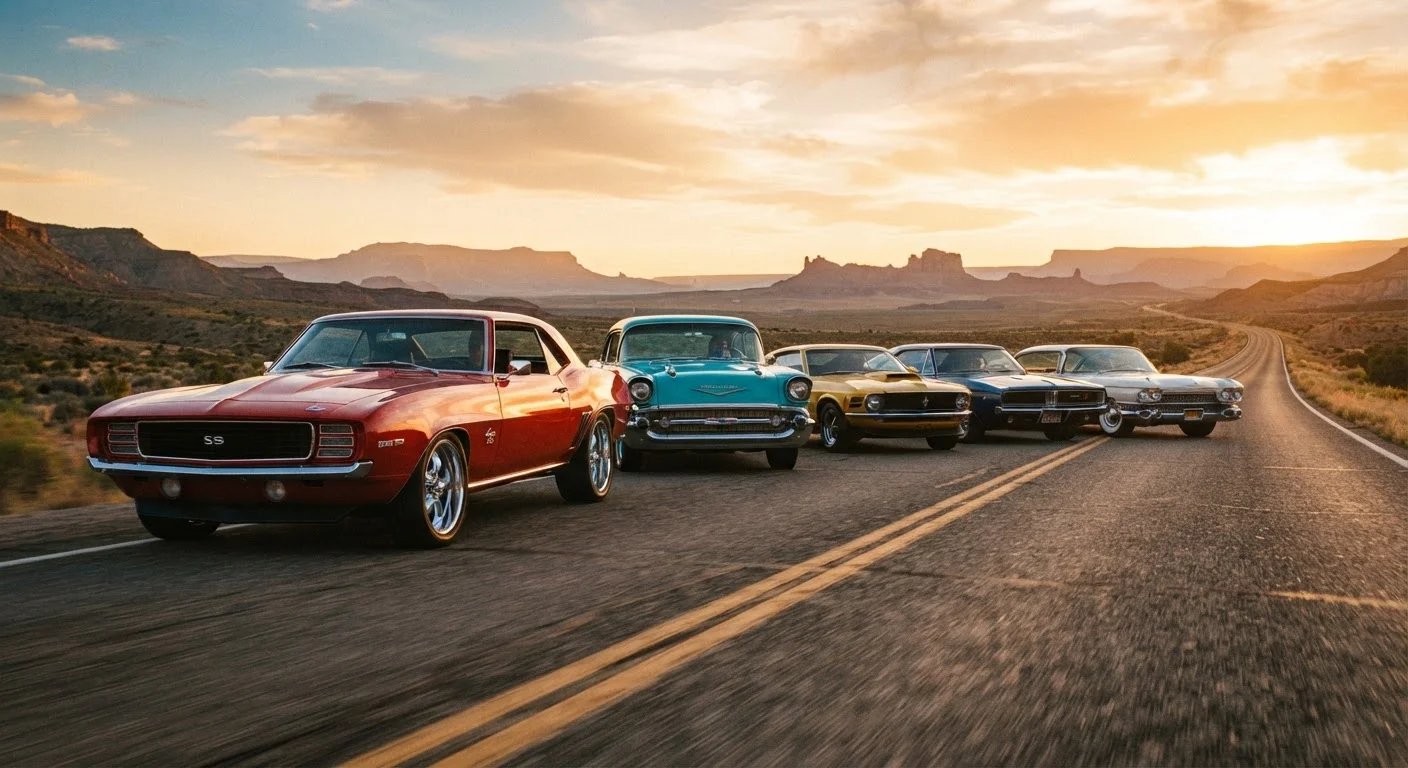
For enthusiasts exploring where American and European philosophies diverged on what a classic should be, European Icons vs. American Muscle traces that fascinating fault line. And if the muscle car era's cultural origins resonate, The Origins of American Muscle offers essential context for understanding how post-war prosperity shaped an icon.