Two Continents, Two Definitions of Performance
The classic car era - broadly spanning the 1950s through the early 1970s - produced some of the most consequential vehicles in automotive history. Yet what defined a performance car in Stuttgart or Maranello differed fundamentally from what rolled off assembly lines in Detroit or Pontiac, Michigan. Understanding that divide is central to understanding why both traditions endure in the enthusiast imagination.
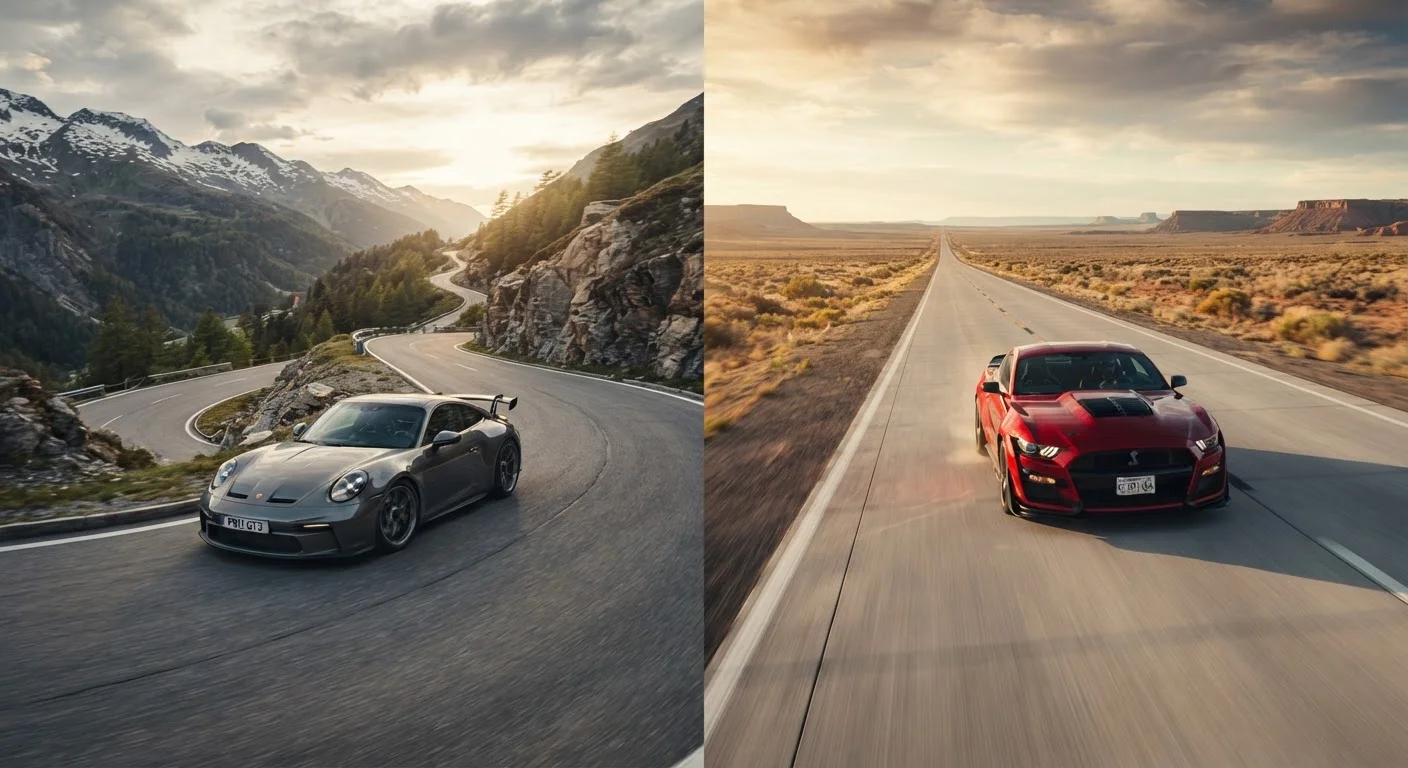
European manufacturers, shaped by narrow roads, high fuel costs, and a deep tradition of motorsport competition, pursued performance through engineering efficiency. Lightweight bodies, independent suspension systems, and rev-happy engines with relatively modest displacement were the tools of the trade. Racing programs weren't marketing exercises - they were laboratories. Technologies developed on circuits fed directly into road cars.
American automakers operated in a different reality entirely. Vast highway infrastructure, cheap fuel, and a booming postwar middle class created demand for cars that felt powerful in the most immediate, sensory way possible. As explored in our piece on the origins of American muscle, postwar prosperity and factory racing programs combined to make the V8 engine the defining symbol of an era. Displacement was the metric that mattered most.
Engineering Philosophy: Finesse vs. Force
The mechanical contrasts between these two schools are stark and instructive. European sports and grand touring cars of the era typically featured independent rear suspension, disc brakes adopted earlier than American counterparts, and engines tuned for sustained high-speed performance rather than peak horsepower figures. Weight was the enemy; balance was the goal.
| Criterion | European Icons | American Muscle |
|---|---|---|
| Engine philosophy | Smaller displacement, high revving | Large V8, high torque |
| Chassis focus | Balance, handling, lightweight | Straight-line acceleration |
| Suspension design | Independent, often all-round | Live rear axle common |
| Brake technology adoption | Early disc brake adoption | Drum brakes common into 1960s |
| Motorsport connection | Direct - race tech to road | Factory drag/NASCAR programs |
| Cultural identity | Sophistication, craft, heritage | Youth, power, democratized speed |
| Price point (original era) | Often premium or luxury tier | Accessible mid-market pricing |
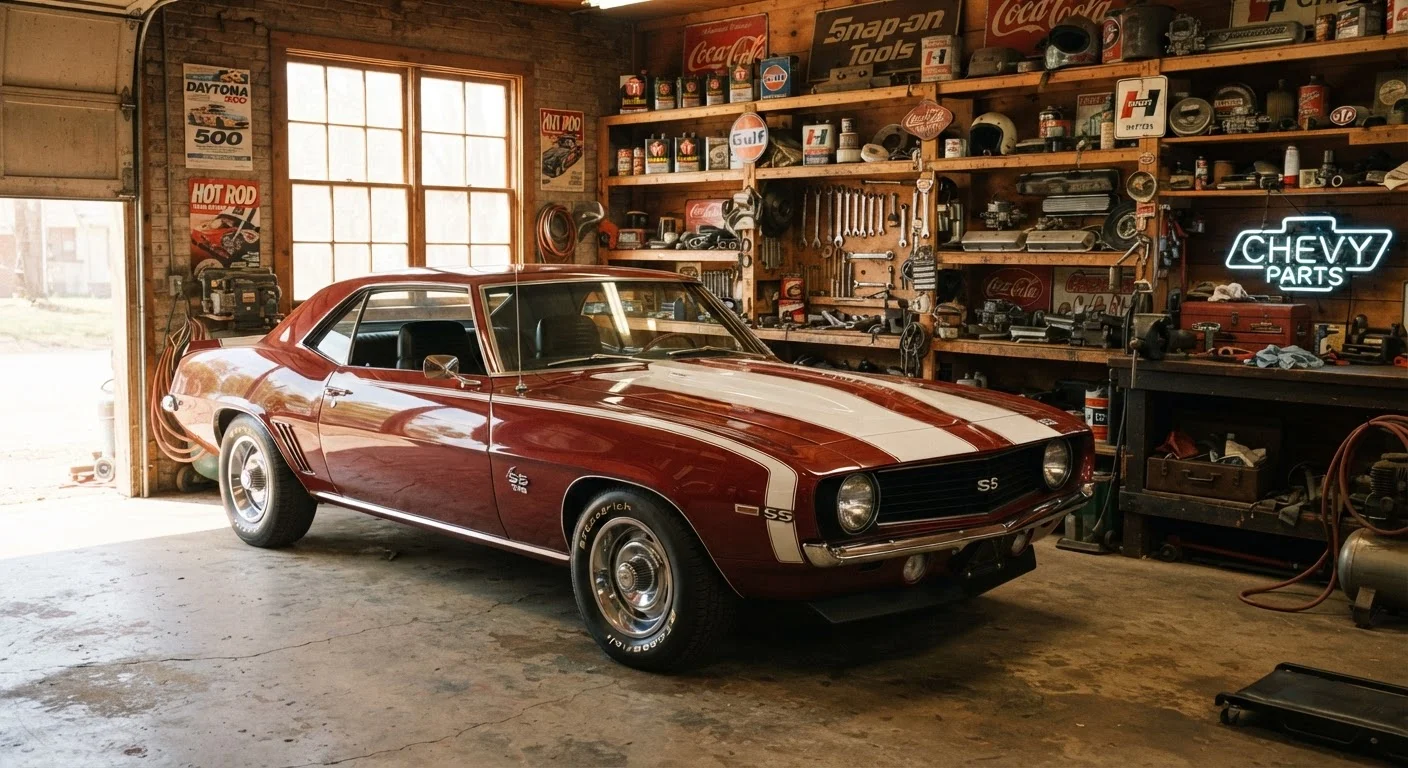
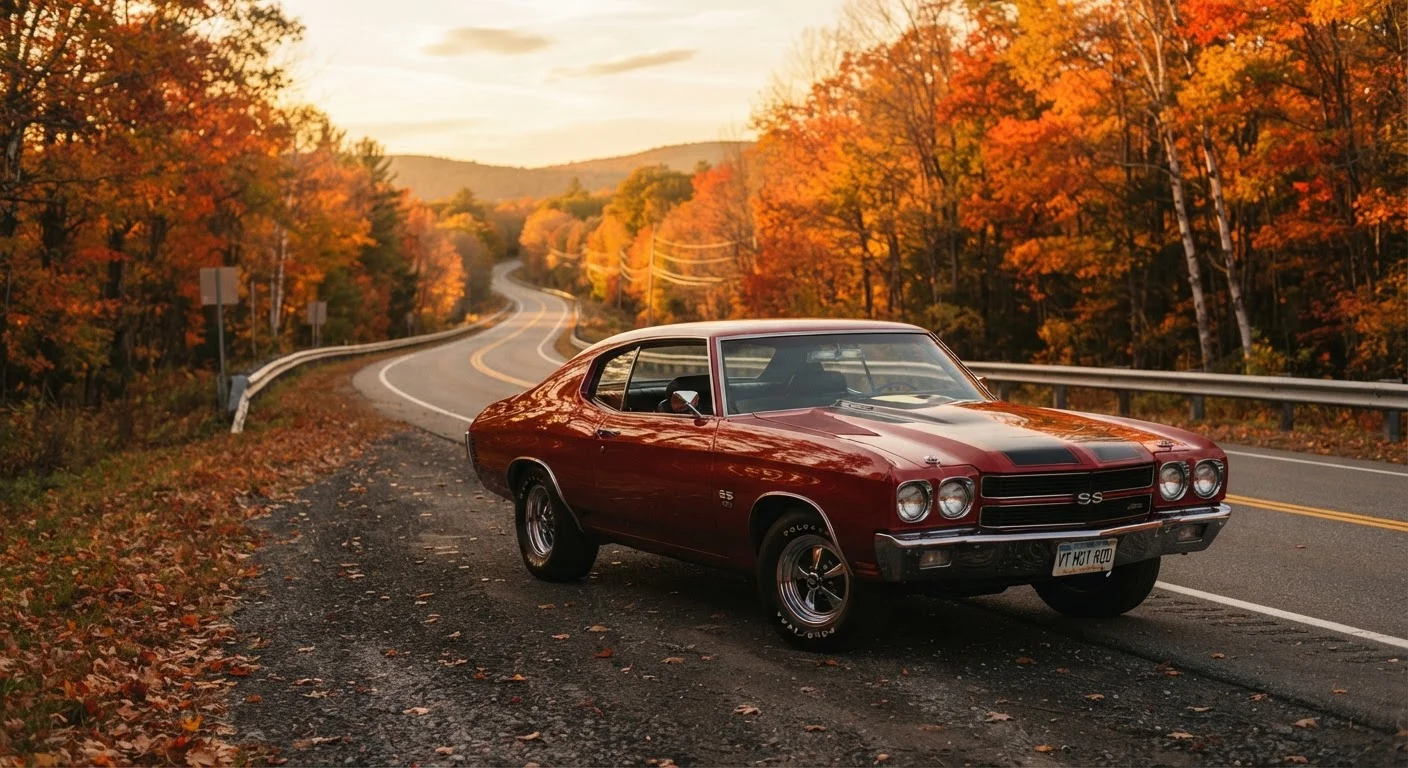
American muscle cars took a different path. The formula - large V8 engine dropped into a mid-size body - prioritized quarter-mile acceleration and immediate throttle response. Suspension tuning was often secondary to power output. These were not track-optimized machines by design; they were expressway cruisers and stoplight warriors, and they were extraordinarily good at both.
It's worth noting that neither approach was without trade-offs. European cars of the era often required more fastidious maintenance and could be costly to repair. American muscle cars, while mechanically simpler, could be punishing in corners. Both philosophies reflected honest compromises shaped by their intended environment. For a fuller picture of how design eras evolved on both sides, see our coverage of the decades that defined classic car design.
Cultural Meaning and Lasting Legacy
A vehicle earns classic status not only through engineering merit but through cultural weight - what it represented to the people who bought it, drove it, and dreamed about it. Here, the two traditions diverge again in illuminating ways.
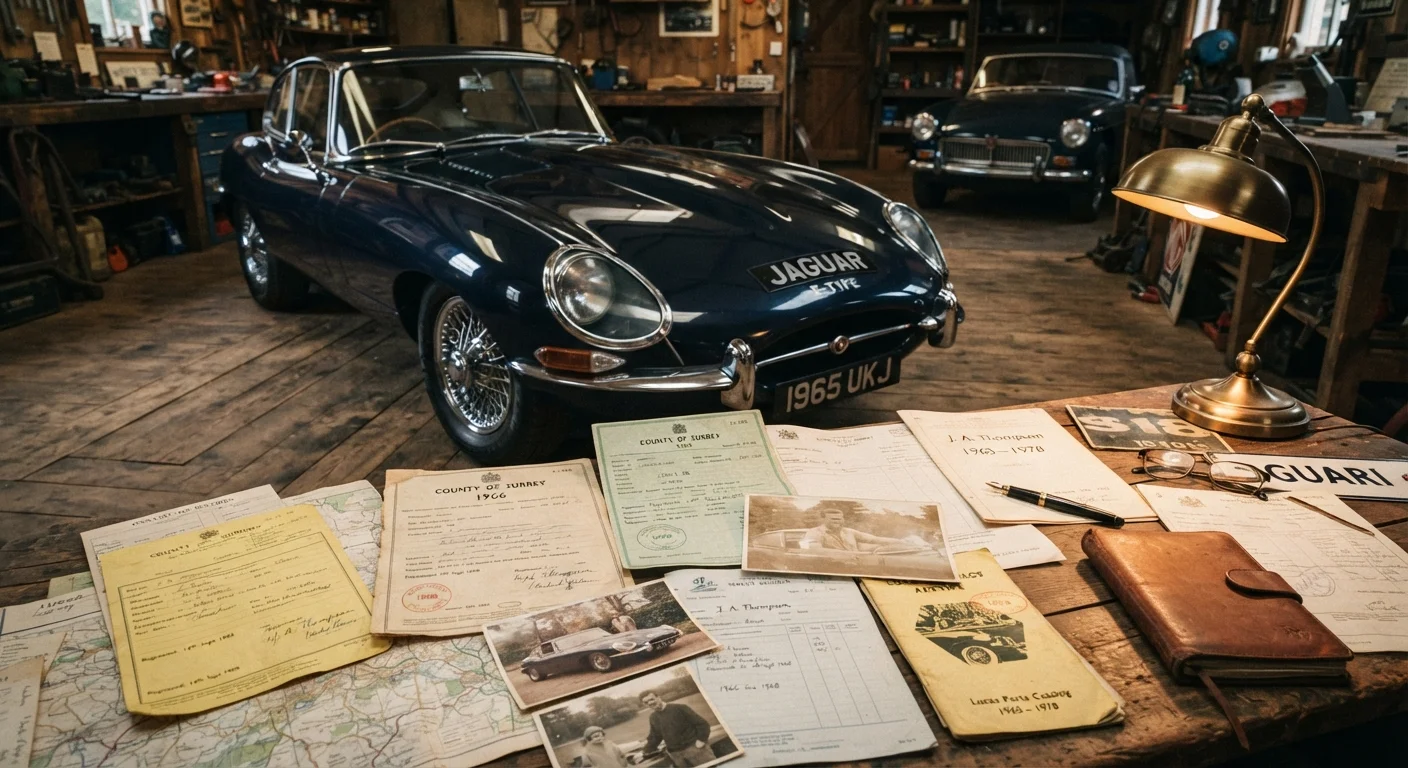
European icons carried a certain aspirational sophistication. Owning or even knowing about a Jaguar E-Type or an Alfa Romeo Giulia Sprint said something about taste, knowledge, and appreciation for craft. These cars were featured at concours events where presentation and originality were judged with connoisseurial precision - a world examined in our comparison of concours d'Élégance vs. car shows.
American muscle belonged to a broader, more democratic mythology. A Pontiac GTO or a Ford Mustang fastback wasn't a connoisseur's object - it was youth culture made metal. It belonged on the street, at the dragstrip, and in the cultural imagination of an entire generation. The rise of the muscle car was inseparable from the social upheavals of the 1960s.
1962
Year the GTO formula was born
Pontiac's 1964 GTO - widely credited as the first true muscle car - emerged from an internal project that began around 1962, pairing a large V8 with a mid-size Tempest body.
3.8 sec
Ferrari 250 GTO 0-60 mph estimate
Period road tests and subsequent analysis placed the 1962 Ferrari 250 GTO's 0-60 mph time at approximately 3.8 seconds, extraordinary for a road-legal car of its era.
4,000+
Estimated surviving E-Types worldwide
Jaguar Heritage and enthusiast registries estimate that several thousand of the approximately 72,000 E-Types produced between 1961 and 1975 remain in identifiable existence globally.
Both traditions have proven remarkably durable. Landmark vehicles from each school continue to set auction records and inspire design language in contemporary performance cars. As our look at landmark models that changed automotive history makes clear, the most enduring classics reshaped how engineers and designers thought about cars - not just how fast they went.
This article is intended for educational and informational purposes only. Performance characteristics, values, and collectibility of specific vehicles can vary significantly based on condition, provenance, and market conditions. Consult qualified specialists for guidance on acquiring or restoring classic vehicles.