Why Provenance Matters in the Classic Car World
Provenance - the documented record of a vehicle's origin, ownership, and history - is one of the most consequential factors in classic car collecting. It shapes how a car is perceived at auction, in a private sale, and within enthusiast communities. Two mechanically identical cars of the same year and specification can command dramatically different levels of interest based solely on how well their histories are documented.
For vehicles with notable histories - factory special orders, motorsport participation, celebrity ownership, or significant racing results - provenance is not merely useful context; it is integral to what the car is. Without documentation, these stories become unverifiable claims. With it, they become part of automotive heritage.
Even for vehicles without a famous backstory, a clear chain of ownership and a record of how the car was maintained, modified, or preserved tells buyers and appraisers something reliable about what they are examining. It is the difference between informed confidence and educated guesswork. If you are new to this world, our complete introduction for new enthusiasts covers the broader landscape of collecting culture and terminology.
What you will need
What to Research and How to Do It
Assembling a provenance file is a structured research process. It combines physical inspection of the car itself with documentary research across official and community sources. The tools and records you need are outlined below.
VIN Decoder Service
Interprets the vehicle's VIN to confirm production details such as model year, plant of manufacture, and factory-installed options.
State DMV Title History Request
Provides an official record of past title transfers and registered owners in the issuing state.
Marque Registry or Club Database
Marque-specific registries often hold factory build records, known chassis histories, and expert contacts for verification.
Manufacturer Heritage Archive
Some automakers maintain historical archives that can provide factory build records or Certificates of Authenticity for qualifying vehicles.
Flatbed Scanner or High-Resolution Camera
Used to create archival-quality digital copies of all physical documents.
Acid-Free Document Storage Sleeves
Protects original paper documents - titles, window stickers, build sheets - from deterioration over time.
Decode and Record the VIN
The VIN is the car's fingerprint. Locate it on the dashboard (visible through the windshield), the driver-side door jamb, and - on many vehicles - stamped on the firewall or engine block. Record all VIN locations and confirm they match. Discrepancies between stampings are a serious red flag.
Use a marque-specific VIN decoder or a reputable general decoding service to extract the factory-encoded details: model year, assembly plant, body style, engine code, and production sequence. Document every decoded field for your records file.
Gather All Existing Ownership Documents
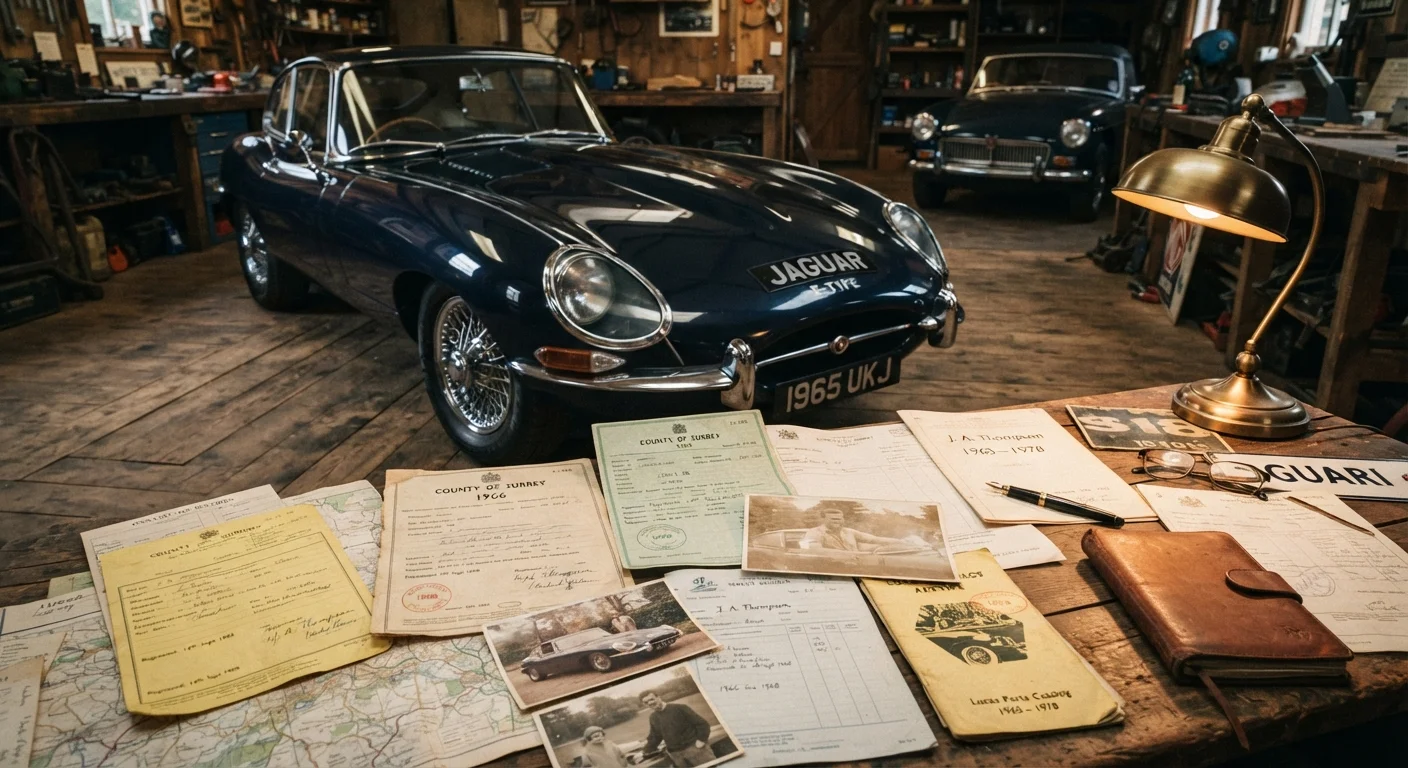
Collect every paper document associated with the vehicle: titles, bills of sale, registration certificates, insurance cards, old license plates, and any receipts for work performed. Ask the current owner - and, if possible, reach out to previous owners - for anything they may have retained.
Organize documents chronologically and note any gaps. A continuous chain of title from the original sale is ideal but rarely complete on older vehicles.
Request Official Title and Registration History
Contact the DMV (Department of Motor Vehicles) in each state where the vehicle was registered. Most states allow title history requests; fees and turnaround times vary. This official record provides an independent account of ownership transfers and can confirm - or contradict - what the seller has presented.
If the car has moved between many states, prioritize the state of original sale and the most recent registration state, then fill in gaps where records are accessible.
Locate Factory Build and Options Documentation
Factory documentation is among the most compelling provenance evidence. Seek out any of the following that may exist for the vehicle:
- Build sheet (broadcast sheet): A production document listing all factory-installed options, often found tucked under seats or inside door panels during restoration.
- Window sticker (Monroney label): Original MSRP sticker listing factory equipment; highly prized when present.
- Manufacturer Certificate of Authenticity (COA): Some automakers' heritage programs issue these for qualifying vehicles based on production records.
Cross-reference any option codes or data on these documents against what the VIN decoder reveals and what is physically present on the car.
Consult Marque Registries and Specialist Clubs
Marque registries and model-specific clubs are invaluable resources. Many maintain databases of known chassis numbers, documented race histories, and ownership genealogies. Submitting a vehicle for registry documentation - where programs exist - provides third-party validation that strengthens provenance considerably.
Clubs can also connect you with long-time members who may have historical knowledge of a specific car, particularly for rare or competition-history vehicles.
Organize, Preserve, and Store All Records
Compile all gathered documents - originals, copies, correspondence with archives and clubs, photographs of VIN stampings, and decoded data - into a single, organized provenance file. Use acid-free sleeves for original paper documents and store them away from humidity and direct light.
Create high-resolution digital scans of everything and maintain backups in at least two locations. A well-organized provenance file travels with the car through future ownership and compounds in value over time. For ongoing maintenance documentation, the same discipline applies - see the importance of a proper maintenance log for guidance on sustaining the record beyond initial research.
Verify Before You Trust Any Document
Fraudulent documentation exists in the classic car market. Title washing, altered VINs, and forged build sheets have all been used to misrepresent a vehicle's history. Always cross-reference documents against independent sources - such as manufacturer records or marque registry databases - before accepting provenance claims at face value. When significant money is involved, consider engaging an independent appraiser or marque specialist.
Gaps in Ownership History Are Common
It is normal for decades-old vehicles to have missing records. A gap in the paper trail does not automatically disqualify a car, but it does require extra due diligence. Be cautious of sellers who claim completeness without supporting documentation to back it up.
Digitize Every Document You Gather
Scan or photograph all physical records and store copies in at least two separate locations - such as a cloud service and an external hard drive. Paper documents degrade over time, and a digital backup ensures the history survives even if the originals are lost or damaged. See our maintenance log guide for a practical framework to track ongoing records.
Once you have assembled a working provenance file, it is worth pairing that documentary record with a thorough physical inspection of the vehicle. Our guide to inspecting a classic car before you commit provides a detailed mechanical and structural checklist to use alongside your document review. Questions of originality - what has been changed, restored, or replaced - are closely tied to provenance, and the originality vs. restoration debate at the heart of classic car culture is well worth understanding as you evaluate what the records reveal.