Why the Labels Matter
Walk into any car show or browse any enthusiast forum and you'll hear the terms pony car, muscle car, and supercar used almost interchangeably. They're not. Each label carries a specific meaning rooted in engineering philosophy, price point, era, and purpose - and conflating them flattens the rich traditions behind each category. Whether you're deepening your appreciation for car culture or trying to settle a debate in the paddock, a precise vocabulary matters.
Classification systems for classic cars reveal how automotive categories are rarely arbitrary - they reflect the market conditions, technology, and cultural values of their time. The same logic applies here.
| Pony Car Originator | Ford Mustang (1964½) |
| Muscle Car Era | Approximately 1964-1972 |
| Muscle Car Engine Benchmark | 400+ cubic inches (6.5L+) displacement |
| Supercar Typical 0-60 mph | Under 3 seconds |
| Key Pony Car Platforms | Ford Mustang, Chevrolet Camaro, Pontiac Firebird |
| Key Muscle Car Models | Pontiac GTO, Chevelle SS, Plymouth Road Runner, Dodge Charger |
Pony Cars: Sporty Style, Practical Roots
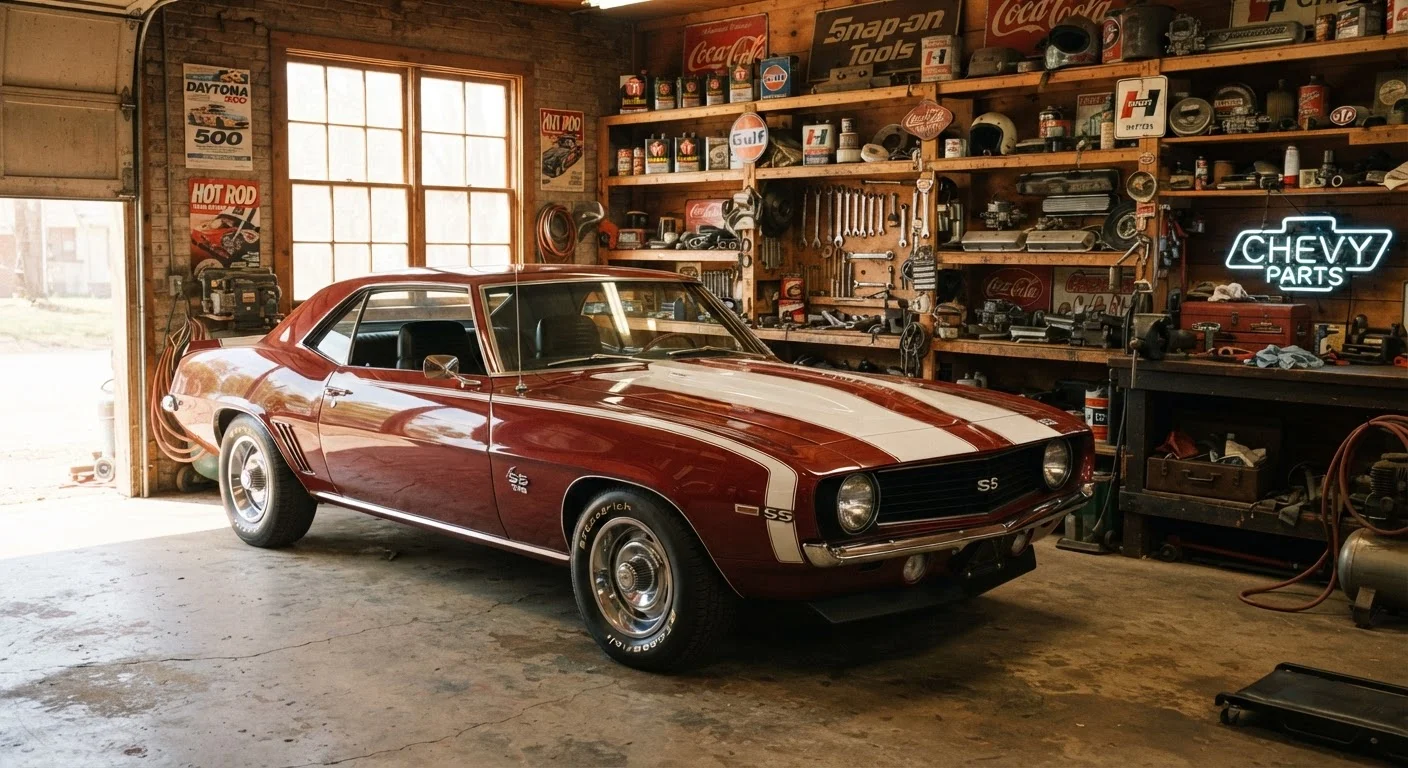
The term pony car traces directly to the Ford Mustang's 1964½ debut - a vehicle that defined an entirely new segment. Pony cars share a recognizable formula: a long hood, short rear deck, compact-to-midsize footprint, and a price accessible to younger buyers. They were built on economy-car or intermediate platforms, which kept manufacturing costs down while delivering style that felt aspirational.
Critically, pony cars were never exclusively performance machines. Buyers could order them with a base inline-six and enjoy a sporty commuter, or optionally spec a big-block V8 for serious performance. That optionality is core to the concept. The Chevrolet Camaro and Pontiac Firebird followed the Mustang's blueprint closely, confirming the segment's commercial viability throughout the late 1960s and 1970s.
The cultural rise of American performance cars is inseparable from the pony car's populist appeal - these were vehicles that brought performance within reach of everyday American buyers.
Pony Car
A compact-to-midsize American automobile characterized by a long hood, short rear deck, affordable price, and a wide range of available engine options. The Ford Mustang established the segment in 1964.
Muscle Car
An American mid-size performance vehicle built around a large-displacement V8 engine, prioritizing straight-line acceleration at a mass-market price point. The genre peaked between roughly 1964 and 1972.
Supercar
A high-performance, low-volume vehicle engineered to deliver exceptional speed, handling, and braking, typically at a price point far above the mainstream market. Advanced materials and powertrains are defining features.
Displacement
The total volume swept by all pistons inside an engine's cylinders, expressed in liters or cubic inches. Higher displacement generally produces more torque, which muscle car builders used to maximize acceleration.
Homologation
The process of certifying a vehicle for a particular class of competition, sometimes requiring manufacturers to produce a minimum number of road-legal units. Relevant to understanding why some supercars exist in limited numbers.
Muscle Cars: Displacement as a Philosophy
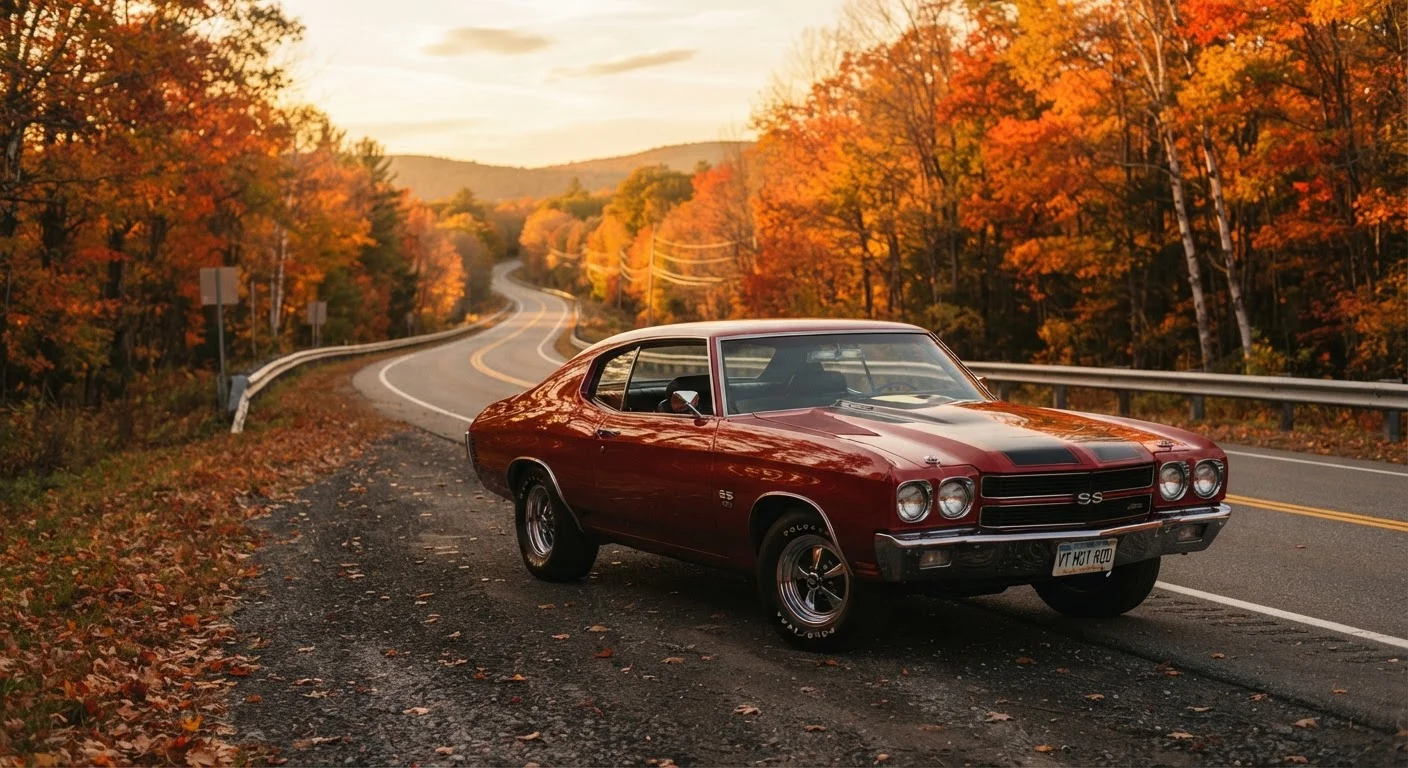
A muscle car takes a different approach entirely. The defining characteristic is a large-displacement V8 engine - typically 400 cubic inches or more - installed in a mid-size body to maximize the power-to-weight ratio at a relatively affordable price. The 1964 Pontiac GTO is widely credited as the car that established the template, followed by the Chevelle SS, Plymouth Road Runner, Dodge Charger, and Buick GSX, among others.
Where pony cars offered engine choices across a wide spectrum, muscle cars were built around the big engine as a starting premise. Handling, luxury, and fuel economy were secondary concerns. The goal was straight-line acceleration - quarter-mile performance that could be purchased for the price of a family sedan.
The muscle car era had a defined peak: roughly 1964 to 1972, when tightening emissions regulations, rising insurance costs, and the 1973 oil crisis dramatically curtailed engine displacement across the industry. European and American performance philosophies of the classic era diverged sharply on this point - European manufacturers pursued smaller, more rev-happy engines while Detroit maximized cubic inches.
Supercars: Engineering at the Limit
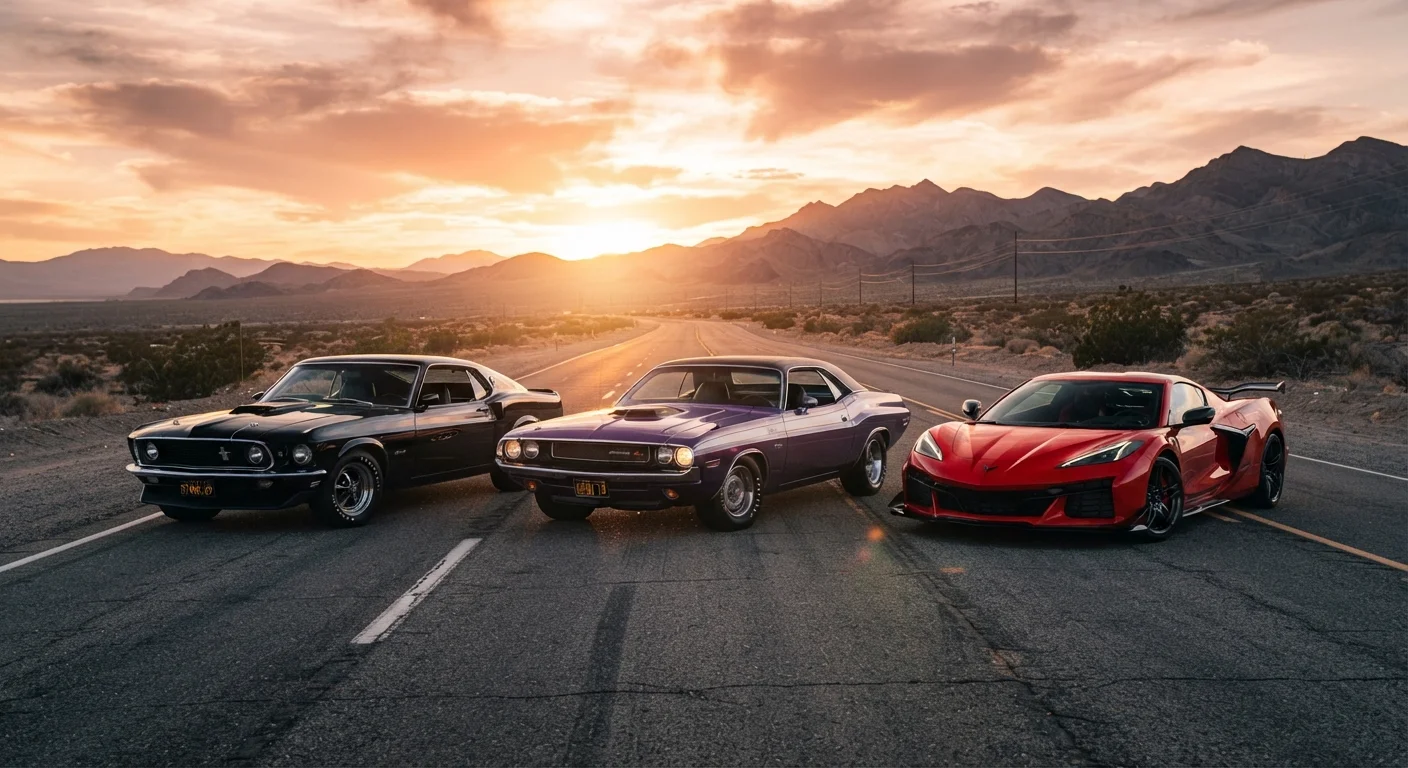
The supercar category operates on an entirely different plane. These are purpose-engineered performance vehicles where cost is subordinated to capability. Supercars typically combine exotic powertrains - high-revving naturally aspirated engines, forced induction, or hybrid systems - with aerodynamically sophisticated bodywork, advanced suspension geometry, and lightweight construction materials such as carbon fiber and aluminum alloys.
Pricing reflects that engineering intensity. Supercars are not mass-market vehicles; they are produced in limited volumes and priced well beyond what the average buyer can access. Performance benchmarks are exceptional: 0-60 mph times under three seconds and top speeds well above 180 mph are expected territory.
The supercar category also tends to be internationally defined rather than regionally specific - Italian, British, German, and Japanese manufacturers have all produced canonical examples, though American constructors have contributed significantly as well. The full spectrum of performance vehicle categories places supercars within a broader hierarchy that extends through hypercars to outright track-only machines.
For readers wanting to go deeper on the technical language that describes these vehicles, the performance vehicle terminology glossary is an essential reference.
1964½
Year the pony car segment was born
The Ford Mustang's mid-year 1964 launch established the pony car formula that competitors would spend years trying to replicate.
~8 years
Duration of the classic muscle car era
The golden age of American muscle is generally recognized as spanning from approximately 1964 to 1972, curtailed by emissions regulations and rising insurance costs.
180+ mph
Typical supercar top speed threshold
While exact figures vary by model, sustained top speeds above 180 mph are a widely recognized benchmark that separates supercars from conventional performance cars.