More Than a Build - A Statement of Values
Ask a roomful of classic car enthusiasts whether they'd rather build a resto-mod or a full restoration, and you'll learn something immediately: these aren't just technical preferences. They're expressions of what people believe a classic car is for.
The resto-mod camp holds that the essence of a classic lives in its body lines, its proportions, its cultural DNA - and that swapping in a modern fuel-injected engine or four-wheel disc brakes doesn't betray the car; it liberates it. The full-restoration camp counters that a car stripped of its original running gear and components has lost something irreplaceable - the texture of a specific era in engineering and manufacturing history.
As we explore in the broader debate around originality and restoration, these tensions run deep in classic car culture and rarely resolve neatly. Understanding where each approach comes from helps you find your own footing.
| Criterion | Resto-Mod | Full Restoration |
|---|---|---|
| Primary goal | Modern drivability in classic body | Factory-correct authenticity |
| Powertrain | Modern engine, often crate or LS swap | Original or rebuilt numbers-matching engine |
| Brakes & suspension | Contemporary disc, rack-and-pinion upgrades | Period-correct rebuilt components |
| Show eligibility | Resto-mod and SEMA-style events | Concours d'Elegance and judged originality classes |
| Daily usability | High - engineered for modern conditions | Low to moderate - period mechanicals have limits |
| Research demands | Moderate - focused on fitment and fabrication | Extensive - factory codes, dates, documentation |
| Collector market appeal | Strong in specialty market; variable overall | Broadly strong, especially with documentation |
| Creative latitude | High - builder's vision guides choices | Low - factory specs are the benchmark |
What Each Approach Actually Involves
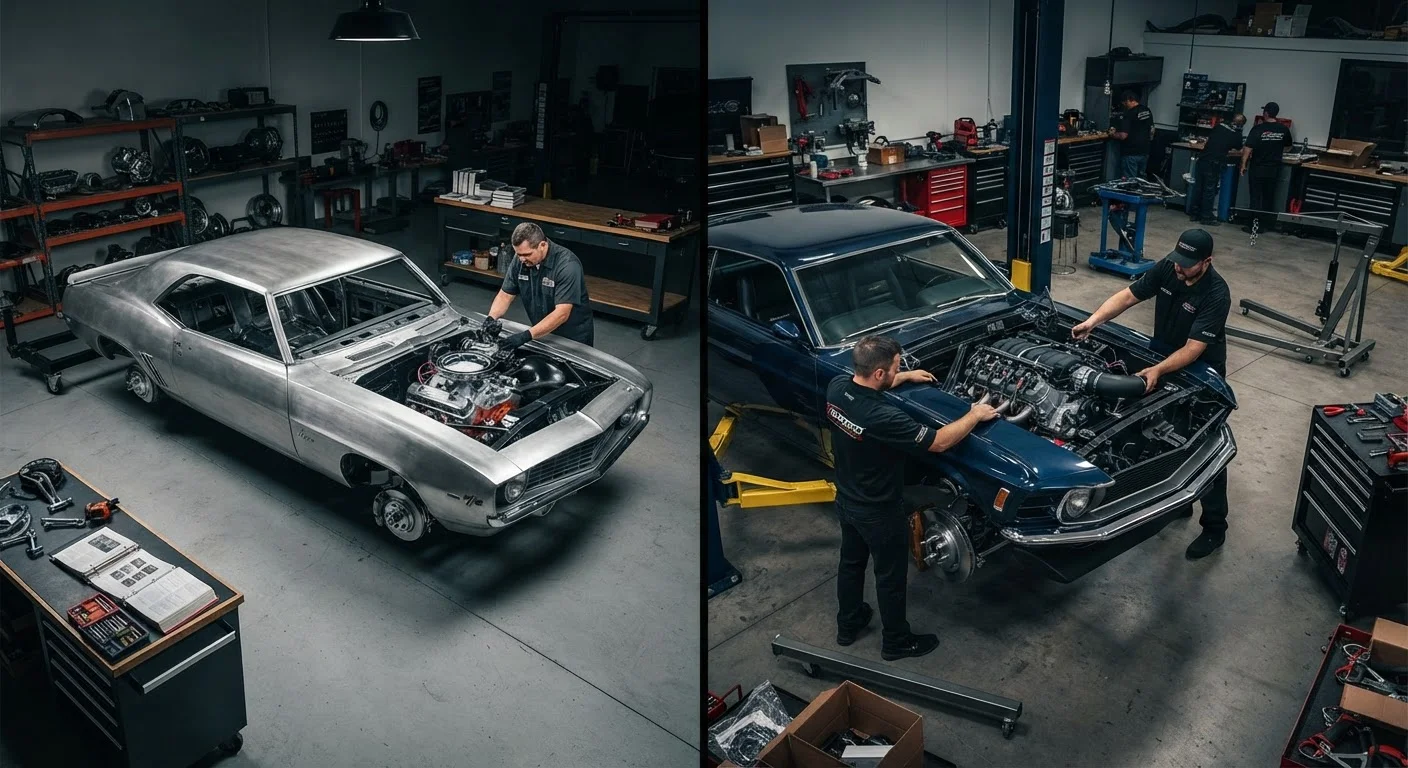
Resto-mod is a portmanteau of "restoration" and "modification." In practice, it means retaining - and often fully restoring - a vehicle's exterior and sometimes its interior to a high cosmetic standard, while replacing period mechanicals with modern equivalents. Common substitutions include late-model LS-series V8 engines, rack-and-pinion steering, four-wheel disc brake conversions, independent rear suspensions, and modern climate control systems hidden behind vintage-looking dashboards.
The craftsmanship ceiling is exceptionally high. Elite builders integrate modern technology so seamlessly that a casual observer sees only the classic body. The engineering challenge is substantial, and costs reflect that - custom fabrication, bespoke wiring harnesses, and specialty parts accumulate quickly.
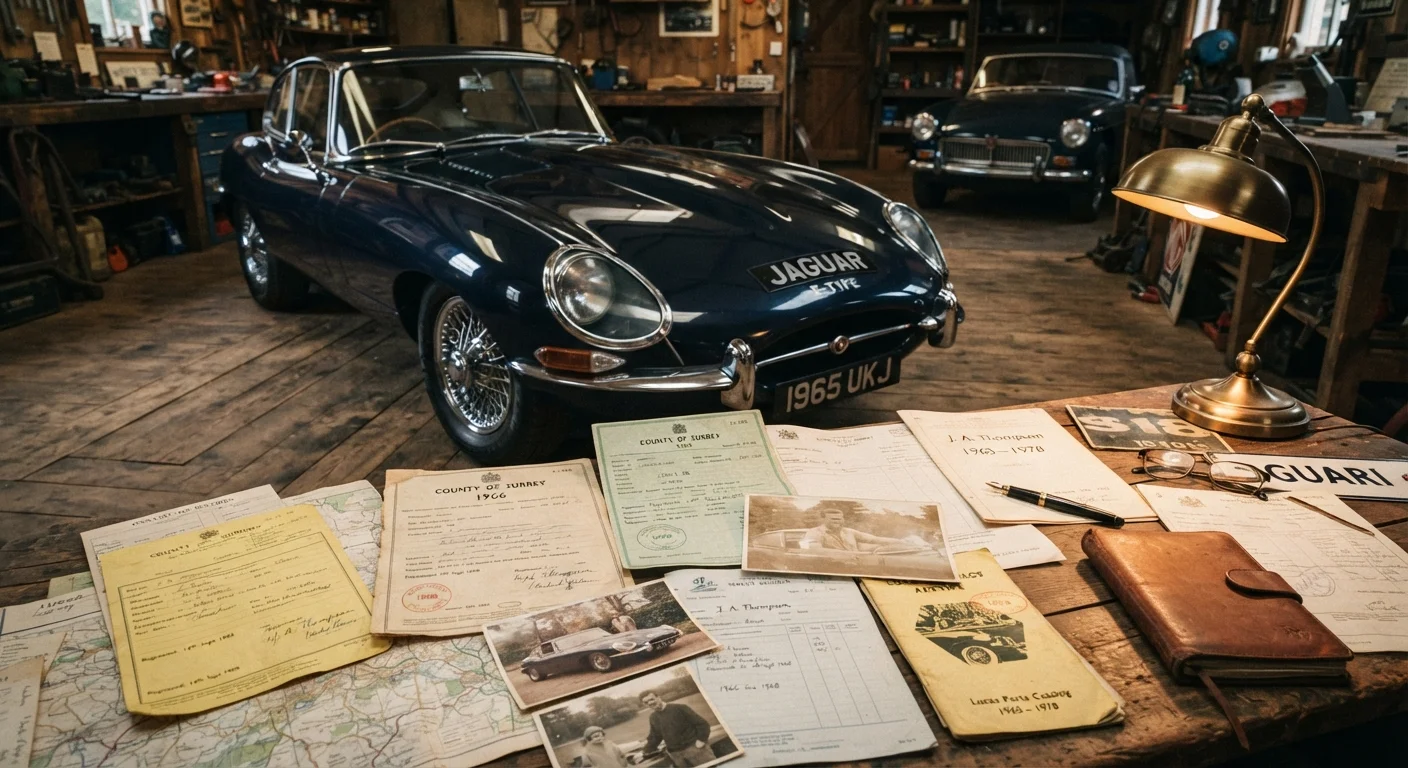
Full restoration demands an equally exacting but fundamentally different discipline. The goal is factory correctness: matching original paint codes, sourcing date-coded components, rebuilding original engines to factory specifications, and locating correct-year rubber, glass, and trim. Documentation matters enormously. Serious restorers maintain paperwork trails - broadcast sheets, window stickers, historical photographs - to substantiate a car's originality.
This is painstaking, research-intensive work. The difference between a correct and incorrect restoration often comes down to stampings on a carburetor or the weave of a seat fabric. For some, that precision is the entire point. For others, it feels like an unnecessarily narrow constraint on a build they're funding from their own pocket.
~60%
Resto-mods featuring engine swaps
Industry observers at major custom car events consistently note that engine replacement - particularly LS-series swaps - is the single most common modification in resto-mod builds.
10-20%
Concours score penalty for non-original parts
Judging guidelines at many concours events apply meaningful point deductions for components that deviate from documented factory specifications, underscoring how consequential originality is in that context.
3-5 years
Typical full restoration timeline
Experienced restorers widely estimate that a comprehensive, documentation-supported full restoration of a classic American car takes three to five years when done without cutting corners.
The Community Divide and Where It Comes From
Car show culture has historically been segmented by these philosophies. Concours d'Elegance events - where judges score originality and factory accuracy down to the smallest fastener - have little place for a restomodded car, however stunning. Meanwhile, specialty resto-mod events and SEMA-style showcases celebrate fabrication ingenuity and modern performance integration.
The friction between camps occasionally surfaces online and at shows, but the culture has shifted considerably. Many enthusiasts now hold genuine respect for both disciplines, recognising that a flawlessly executed resto-mod and a meticulously documented factory restoration each represent extraordinary investments of time, knowledge, and craft.
What still divides people is often less about the builds themselves and more about language. Calling a modified car "restored" when it carries a crate engine is the kind of terminology dispute that ignites forum threads. Accuracy in how you describe your build - and respect for how others choose to describe theirs - goes a long way toward productive conversation across the divide.
For a wider look at what classic ownership really demands in either camp, see Classic Car Ownership: The Realities Alongside the Romance.
A Note on Terminology at Shows
Classification categories vary significantly between events. What one show labels "modified" another may call "street machine" or "pro touring." If you plan to enter your build in judged competition, review the specific rules and class definitions for each event well in advance. Misclassifying your car - intentionally or not - can lead to disqualification or friction with organizers.
Choosing Your Philosophy
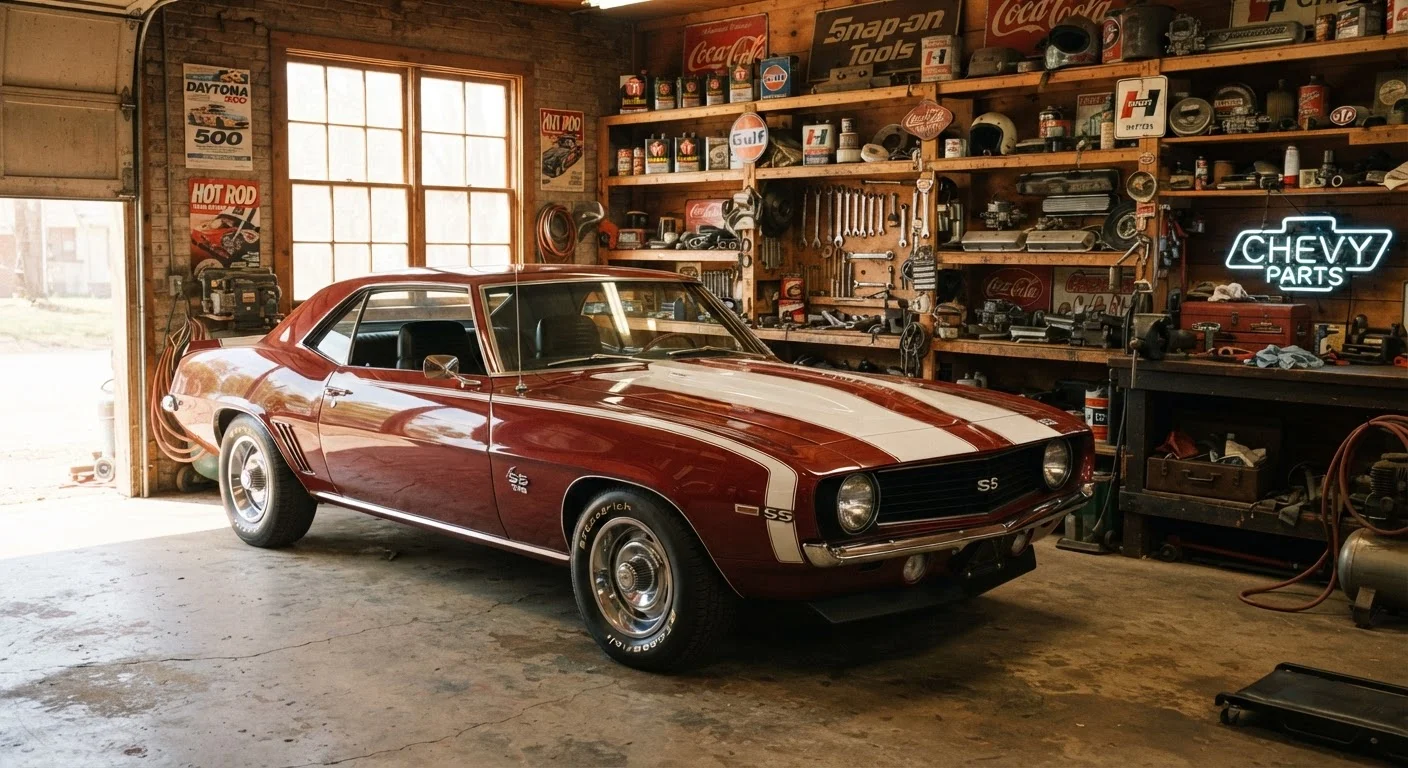
The most practical starting question isn't "which approach is better?" - it's "what do I want to do with this car?" A '69 Camaro rebuilt to concours standards with a numbers-matching engine is a masterwork of historical preservation, but it may also be a car you're reluctant to put miles on. A resto-mod version of the same car might be something you drive to work, take on tours, and push through mountain switchbacks without anxiety.
Budget realities matter too, though not always in the direction people expect. Full restorations can be extremely expensive when correct NOS (new old stock) parts are scarce and period documentation is required. Resto-mods carry their own premium through fabrication labor and modern component sourcing. Neither path is inherently cheaper; both reward patience and planning.
The cultural philosophies behind these approaches mirror broader debates in the classic car world - explored thoughtfully in our piece on European Icons vs. American Muscle - where engineering tradition, national identity, and personal values all shape how people relate to automobiles.
Ultimately, both philosophies deserve their place. One preserves history; the other extends a classic's working life into a new century. The cars that survive either path with integrity are the ones that matter most - the ones somebody cared enough about to see through to completion.