How Each Drivetrain Layout Works
At its most fundamental level, drivetrain layout describes which wheels receive engine torque. In a rear-wheel drive (RWD) system, the engine sends power exclusively to the rear axle. The front wheels handle only steering. This division of labor is central to why RWD cars feel the way they do - there is no conflict between the front tires trying to steer and simultaneously propel the vehicle.
All-wheel drive (AWD) distributes torque to all four wheels simultaneously. Unlike part-time 4WD systems common in trucks, performance-oriented AWD is typically active full-time and managed electronically. Modern systems use multi-plate clutch packs and torque-vectoring differentials to send more power to individual wheels based on grip conditions, dramatically improving both acceleration and cornering dynamics. For a broader look at how AWD compares to 4WD in truck and SUV contexts, see how 4WD and AWD differ in trucks.
Understanding these mechanical basics helps clarify why drivetrain layout is considered a foundational element of what defines a true performance car.
Handling Dynamics: Balance vs. Traction
The core handling difference between RWD and AWD comes down to a trade-off between balance and traction.
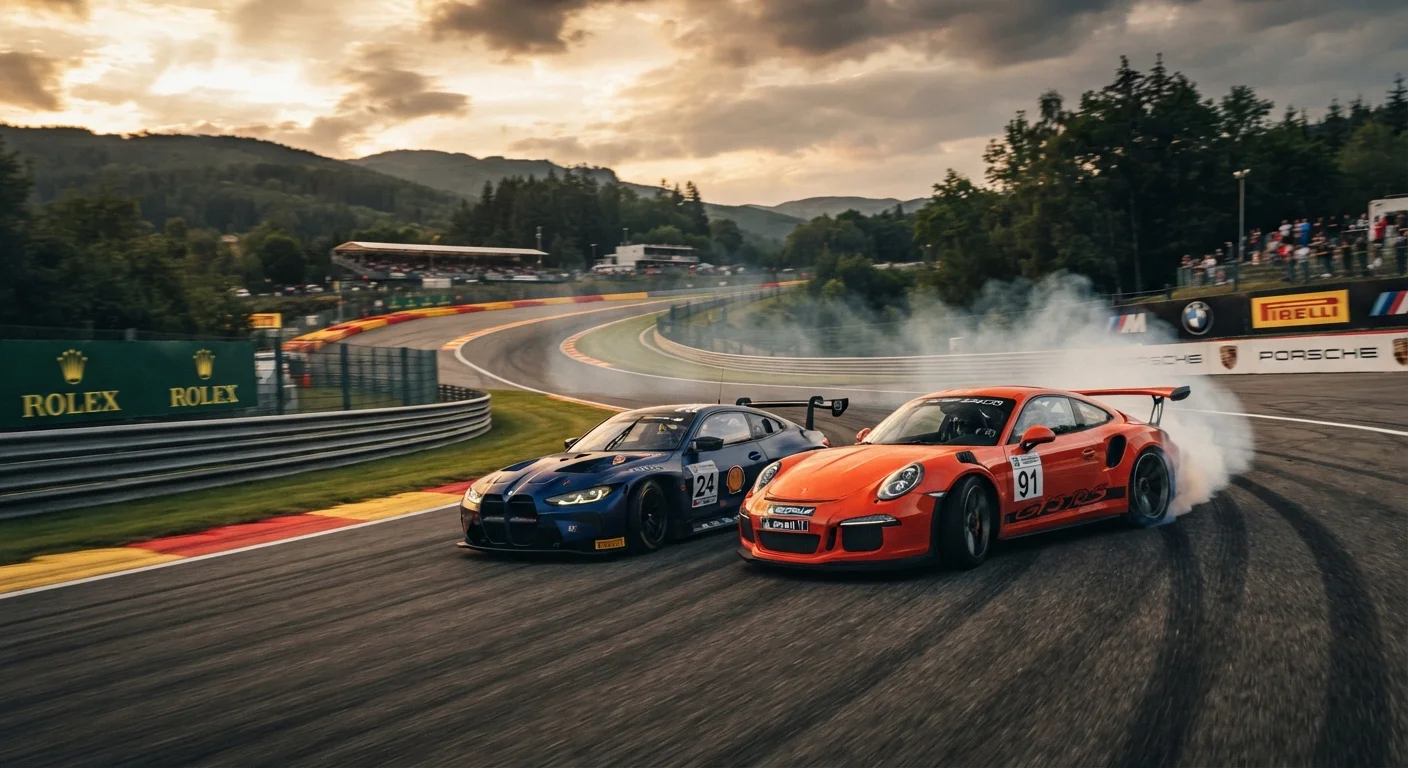
RWD cars carry a well-earned reputation for oversteer - the tendency for the rear to step out under power. In skilled hands on a closed course, this is a feature, not a flaw. A driver can use throttle to adjust the car's attitude mid-corner, dialing in more or less rotation. The steering communicates directly because the front tires are free of drive forces. This characteristic is precisely why RWD remains dominant in motorsport disciplines such as Formula 1, GT racing, and drifting.
AWD cars tend toward understeer in their natural state - the front tires can become overwhelmed when asked to steer and pull simultaneously. However, advanced torque-vectoring AWD systems found in modern performance cars actively counteract this tendency by redistributing torque to the outside rear wheel through corners, effectively yawing the car into the turn. The result is cornering grip that can exceed what RWD allows on a single lap.
| Criterion | Rear-Wheel Drive | All-Wheel Drive |
|---|---|---|
| Handling balance | Neutral to oversteer | Understeer to neutral (system-dependent) |
| Launch traction | Moderate (spin-prone at high power) | Excellent (torque spread across 4 wheels) |
| Driver feedback | High - front tires steer only | Reduced - front tires steer and drive |
| System weight | Lighter drivetrain | 100-200 lbs heavier typically |
| Mechanical complexity | Simpler, lower maintenance | Complex, more components |
| All-weather capability | Limited in wet or cold conditions | Significantly better year-round |
| Motorsport prevalence | Dominant in most racing series | Rally, GT, and production-car racing |
These dynamics are explored in depth when examining the qualities that define a driver-focused performance vehicle, including steering feel, chassis balance, and power delivery.
Weight, Complexity, and Real-World Performance
AWD systems carry a meaningful weight penalty. A full AWD drivetrain typically adds between 100 and 200 pounds compared to an equivalent RWD setup, depending on system complexity. That added mass affects not just acceleration but also braking distances and the car's responsiveness through directional changes.
100-200 lbs
Typical AWD weight premium over RWD
Engineering estimates based on drivetrain component comparisons across production performance vehicles; exact figures vary by manufacturer and system design.
~0.3 sec
Average 0-60 mph advantage of AWD at moderate power
Commonly observed across automotive road tests comparing RWD and AWD variants of the same platform at similar power outputs.
AWD systems are also mechanically more complex, with additional differentials, transfer cases, and electronic control units. This complexity can translate into higher maintenance costs over the life of the vehicle, though engineering advances have improved reliability significantly in recent decades.
In terms of outright lap times, AWD often holds an advantage at lower power levels, where eliminating wheel spin matters most. At very high power outputs, purpose-built RWD race cars with sophisticated limited-slip differentials and wide sticky tires can exploit every available horsepower with fewer parasitic losses through the drivetrain. The relationship between drivetrain and transmission choice also matters - how your gearbox manages torque delivery directly interacts with how each layout performs.
Torque Vectoring Changes the Equation
Not all AWD systems behave identically. Passive, open-differential AWD behaves very differently from active torque-vectoring systems found in many modern performance cars. Before drawing conclusions about an AWD car's dynamics, it is worth understanding which type of system it uses. Some torque-vectoring AWD systems can produce handling behavior that rivals or surpasses conventional RWD setups in certain conditions.
Neither layout is a substitute for proper chassis tuning. As covered in the full spectrum of performance vehicles, from grand tourers to hypercars, the best results come from matching drivetrain to the vehicle's intended use case and engineering philosophy.