How Each System Actually Works
The core difference between automatic climate control and manual air conditioning comes down to feedback loops. A manual A/C system gives the driver direct control over fan speed, temperature blend (the mix of cooled and ambient air), and vent direction. The compressor runs when you switch the A/C on, and you adjust the output until it feels right. There's no automatic response to what's happening inside or outside the car.
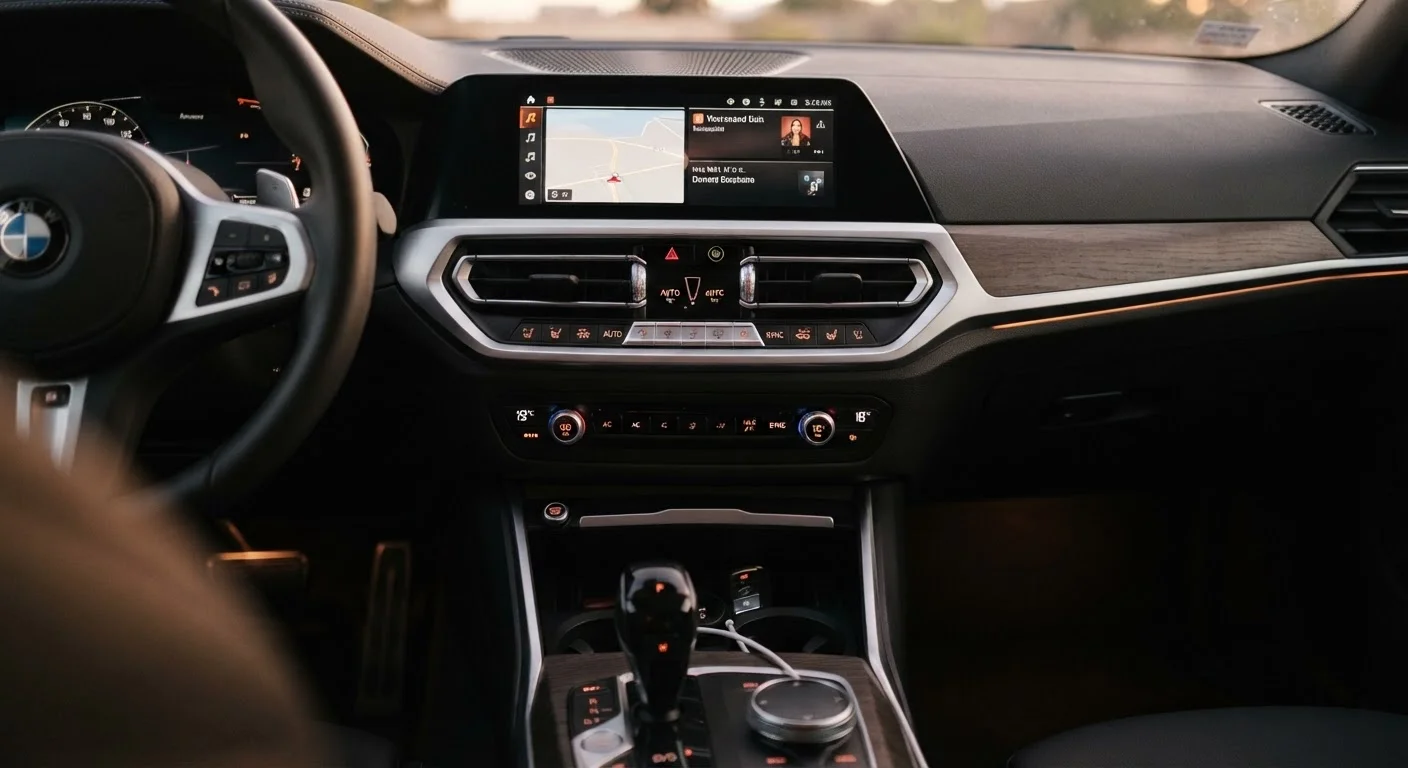
Automatic climate control - sometimes called HVAC automation or dual-zone/tri-zone climate - adds an array of sensors that monitor cabin air temperature, outside ambient temperature, and sometimes humidity or solar load. A control module compares these readings against your target temperature and continuously adjusts fan speed, compressor cycling, and blend door positions to hit that number. You set 72°F and the system does the rest, even as outside conditions shift.
This distinction affects more than convenience. On a bright summer drive, an automatic system can detect solar heat gain through the glass and pre-compensate - something a manual system simply cannot do without your intervention. For context on why cabins heat up so dramatically, see why your car gets unbearably hot in summer.
| Criterion | Automatic Climate Control | Manual Air Conditioning |
|---|---|---|
| Temperature regulation | Sensor-driven, continuous adjustment | Driver-adjusted, fixed output |
| Driver involvement | Minimal once target is set | Ongoing manual adjustment required |
| System complexity | Higher - sensors, actuators, modules | Lower - physical controls, fewer sensors |
| Repair difficulty | Typically requires diagnostic tools | Generally simpler to diagnose |
| Multi-zone capability | Available (dual/tri-zone options) | Rarely available |
| Response to solar/ambient changes | Automatic, sensor-compensated | Manual intervention needed |
| Typical vehicle availability | Mid-range to premium vehicles | Entry-level to mid-range vehicles |
Comfort Implications in Real Driving Conditions
For daily commuters and long-haul drivers, the comfort gap between systems becomes most apparent during temperature transitions - morning warm-ups, midday heat spikes, or rapid weather changes. Automatic climate control handles these shifts passively; manual A/C demands that the driver notice the change and respond to it, which is a minor but real source of distraction.
That said, manual systems are not without advantages in cabin comfort terms. Experienced drivers often develop a feel for their specific vehicle - knowing that two notches on the fan dial at a mid-temperature setting works best on humid days, for example. This kind of learned, intuitive control can rival automatic precision in stable conditions.
72°F
Common target temperature set by US drivers
Industry surveys consistently show 72°F (22°C) as the most frequently selected cabin temperature on automatic climate systems in North America.
~40%
Compressor cycling reduction with auto climate
Automatic systems can reduce unnecessary compressor cycling compared to manually-on systems left running at full output, according to general HVAC engineering principles.
Dual-zone automatic systems add another dimension: independent temperature control for driver and front passenger. This is particularly useful for families or shared vehicles. If overall cabin ergonomics are important to you, the complement to temperature management is seat positioning and accessory placement - covered in detail in our guide to setting up your car's interior for all-day comfort.
Reliability, Maintenance, and System Complexity
Automatic climate control introduces components that manual systems lack: temperature sensors, blend door actuators, control modules, and in some cases humidity and solar sensors. Each represents a potential failure point. When an automatic system malfunctions, diagnosis typically requires a scan tool and familiarity with the specific vehicle's HVAC control network - tasks that are usually best handled by a qualified mechanic.
Manual A/C systems, by contrast, rely on a simpler set of physical controls and fewer electronic inputs. Common issues - a sticking blend door, a failed blower motor resistor, or a refrigerant leak - are generally easier to isolate. Repair costs tend to be lower as a result, though this varies by vehicle make and model.
EPA Refrigerant Regulations Apply to Both Systems
Regardless of whether your vehicle uses automatic climate control or manual A/C, the refrigerant circuit is subject to the same federal regulations. Under EPA Section 609, only certified technicians may purchase and handle refrigerants used in motor vehicle air conditioning systems. DIY refrigerant recharging with consumer-grade cans carries compliance and safety considerations - consult a certified shop for any refrigerant-related service.
It's worth noting that the underlying refrigerant circuit - compressor, condenser, evaporator, and associated lines - is essentially the same in both system types. The cooling hardware is not what distinguishes them; it's the control layer on top of it. Any refrigerant service or component repair should be performed by a certified technician, as refrigerant handling is regulated under EPA Section 609 in the United States.
For those who enjoy understanding how control and mechanical systems interact in their vehicle, the dynamics share some conceptual ground with how transmission types manage driver input - explored in our breakdown of manual vs automatic transmission.