Why Safety Terminology Matters
Whether you're shopping for a motorcycle helmet, fitting a child restraint, or selecting a personal flotation device for the water, every category of safety equipment comes with its own vocabulary. Certification marks, impact standards, and material acronyms appear on hang tags, spec sheets, and instruction manuals - yet few resources explain what these terms actually mean in practice.
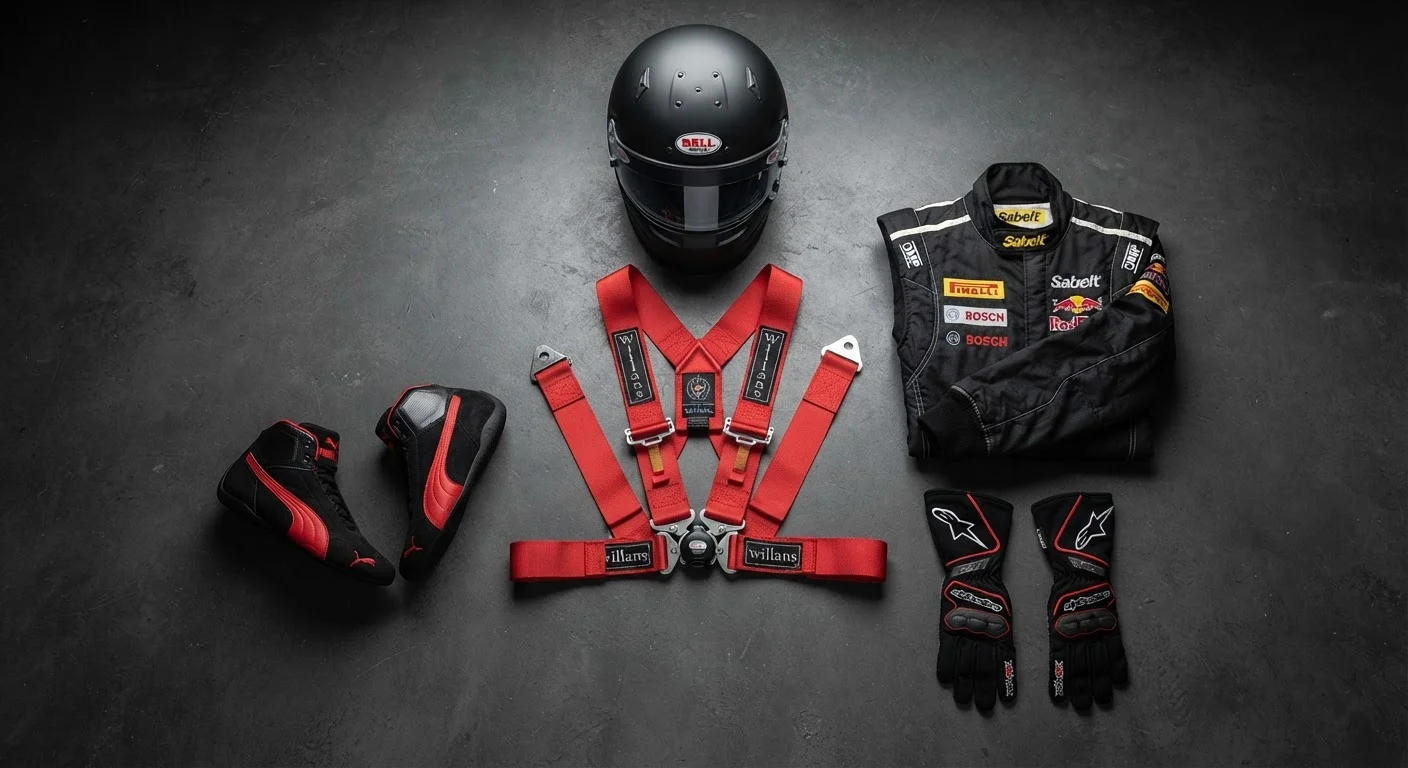
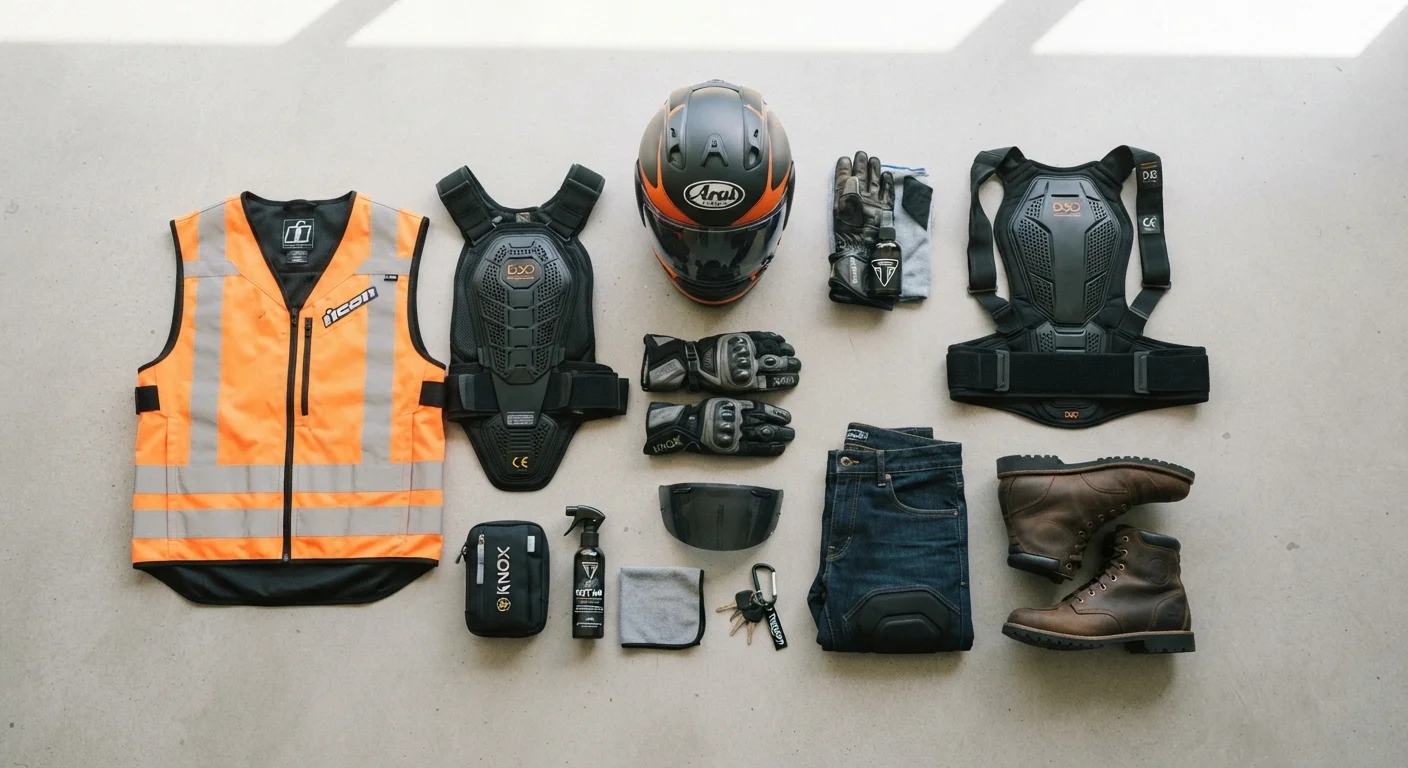
This glossary covers the most common safety gear terms across cars, motorcycles, bicycles, and watercraft. For a deeper look at how individual pieces of equipment function, see our guide to driver safety gear. For layered rider protection specifically, building a layered protection system for riders goes into greater detail.
DOT Certification
A self-certification mark indicating a helmet meets Federal Motor Vehicle Safety Standard No. 218. Manufacturers are responsible for testing compliance; the DOT does not independently test each model before it reaches market.
ECE 22
A government-administered helmet certification used across more than 50 countries. Products must pass independent laboratory testing before receiving the ECE mark, distinguishing it from self-certification schemes.
EPS Liner
Expanded polystyrene foam used in most helmet shells to absorb impact energy by permanently crushing. Because the process is irreversible, a helmet involved in a significant impact should be replaced even if it looks undamaged.
MIPS
Multi-directional Impact Protection System - a low-friction slip layer inside some helmets intended to redirect rotational forces during angled impacts, potentially reducing stress on the brain.
CE Level 1 / CE Level 2
European impact attenuation ratings for motorcycle body armour inserts. Level 2 provides greater impact absorption and is the minimum required for back protectors in higher-specification riding suits.
PFD
Personal Flotation Device - a buoyancy aid classified by the US Coast Guard into types based on buoyancy and intended use. Type I devices are designed to keep an unconscious wearer face-up in open water; lighter types suit supervised, calm-water activity.
Retroreflective Material
A material that reflects light directly back toward its source, significantly improving the visibility of the wearer to vehicle operators in low-light conditions. ANSI/ISEA standards define minimum retroreflective tape widths for high-visibility garments.
Retention System
The mechanism that secures a helmet to the wearer's head, including dial-fit adjusters, ratchet buckles, and cam-lock closures. A correctly fastened retention system is critical to the helmet's protective function.
LATCH
Lower Anchors and Tethers for Children - a US system of standardised anchor points built into most vehicles and compatible child safety seats since the late 1990s, allowing installation without routing the seat belt through the seat.
SNELL Certification
An independent helmet safety certification issued by the Snell Memorial Foundation, involving third-party laboratory testing. Snell standards are generally considered more stringent than DOT self-certification requirements.
CPSC Standard
Standards issued by the US Consumer Product Safety Commission. For bicycle helmets, the relevant standard is 16 CFR Part 1203, which sets mandatory impact attenuation and retention requirements for helmets sold in the US.
Abrasion Resistance Rating
A measure of how well a riding suit or glove material withstands sliding contact with road surfaces. Standards such as EN 13595 specify test methods and classify garments into protection levels.
Certification Standards and Impact Ratings
Certification marks tell you that a piece of equipment has been tested against a documented protocol - but not all marks are equivalent. Different bodies set different thresholds, test methods, and oversight models.
| US Helmet Standard Body | Department of Transportation (DOT) - FMVSS No. 218 (National Highway Traffic Safety Administration) |
| Countries Recognising ECE 22 | 50+ (UNECE Regulation 22) |
| US Bicycle Helmet Standard | CPSC 16 CFR Part 1203 (mandatory) (US Consumer Product Safety Commission) |
| PFD Type Classifications | Types I-V (US Coast Guard classification system) |
| CE Body Armour Levels | Level 1 and Level 2 (EN 1621 European standard for motorcycle protective clothing) |
| LATCH System Introduced | Required in US vehicles from model year 2003 (NHTSA FMVSS No. 225) |
DOT (Department of Transportation) certification for helmets in the US is a self-certification standard: manufacturers test their own products and label them accordingly. Federal Motor Vehicle Safety Standard No. 218 defines the minimum test criteria. ECE 22 (Economic Commission for Europe Regulation 22) is a government-administered type-approval standard used in over 50 countries. Snell certification, issued by the Snell Memorial Foundation, involves independent lab testing and is generally considered more stringent than DOT. For a side-by-side breakdown, see our article on motorcycle helmet standards compared.
CPSC (Consumer Product Safety Commission) governs bicycle helmet standards in the US under 16 CFR Part 1203. ASTM International develops voluntary consensus standards for a wide range of protective equipment, including helmets, body armour, and eye protection. ANSI/ISEA standards apply to high-visibility apparel, specifying retroreflective tape widths, background material luminance, and garment classes.
Materials, Construction, and Fit Terms
Understanding the material and structural language on a product label helps you evaluate protective performance before you buy or use a piece of equipment.
EPS (Expanded Polystyrene) is the most common liner material in helmets. It absorbs energy by crushing on impact - a one-time process, which is why helmets should be replaced after a significant impact even if no damage is visible. MIPS (Multi-directional Impact Protection System) is a low-friction layer inside certain helmets designed to reduce rotational energy transferred to the brain during angled impacts. CE Level 1 / CE Level 2 refer to European impact protection ratings for motorcycle body armour inserts - Level 2 absorbs more impact force and is the standard required for back protectors in higher-rated riding suits.
Retention system describes the mechanism that keeps a helmet securely on the head - dial-fit systems, ratchet buckles, and cam-lock closures all serve this function. Proper fit and a correctly fastened retention system are as important as the helmet's certification rating. For child restraint fit terminology, our article on child passenger safety fundamentals covers harness slots, chest clip placement, and LATCH anchors in detail.
PFD (Personal Flotation Device) type classifications (Type I through V in the US Coast Guard system) indicate buoyancy level and intended use scenario. Type I devices offer the most buoyancy and are designed to turn an unconscious wearer face-up in open water; Type III are suited to supervised activities in calm, inland water. For more foundational watercraft safety vocabulary, see boating basics.
~37%
Reduction in motorcyclist fatality risk with helmet use
According to NHTSA research, helmets are estimated to reduce motorcyclist fatality risk by approximately 37%.
Type I
Highest buoyancy PFD class for open water
The US Coast Guard designates Type I PFDs as those capable of turning most unconscious wearers face-up in open, rough water.