How Each Technology Actually Works
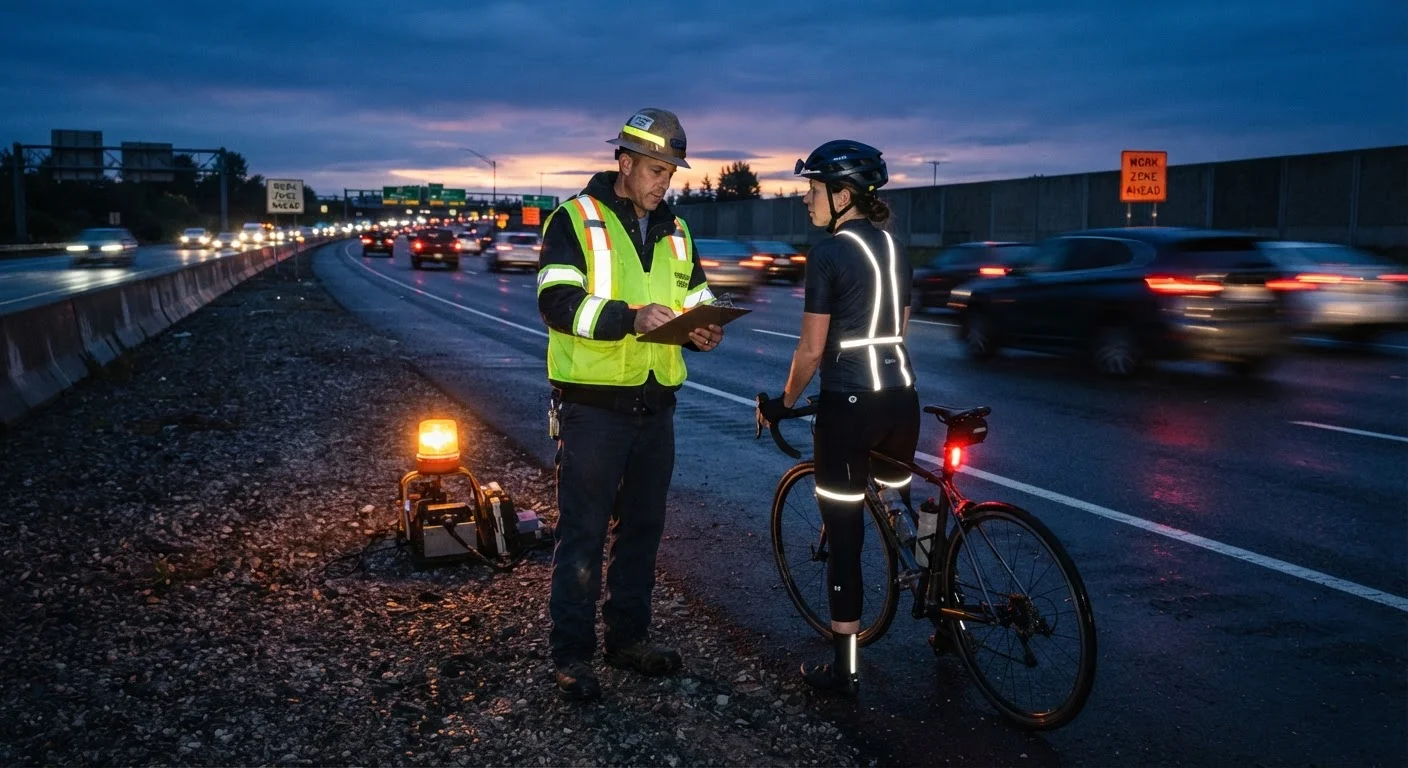
Reflective gear relies on retroreflection - microscopic glass beads or prismatic elements embedded in fabric or tape that redirect incoming light back toward its source. When a vehicle's headlights hit this material, the light returns toward the driver rather than scattering. The result is a bright, high-contrast signal that works exceptionally well at night but contributes almost nothing when there is no directed light to reflect.
High-visibility fluorescent materials work through a fundamentally different mechanism: photoluminescence. Fluorescent dyes - most commonly yellow-green (lime) or orange - absorb ultraviolet radiation in sunlight and re-emit it as visible light. This makes the material appear to glow brighter than the surrounding environment. The effect peaks in daylight and particularly in overcast conditions when UV levels remain high but the background is visually flat. After sunset, once UV is absent, the fluorescent advantage disappears almost entirely.
Combined Standards Address Both Conditions
Safety standards such as EN ISO 20471 and ANSI/ISEA 107 specify minimum areas of both fluorescent background fabric and retroreflective tape - because neither technology alone covers all lighting scenarios. When shopping for compliant gear, look for explicit standard references on the label rather than general marketing claims about reflectivity or brightness. Garments meeting these benchmarks are designed to perform across the full range of conditions workers and riders commonly encounter.
Understanding this distinction helps explain why gear rated to safety standards like EN ISO 20471 (used internationally) specifies minimum areas of both fluorescent background material and retroreflective strips - the standard is designed around combined performance, not either technology in isolation.
Comparing Performance Across Conditions
The core trade-off is straightforward: reflective gear dominates at night; high-vis dominates during the day. The genuinely difficult zone is the transition periods - dawn, dusk, tunnel exits, and heavily overcast midday conditions - where neither technology is at peak performance and ambient light is ambiguous.
| Criterion | Reflective Gear | High-Vis Vests |
|---|---|---|
| Primary mechanism | Retroreflection of directed light | Fluorescent photoluminescence |
| Best condition | Night, tunnels, low ambient light | Daylight, overcast skies |
| Effectiveness at night | High - requires headlight source | Low - fluorescence inactive |
| Effectiveness in daylight | Minimal - passive without light source | High - UV-activated visibility |
| Typical applications | Cycling, motorcycling, running | Roadside emergencies, construction zones |
| Storability | Integrated into clothing or accessories | Foldable, compact for glove box |
| Degradation factors | Washing, abrasion, UV exposure | UV exposure, heat, prolonged storage |
Motorcyclists and cyclists navigating commutes that span these transition windows benefit most from gear that integrates both technologies. A fluorescent jacket with prominent retroreflective bands across the shoulders, chest, and sleeves covers the broadest range without requiring a wardrobe change mid-ride. See our guide to layered rider protection for how visibility gear fits into a broader safety system.
Regulatory Context and Practical Obligations
In the United States, there is no universal federal mandate requiring civilian drivers or motorcyclists to carry high-vis vests, though OSHA mandates high-visibility apparel for workers in roadway construction zones. Several states have specific requirements for visibility gear worn during vehicle breakdowns on controlled-access highways. Requirements vary, so checking your state's Department of Transportation guidelines is advisable before a long road trip.
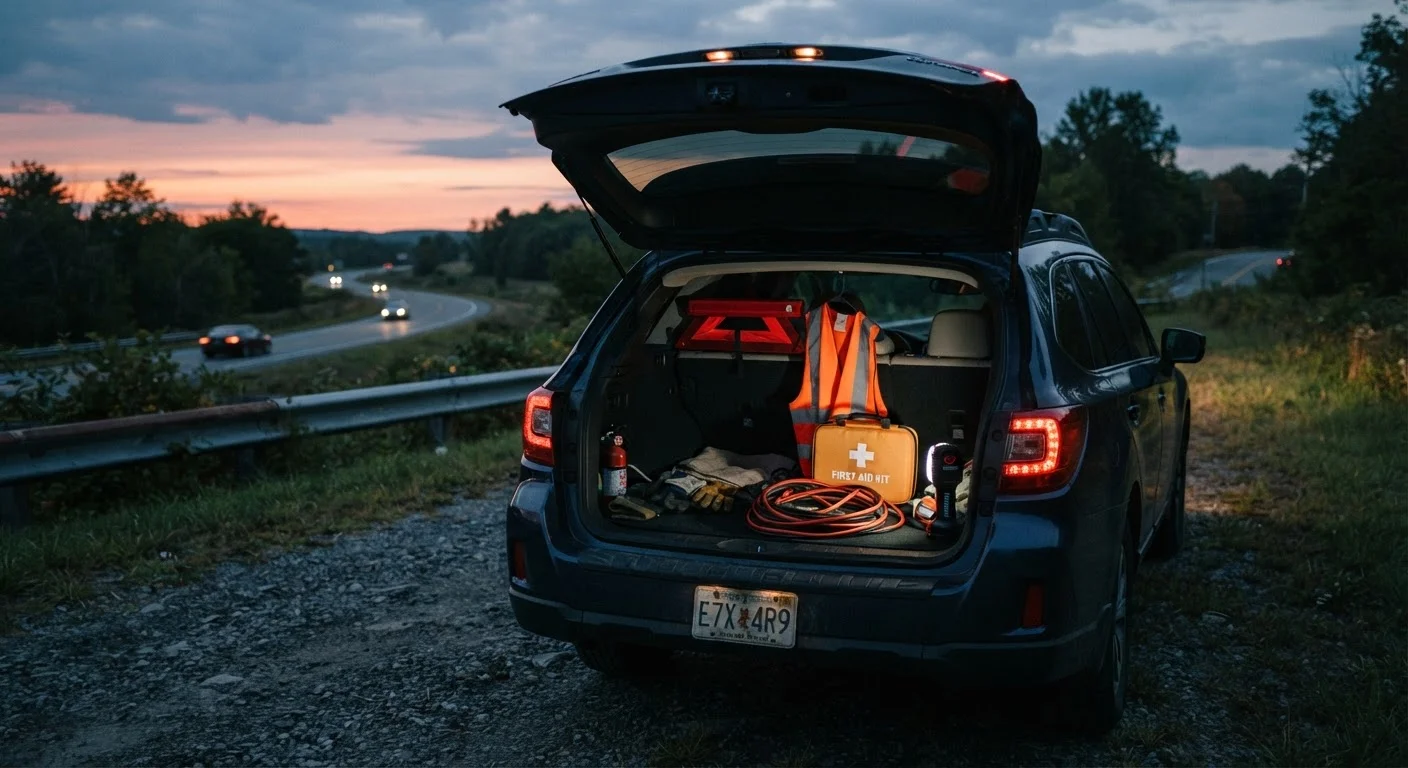
The picture differs for commercial drivers - FMCSA regulations require motor carriers to carry and use emergency warning devices, and many fleet operators additionally require high-vis vests for any roadside exit. If you operate a commercial vehicle or frequently travel with an RV, treating a folded vest as standard kit alongside warning triangles is a reasonable baseline. Our article on emergency roadside safety essentials covers the full kit worth carrying.
For a broader look at how visibility gear fits within the full spectrum of driver protection, the driver safety gear overview is a useful reference.
~35%
Of fatal pedestrian crashes occur in dark conditions
NHTSA data consistently shows that a disproportionate share of pedestrian fatalities happen at night, underscoring the importance of retroreflective visibility after dark.
500 ft
Minimum driver detection distance for high-vis at dusk
Research cited in FHWA worker visibility guidelines suggests fluorescent/retroreflective combined garments can be detected at significantly greater distances than non-compliant clothing in transition lighting.
Choosing and Maintaining Your Visibility Equipment
When selecting gear, look for garments that specify minimum retroreflective tape widths and fluorescent surface areas - vague claims like "reflective accents" often fall well short of meaningful coverage. Retroreflective tape degrades with washing and UV exposure; check tape edges for peeling or clouding, which signal reduced performance. Most manufacturers rate tape longevity in wash cycles rather than years, and replacing tape or the garment itself after heavy use is a practical maintenance step.
Storage matters too. A high-vis vest folded in a hot car trunk for extended periods can suffer fluorescent dye degradation - keeping spares in a cool, dark location when not in use extends their effective life. For riders building a full protection system, visibility is one layer among several, and overlooked safety gaps are worth auditing alongside your visibility choices.
This article is for general informational purposes. Safety regulations vary by state, vehicle type, and operating context. Consult applicable federal and state guidelines and, where relevant, a qualified safety professional for your specific situation.