The Safety Equipment Most Vehicles Simply Don't Have
Walk through any busy parking lot and ask yourself how many of those vehicles carry a serviceable fire extinguisher, a set of warning triangles, or even a basic first aid kit. The honest answer, based on roadside assistance data and highway safety surveys, is: very few. Drivers tend to assume that factory-installed seatbelts and airbags cover their safety obligations - but those systems only address the collision itself, not what happens afterward.
The gap between what drivers carry and what a roadside emergency actually demands is significant. A vehicle fire can escalate within two minutes. A stopped car on a highway without warning triangles or flares is invisible to approaching traffic until it's dangerously close. These are not edge-case scenarios; they are documented, recurring causes of secondary crashes and fatalities.
For a deeper grounding in what each category of equipment actually does, see our driver safety gear explained guide - it covers function and purpose across the full range of items discussed here. And for a comprehensive list of what should physically be in your vehicle, our roadside safety reference is worth bookmarking.
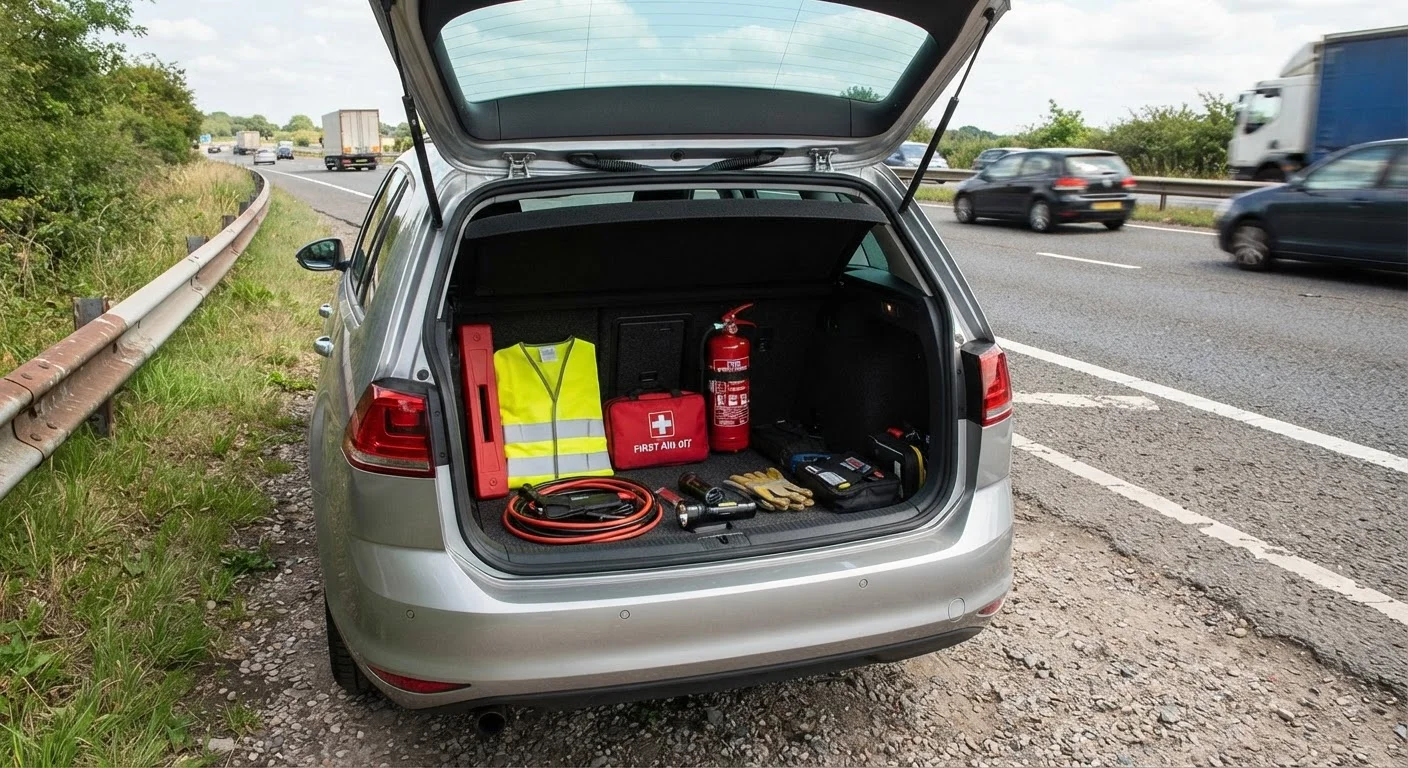
Carrying no fire extinguisher - or one that has expired or lost pressure.
Why it happens: Fire extinguishers aren't required by law for most passenger vehicles in the US, so they're rarely on buyers' radar. When drivers do purchase one, they seldom check it again.
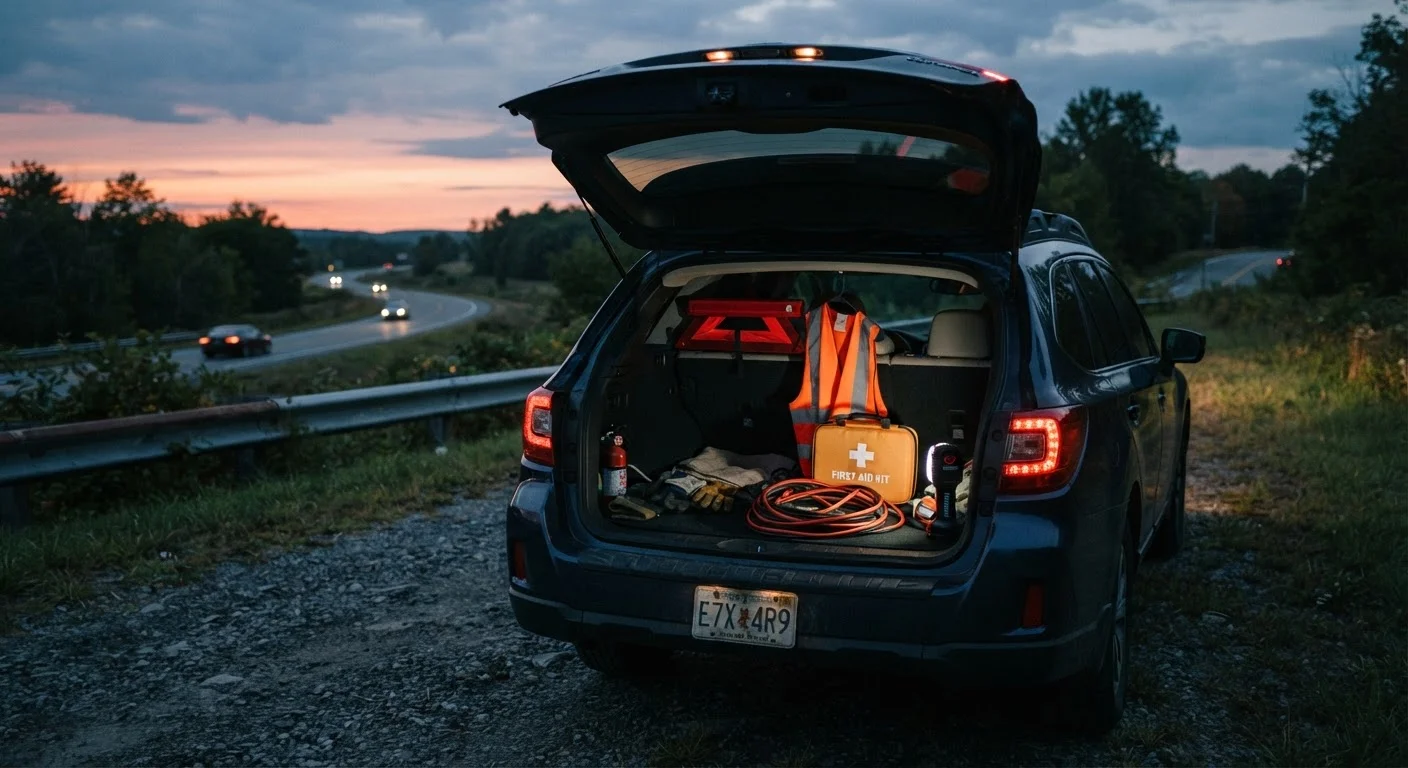
Having no warning triangles, road flares, or LED warning devices in the vehicle.
Why it happens: Drivers assume hazard lights are sufficient to alert approaching traffic. In low-visibility conditions or on high-speed roads, hazard lights alone provide far less advance warning than physical markers placed 100-300 feet behind the vehicle.
Storing hi-vis vests and emergency gear in the trunk - inaccessible once the vehicle is stopped on a live road.
Why it happens: Most people think of emergency equipment as something stored 'out of the way,' not realising that a trunk stop on a busy road can be dangerous to access.
Ignoring expiration dates on first aid kit components and fire extinguishers.
Why it happens: Once stowed, emergency items feel permanent. Bandages, antiseptics, and certain medications degrade; extinguisher agents can also lose effectiveness over time.
Assuming a tow hook or tow eye is always present and accessible when needed.
Why it happens: Many modern vehicles, particularly European-spec models and some compact cars, include a removable tow eye stored in the spare tire well - a location most drivers have never inspected.
Neglecting vehicle-specific or use-specific equipment requirements for trucks, RVs, and motorcycles.
Why it happens: Standard 'emergency kit' checklists are written for passenger cars. Larger or commercial vehicles carry additional legal and practical requirements that generic advice doesn't cover.
Why These Gaps Persist - and How to Close Them
Understanding the pattern behind these oversights matters as much as fixing any individual item. Most drivers don't set out to be unprepared - they simply never received clear guidance on what to carry, checked it once and forgot about it, or assumed the vehicle came equipped from the factory. None of those assumptions hold up under scrutiny.
~35%
US drivers carrying a roadside emergency kit
AAA surveys have consistently found that fewer than half of US drivers keep a basic emergency kit in their vehicle, despite most acknowledging it's a good idea.
2 min
Approximate time for a vehicle fire to become life-threatening
Fire safety educators note that a vehicle fire can spread to the passenger compartment in roughly two minutes under typical conditions, underscoring the value of immediate suppression capability.
Visibility equipment deserves particular attention. A hi-vis vest stored in the boot of a vehicle stopped on a live carriageway requires the driver to exit into traffic to retrieve it - which defeats the purpose entirely. The vest should be accessible from inside the cabin, typically under a seat or in a door pocket. The same logic applies to road flares or LED warning devices: they need to be reachable without putting the driver in harm's way first.
RV and truck operators should note that requirements escalate with vehicle size and use. Commercial vehicle regulations in most states mandate specific fire suppression, reflective triangles, and load-securing equipment that goes well beyond what a standard checklist covers. The trucks and vans hub has additional context for work and recreation operators navigating these requirements. RV owners will also find relevant guidance through the RV living resources.
Expired or Discharged Equipment Provides No Protection
A fire extinguisher with a depleted charge or an expired first aid kit can create a false sense of security that's arguably worse than having nothing. If you haven't physically inspected your emergency equipment in the past twelve months, treat it as unverified. Pressure gauges can read correctly while internal components have degraded - follow manufacturer service intervals, not just the gauge needle.
Motorcyclists and riders face a parallel set of blind spots - often focused entirely on riding gear while neglecting any roadside emergency capability whatsoever. A downed motorcycle with no warning markers and a rider in dark gear is extremely difficult for approaching drivers to see. Our layered protection guide for riders addresses the personal protection side, while visibility-specific guidance is covered in our reflective gear and hi-vis article.
Finally, if any of the terminology in safety equipment discussions is unfamiliar - certification marks, classification ratings, or compliance acronyms - the safety equipment glossary provides clear, plain-language definitions without requiring background knowledge.