Why Performance Builds Go Sideways
A performance build rarely fails because of one catastrophic decision. More often, it unravels through a sequence of small, compounding oversights - each reasonable in isolation, but collectively enough to underdeliver or destroy hardware. Understanding what separates a well-executed performance build from a rushed one starts with recognizing the recurring patterns behind builds that go wrong.
Enthusiasm is the common thread. Builders focus on the headline numbers - horsepower, torque, quarter-mile times - and underweight the unglamorous foundational work that makes those numbers sustainable. The result is a vehicle that either never reaches its potential or reaches it briefly before something gives way.
Adding forced induction without upgrading supporting systems like cooling, fuel delivery, and engine management.
Why it happens: Builders focus on the turbo or supercharger as the centerpiece and treat everything else as secondary, assuming stock systems will cope.
Installing mismatched components - such as an aggressive camshaft profile that conflicts with the intended idle quality and low-end torque curve.
Why it happens: Specifications are selected in isolation based on peak numbers rather than how components interact across the full RPM range.
Skipping a baseline dyno tune before stacking modifications.
Why it happens: Tuning feels like an extra expense and gets deferred until the build is 'complete,' by which point diagnosing problems becomes significantly harder.
Neglecting brake and suspension upgrades after significant power increases.
Why it happens: Acceleration gains are tangible and exciting; braking and handling feel like defensive spending that detracts from the headline numbers.
Using undersized or incorrect-specification fasteners and gaskets during assembly.
Why it happens: Builders substitute available hardware to avoid delays, assuming minor spec differences won't matter under real operating conditions.
The Systems Your Power Mods Are Ignoring
Adding significant power without auditing supporting systems is the most predictable way to shorten the life of a build. Every increase in output places additional demand on cooling, fuel delivery, lubrication, and the drivetrain. A stock radiator, for instance, is sized for stock heat rejection - force-feed a turbocharged engine more boost without addressing thermal management, and you're operating on borrowed time.
Cooling System Neglect Has Hard Consequences
Overheating under sustained load is one of the most common causes of catastrophic engine failure in modified vehicles. Stock cooling systems are calibrated for stock output - they carry no meaningful safety margin for power increases. If your build adds more than 20% over stock power, treat a cooling system evaluation as non-negotiable, not optional.
The same cascade logic applies to braking. Builds that chase acceleration gains while leaving factory brake hardware in place create a genuine safety mismatch. Upgrading one component often demands changes to another, and brake fade under repeated hard stops is a direct consequence of ignoring that principle.
~30%
Increased heat load from a typical turbo upgrade
Engine thermal management specialists generally estimate a moderate turbo installation can increase engine heat rejection requirements by 25-35%, depending on boost level and application.
2-3x
Fuel flow demand increase at peak power
Heavily modified forced-induction engines commonly require two to three times the fuel flow of their stock configuration at wide-open throttle, exceeding factory injector and pump capacity.
Fuel system capacity is equally overlooked. High-output engines - particularly those with forced induction - can exceed the flow rate of stock injectors and pumps under wide-open throttle. Running lean at peak power is one of the fastest ways to damage pistons and rings.
Planning the Build Sequence Before You Buy Parts
Rushed builds typically share one structural flaw: parts are purchased before a coherent sequence is mapped. This leads to components sitting unused while the build pivots, or worse, installation decisions that have to be reversed because a downstream modification is incompatible. Understanding how forced induction, compression ratios, and valve timing interact is essential before specifying any major components.
A sound build sequence starts with the bottom end and works outward - establishing what the short block can reliably support before selecting heads, camshafts, or induction systems. This prevents the common mistake of building a high-flowing top end onto a block that can't handle the cylinder pressure the new combination generates.
Get Professional Help for Critical Assembly Steps
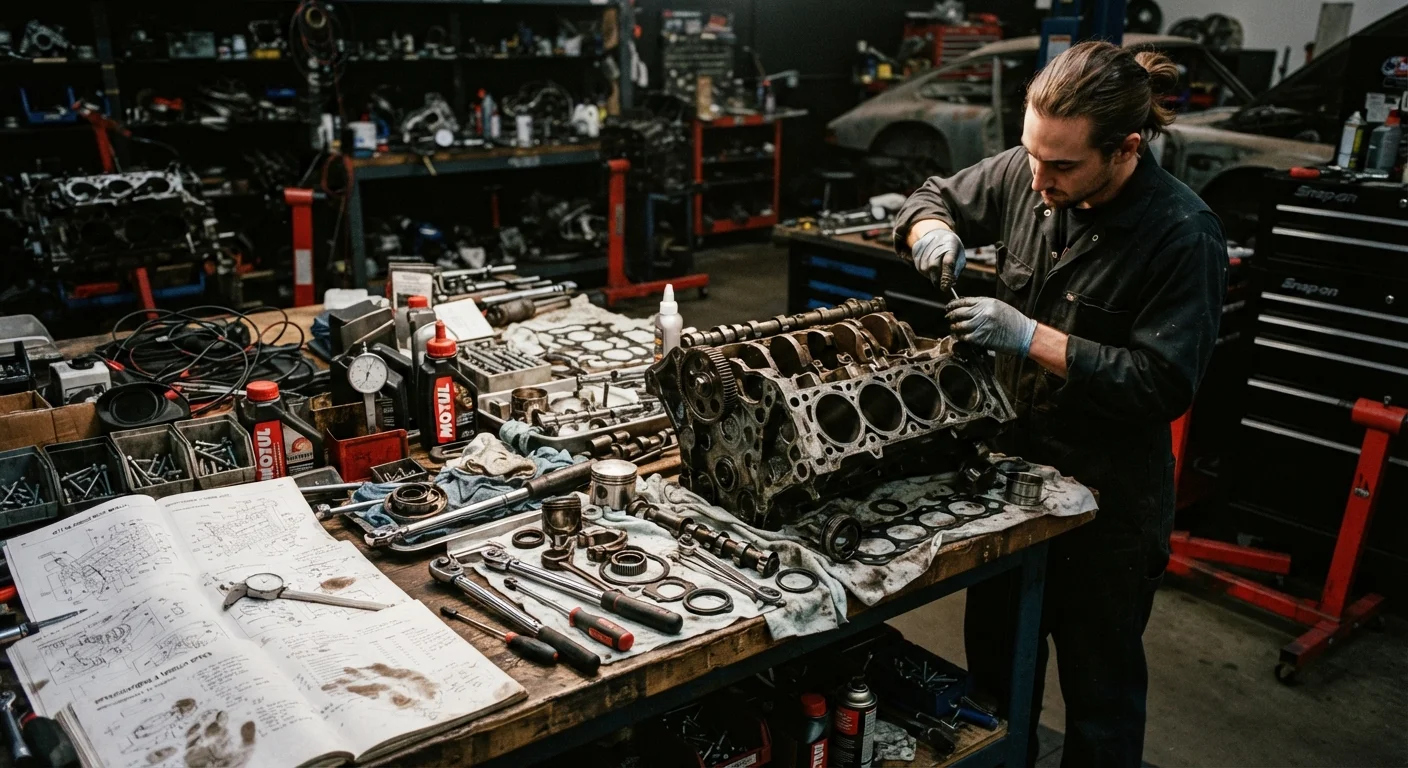
Engine assembly at performance specifications involves tolerances and torque sequences that differ meaningfully from factory service procedures. Tasks such as bearing clearance measurement, piston ring gap filing, and head bolt torque-to-yield procedures should be verified by a qualified engine builder. Incorrect assembly at these steps can result in immediate or latent failures that are expensive and potentially dangerous.
Tuning should be treated as a stage in the build, not an afterthought. Each significant hardware change warrants a corresponding calibration session. Stacking multiple modifications and tuning once at the end introduces more variables than a skilled tuner can reliably resolve in a single session, and it masks which modification is responsible if a problem surfaces.