Why Pedal Feel Is a Diagnostic Signal
Most drivers treat the brake pedal as an on/off switch - press it, slow down. But the pedal is actually a feedback interface between you and the entire braking system. Its firmness, travel, and consistency under foot tell a story about the health of your brake fluid, master cylinder, rotors, pads, and booster. Learning to read that story early can prevent minor issues from becoming dangerous failures.
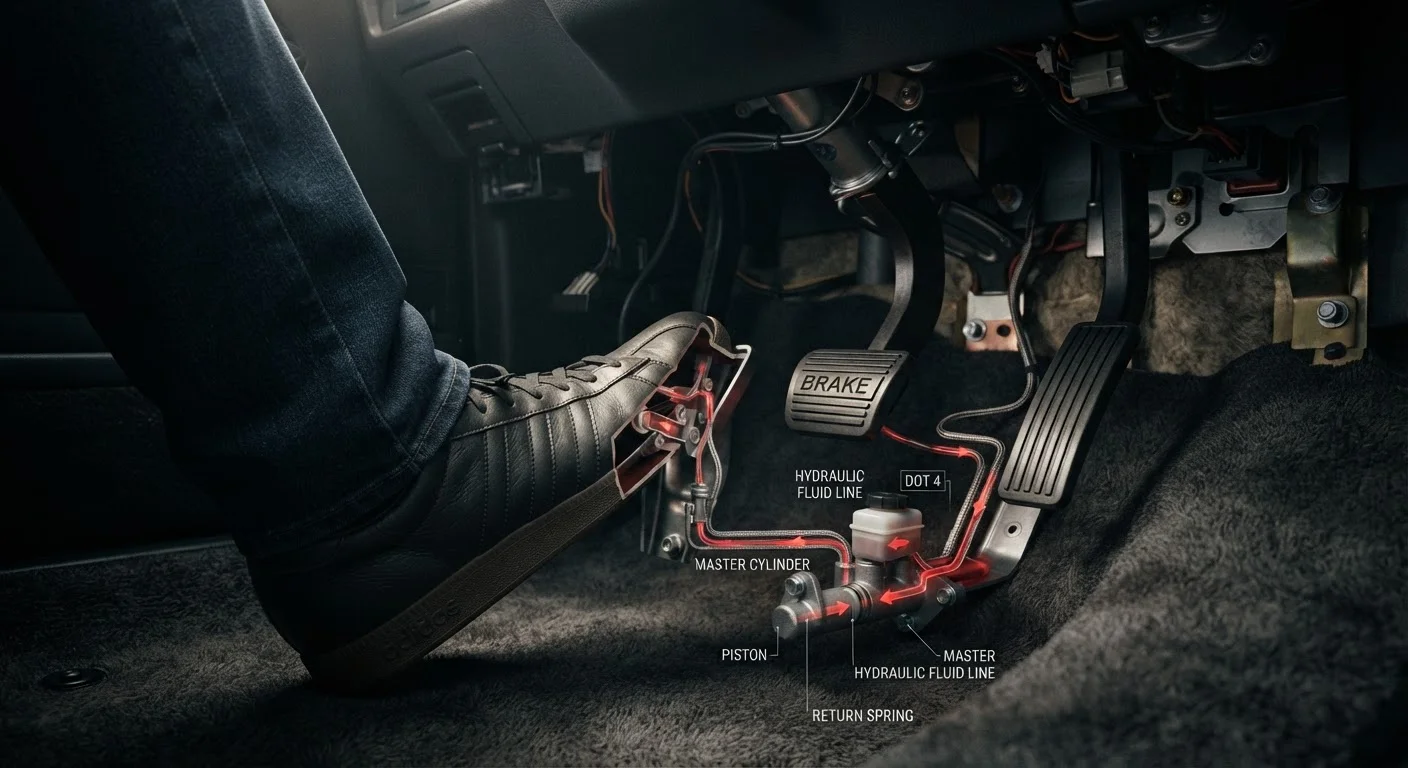
The braking system in most passenger vehicles is hydraulic: your foot pushes a piston in the master cylinder, which pressurizes brake fluid through lines and calipers to squeeze pads against rotors. Any disruption in that chain changes what you feel underfoot. Three sensations - a spongy pedal, a pulsating pedal, and a rock-hard pedal - are the most diagnostically useful and most commonly misunderstood.
~20%
Brake-related share of vehicle crashes attributed to equipment failure
According to NHTSA crash causation studies, brake-related issues are among the most common vehicle equipment factors in crashes where mechanical failure played a role.
2 Years
Typical recommended brake fluid replacement interval
Many vehicle manufacturers specify brake fluid replacement every two years regardless of mileage, as moisture absorption occurs with time rather than use alone.
3-5%
Moisture content that significantly lowers brake fluid boiling point
Industry testing indicates that brake fluid with as little as 3-5% water content by volume can have its boiling point reduced enough to increase vapor lock risk under hard braking.
The Spongy Pedal: Hydraulic Integrity Lost
A spongy or mushy pedal feels like pressing on a partially inflated balloon. The pedal travels further than normal before resistance builds, and you may need to pump it once or twice to achieve firm braking. The underlying cause is almost always a loss of hydraulic integrity - meaning something compressible has entered a system that should only contain incompressible fluid.
The most common culprit is air in the brake lines. Air enters when a caliper seal fails, when brake lines develop a leak, or when the system is opened for service and not bled properly. Even small pockets of air dramatically reduce pedal firmness because air compresses easily under pressure.
A secondary cause is moisture-saturated brake fluid. Brake fluid is hygroscopic - it absorbs water vapor from the atmosphere over time. As moisture content rises, the fluid's boiling point drops. Under hard braking, degraded fluid can vaporize at the caliper, creating compressible vapor pockets that mimic the feel of air in the lines. This is why fluid condition matters as much as fluid level. See why brake fluid degrades and what it means for your system for a deeper look at this process.
A sinking pedal - one that slowly travels toward the floor under steady pressure - points more specifically to an internal master cylinder failure, where fluid bypasses the piston seal internally without any visible external leak.
Test Your Pedal Feel Deliberately
Once a month, with the vehicle stationary and the engine running, press the brake pedal firmly and hold it for 30 seconds. A healthy pedal should hold its position without sinking. Any gradual sinking under steady pressure is worth noting and having inspected. This simple check takes less than a minute and can catch master cylinder issues early.
The Pulsating Pedal: Rotor Surface Problems
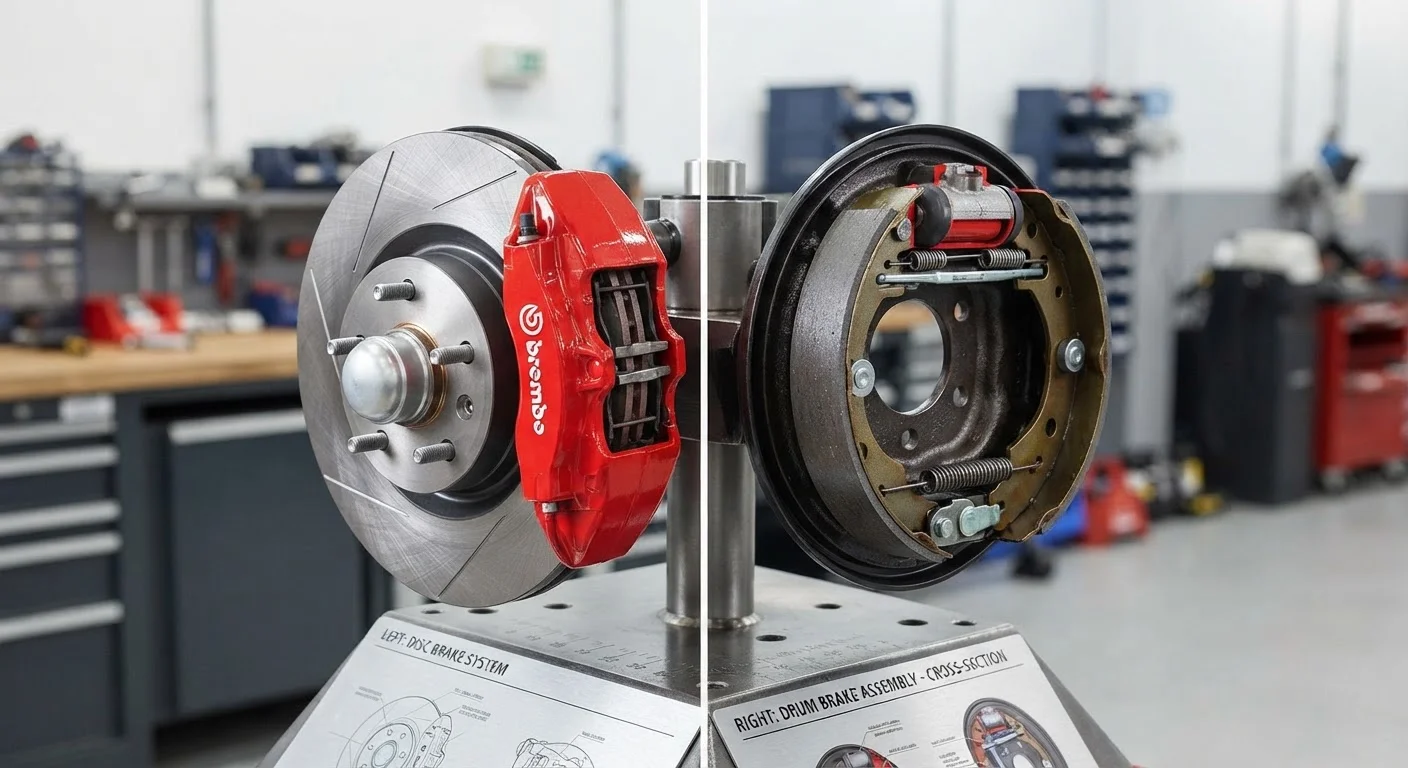
A pulsating or vibrating pedal - a rhythmic throbbing sensation felt through the pedal during braking - is almost always a rotor issue. The pulsation frequency increases with vehicle speed and typically smooths out at very low speeds, which is a useful differentiating clue.
The most common cause is rotor thickness variation, commonly called runout or warping. When a rotor's braking surface is not perfectly uniform in thickness, the caliper pads alternately grip and release as the rotor spins, creating that rhythmic push-back through the pedal and sometimes through the steering wheel as well.
Rotors develop thickness variation through heat stress - repeated hard braking without adequate cool-down, aggressive panic stops, or riding the brakes on long descents. Installing wheels with improper torque sequence can also distort rotor geometry over time. In some cases, uneven pad deposits baked onto the rotor surface cause similar symptoms even when the rotor itself is dimensionally within tolerance.
Rotors can sometimes be resurfaced on a brake lathe if enough material remains above the minimum thickness spec. If they are at or below minimum thickness, replacement is required. A qualified technician can measure rotor thickness and runout with a micrometer and dial indicator to determine which option applies.
The Rock-Hard Pedal: Booster Failure
A rock-hard brake pedal - one that requires unusually high foot force to achieve ordinary deceleration - signals a problem with the brake booster. Most vehicles use a vacuum-assisted power brake booster mounted between the master cylinder and the firewall. It uses engine vacuum (or an electric vacuum pump on hybrids and some turbocharged vehicles) to multiply the force your leg applies to the pedal.
When the booster fails - typically due to a ruptured diaphragm, a faulty check valve, or loss of vacuum supply - the mechanical advantage disappears. Braking still works, but the effort required increases dramatically. The pedal feels like pressing against a solid wall rather than a responsive mechanism.
“The brake pedal is the driver's most direct connection to the vehicle's most critical safety system. Changes in pedal feel are not quirks to adapt to - they are the system asking for attention.”
— Parts & Maintenance Editorial Team, Automotive Systems and Diagnostics Writers
A related symptom is a pedal that feels normal when the engine is running but becomes very hard immediately after the engine is switched off. This can indicate a failing check valve that allows vacuum to bleed out of the booster rapidly. To confirm, try this: with the engine off, pump the pedal several times until it firms up completely, then start the engine. A functioning booster will cause the pedal to sink slightly as vacuum is restored. No pedal movement on engine start is a common indicator of booster or vacuum supply problems.
Brake booster diagnosis and replacement is typically a job for a qualified technician, as it involves disconnecting the master cylinder and ensuring proper hydraulic bleeding afterward. For context on how the full braking system works - and how fluid condition connects to pedal feel - brake fluid service intervals and replacement is worth reviewing alongside any booster diagnosis.
When to Stop Driving and Seek Help
All three pedal symptoms described here indicate that the braking system is not performing as designed. The urgency of the response, however, varies:
- Spongy pedal that improves with pumping: Have the vehicle inspected promptly. Avoid hard braking situations until it is serviced.
- Pedal that sinks to the floor or requires pumping to hold: Do not drive. A master cylinder leak or severe fluid loss can result in complete brake failure.
- Pulsating pedal: Schedule inspection within a normal service window, sooner if the pulsation is severe or accompanied by pulling during braking.
- Rock-hard pedal requiring excessive force: Have it diagnosed as soon as possible. In an emergency stop, the effort required may exceed what is physically manageable.
None of these symptoms should be monitored indefinitely or treated as normal operating behavior. The braking system has redundant safety design, but it relies on all components functioning within specification. When in doubt, seek a professional inspection rather than delaying.