Why Brake Fluid Degrades Over Time
Unlike engine oil, which visibly darkens and accumulates soot, brake fluid degrades in a less obvious way. The primary mechanism is hygroscopy - the fluid's tendency to absorb water vapor from the atmosphere. Brake systems are not perfectly sealed; moisture enters slowly through rubber hoses, seals, and the reservoir vent over months and years of normal operation.
As water content rises, the fluid's boiling point drops. Fresh DOT 4 fluid has a dry boiling point of at least 446°F (230°C). Once moisture absorption reaches around 3-4% by volume - a level that can occur within two to three years - the wet boiling point can fall to roughly 311°F (155°C). That narrowing margin matters most during hard or repeated braking, when caliper temperatures spike rapidly.
Vapor Lock Is Rare in Normal Driving
Most everyday commuters will never experience vapor lock, because routine stop-and-go driving does not generate the sustained heat levels needed to boil even degraded fluid. The risk rises significantly during long mountain descents, track driving, or repeated emergency stops. That said, maintaining fresh fluid ensures an adequate safety margin regardless of conditions.
When brake fluid reaches its boiling point inside the caliper, it can vaporize. Vapor compresses easily - unlike liquid - so the pedal travels further before force transmits to the brakes. This is called vapor lock or brake fade, and it temporarily reduces stopping ability. It's most likely during long descents or aggressive driving, not routine commuting.
Reading the Signs: What Degraded Fluid Looks Like
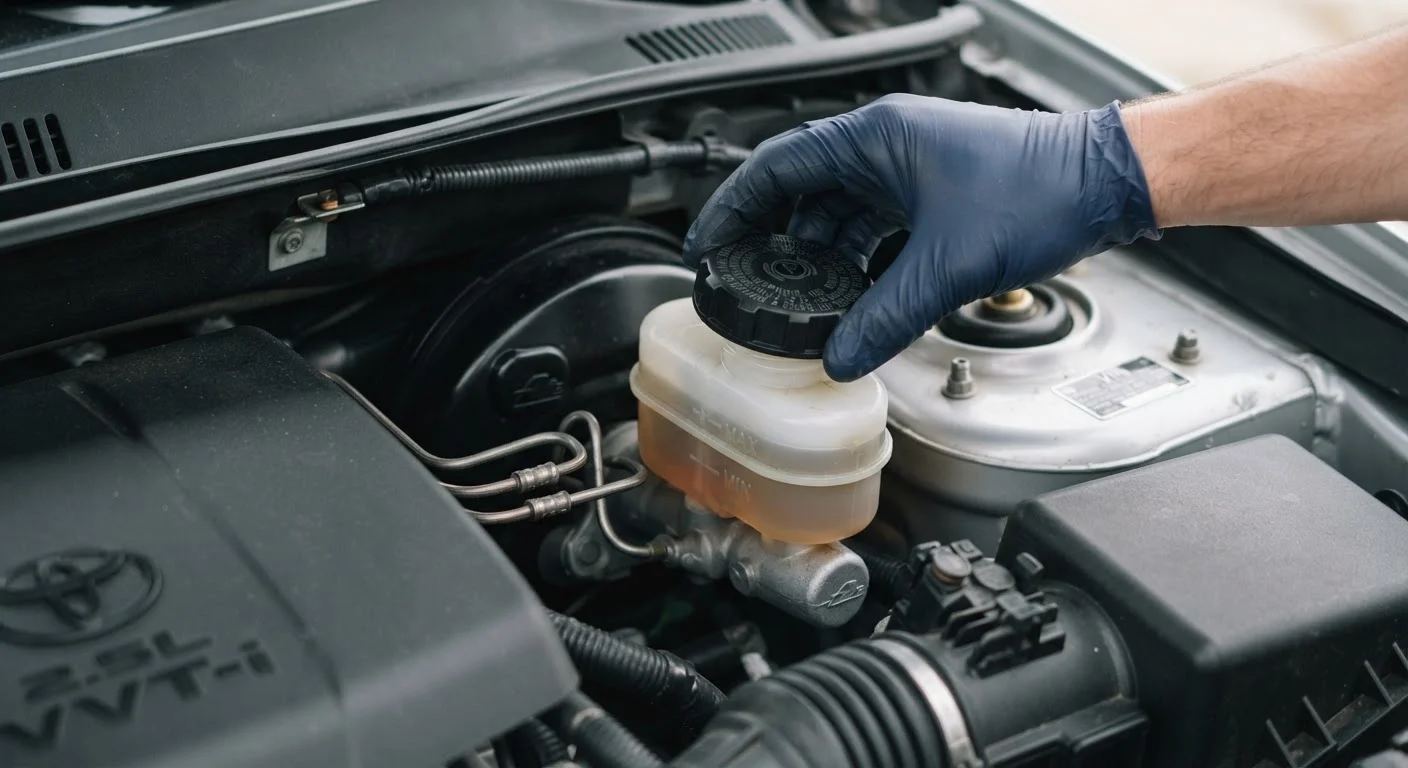
Fresh glycol-based brake fluid is clear to light amber. As contamination increases, it takes on a darker, brownish hue. Open the reservoir cap (engine off, vehicle cool) and look directly at the fluid. Cloudy or very dark fluid is a strong indicator that a change is overdue.
Beyond visual checks, you can use moisture-test strips designed for brake fluid - these are inexpensive and give a rapid reading of water content. Some shops also use electronic testers that measure boiling point directly.
Pedal feel is another diagnostic signal. A soft or spongy pedal that firms up with repeated pumping often points to moisture-laden fluid or air in the lines. For a deeper look at what pedal behavior reveals about brake system health, see how brake pedal feel works as a diagnostic tool.
Check Fluid Color at Every Oil Change
Make it a habit to visually inspect the brake fluid reservoir every time you change your engine oil. The color shift from clear-amber to dark brown is a reliable early indicator that the fluid is absorbing contaminants. Catching it early keeps the service simple and inexpensive.
How a Brake Fluid Flush Works
A brake fluid flush replaces the old fluid throughout the entire hydraulic circuit - master cylinder, lines, calipers, and wheel cylinders. Simply draining and refilling the reservoir does not purge the old fluid from the rest of the system; a proper flush requires bleeding at each wheel.
The process involves connecting a pressure bleeder or using the two-person manual method: one person pumps the brake pedal while another opens and closes the bleeder screw at each caliper in sequence, expelling old fluid until fresh fluid runs clear. Wheels are typically bled starting from the one furthest from the master cylinder.
This is a job that requires mechanical confidence, correct fluid type for your vehicle, and attention to keeping the reservoir topped during the process - allowing it to run dry introduces air into the system. If there's any doubt, this service is well within the scope of a routine shop visit and is generally low-cost relative to its safety impact. As noted in our coverage of how deferred maintenance compounds, delaying a simple fluid service can lead to corrosion in calipers and master cylinders - failures that cost significantly more to address.
Service Intervals and Fluid Specifications
Most vehicle manufacturers recommend brake fluid replacement every two years, with some extending to 45,000 miles under certain conditions. Always defer to your owner's manual, which specifies both the interval and the correct DOT specification for your system.
Do not assume that a higher DOT number is automatically better for your vehicle. System seals and hoses are engineered for specific fluid chemistry. Using the wrong type - particularly substituting DOT 5 silicone fluid into a glycol-based system - can damage seals and cause brake failure. Stick to the specification listed in the manual or on the reservoir cap.
For vehicles used in performance or towing contexts, more frequent changes are reasonable. Repeated hard braking accelerates heat cycling, which drives moisture absorption faster than everyday driving does. For a broader look at how brake system components interact under demanding conditions, see brake upgrades for performance driving.
~3%
Moisture content that significantly lowers boiling point
Industry testing shows that glycol-based brake fluid absorbing approximately 3% water by volume can see its boiling point drop by 100°F or more compared to fresh fluid.
2 years
Common manufacturer-recommended replacement interval
Many OEM service schedules recommend brake fluid replacement every two years, independent of brake pad or rotor condition.
311°F
Typical wet boiling point of DOT 4 fluid
Once moisture-saturated, DOT 4 fluid's boiling point can drop from 446°F to around 311°F - a reduction that narrows the safety margin during hard braking.
This article is for informational purposes only. Brake system work involves safety-critical components. If you are uncertain about any service procedure, consult a qualified mechanic before proceeding.