Reading the Viscosity Code: What 5W-30 Actually Means
Every engine oil label carries a viscosity grade - a shorthand like 5W-30, 10W-40, or 0W-20 - standardized by the Society of Automotive Engineers (SAE). Once you understand the structure of that code, you can immediately interpret what any bottle tells you about flow behavior and protection range.
| Viscosity Rating Body | Society of Automotive Engineers (SAE) |
| "W" in Grade Stands For | Winter (cold-start flow rating) |
| High-Temperature Test Standard | 100°C (212°F) (SAE J300 standard) |
| Common Current API Gasoline Rating | SP (introduced 2020) (American Petroleum Institute) |
| Typical Full Synthetic Change Interval | 7,500-10,000+ miles (varies by vehicle) (Consult owner's manual for your specific vehicle) |
| Base Stock Categories | Groups I-V (per API classification) (American Petroleum Institute) |
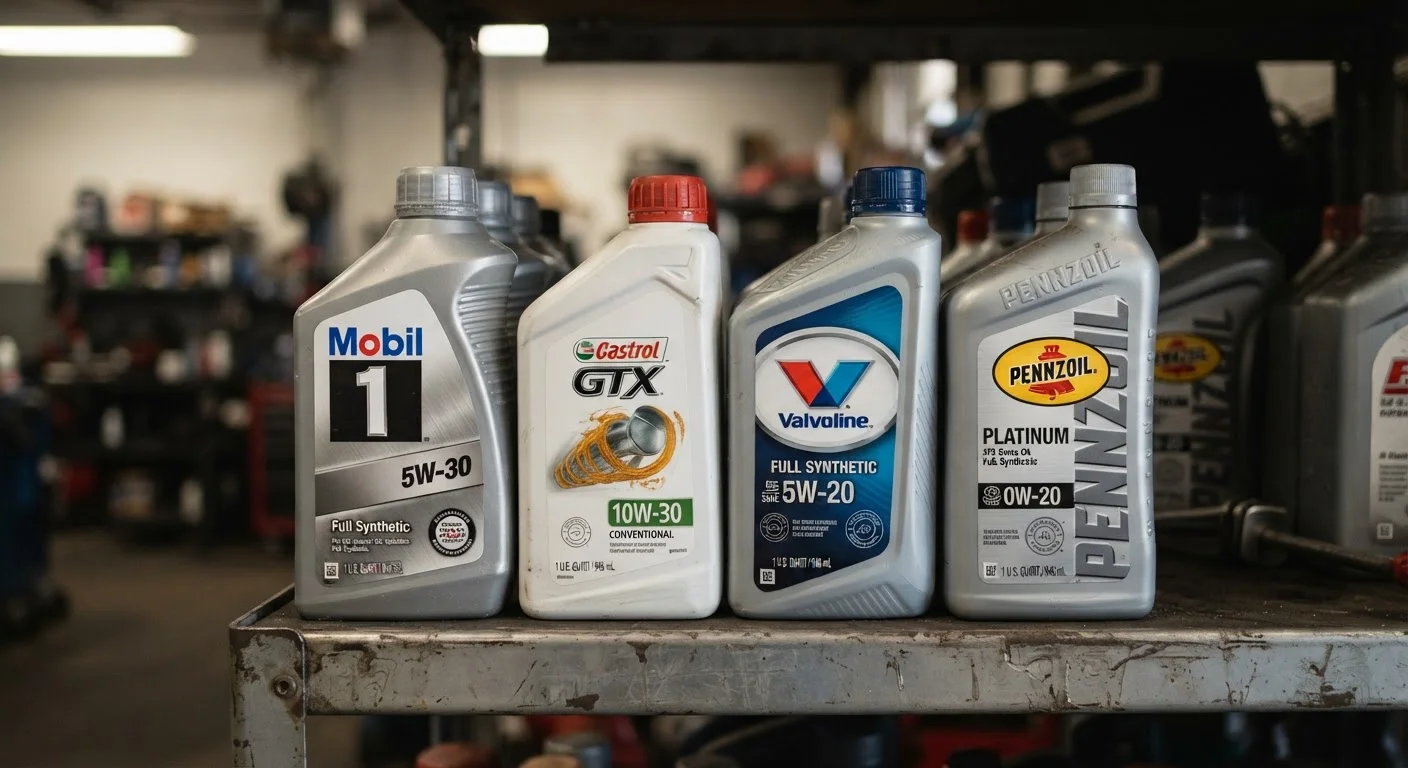
The number before the W (which stands for Winter, not weight) describes how the oil flows in cold temperatures. Lower numbers - 0W, 5W - indicate better cold-start flow, meaning the oil reaches engine components faster after a cold start, reducing wear during those critical first seconds. The number after the hyphen describes viscosity at operating temperature (standardized at 100°C). A higher number means a thicker oil film at heat - relevant for engines running under sustained load or in hot climates.
So a 5W-30 oil flows readily in cold conditions and maintains a moderate film thickness at full operating temperature. A 10W-40 Beyond viscosity, labels often specify the oil's base stock type. This determines the oil's molecular consistency, resistance to thermal breakdown, and how long it retains its protective properties. Viscosity A measure of a fluid's resistance to flow. In engine oil, viscosity describes how readily the oil moves through the engine at a given temperature - lower viscosity means thinner, faster-flowing oil. SAE Grade A viscosity classification system developed by the Society of Automotive Engineers. Grades like 5W-30 define how oil performs at both cold-start and operating temperatures. Full Synthetic Oil Engine oil made from chemically engineered base stocks that provide uniform molecular structure, better thermal stability, and longer service life compared to conventional oil. API Service Category A certification from the American Petroleum Institute (API) that indicates an oil has met tested performance standards for deposit control, oxidation resistance, and engine protection. Cold-Start Viscosity How readily oil flows when the engine is first started at low ambient temperatures. Represented by the number before the W in a multi-grade rating (e.g., 5W). Synthetic Blend An oil that combines conventional petroleum base stock with synthetic base stock, offering improved performance over straight conventional oil at a lower cost than full synthetic. Conventional motor oil is refined from crude petroleum and contains natural molecular variation. It meets basic service requirements but tends to break down faster under extreme heat or prolonged drain intervals. Full synthetic oil is engineered from chemically modified base stocks (or synthesized compounds) to achieve uniform molecular structure. This consistency delivers more stable viscosity across temperature extremes, slower oxidation, and longer service life. Most modern turbocharged engines and high-performance powerplants specify full synthetic because their tighter tolerances and higher operating temperatures demand it. Synthetic blend oils mix conventional and synthetic base stocks, offering a middle-ground in cost and performance - often appropriate for light trucks and vehicles doing moderate towing or hauling. If you notice oil-related symptoms, our guide to engine noises can help you identify whether lubrication may be a contributing factor. For identifying leaks that may indicate oil consumption or seal wear, see Fluid Leaks Decoded. Viscosity and base stock type alone don't tell the full story. Look for the API donut - a circular certification mark from the American Petroleum Institute printed on most oil containers. The two-letter service category inside (such as SP for current gasoline engines or CK-4 for heavy-duty diesel) indicates the oil's tested performance level, including oxidation resistance, deposit control, and compatibility with emissions hardware like catalytic converters. ~40% Of engine wear occurs at cold start Industry engineering data indicates a significant share of total engine wear happens in the seconds before oil pressure fully builds - underscoring the importance of cold-flow viscosity. 0W-60 Range of SAE winter viscosity grades available SAE J300 defines multiple cold-temperature grades, giving engineers and consumers precise control over cold-start lubrication performance. Always cross-reference the oil specification listed in your owner's manual. Manufacturers engineer engines to precise tolerances and specify oil grades based on internal clearances, pump design, and expected operating conditions. Using an oil that is too thick can starve components during cold starts; using one that is too thin at high temperatures can allow metal-to-metal contact under load. For a broader look at how technical specifications relate to real-world performance, What the Numbers on a Performance Spec Sheet Really Tell You puts those figures in context. And if oil myths are clouding your judgment, Common Misconceptions About Engine Oil addresses the most persistent ones directly. This article is intended as a general educational reference. Always consult your vehicle's owner's manual and, where needed, a qualified mechanic before changing oil specifications or extending service intervals.Conventional, Synthetic Blend, and Full Synthetic: What the Base Stock Changes
API Service Ratings and Why Specification Matching Matters