What Defines a Class B Campervan
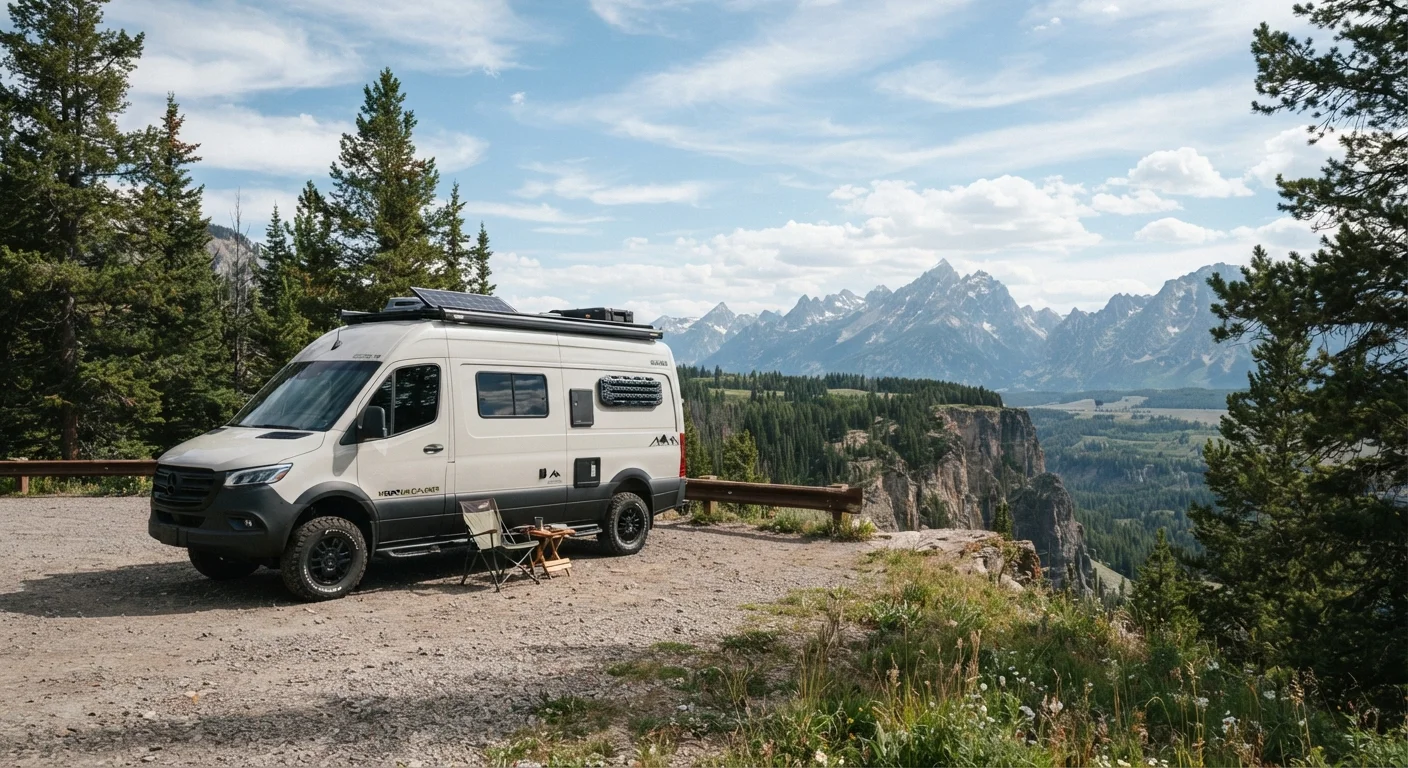
Class B motorhomes - commonly called campervans - are factory-built recreational vehicles constructed on a full-size van chassis. Manufacturers purchase a cutaway or high-roof cargo van (typically a Mercedes-Benz Sprinter, Ram ProMaster, or Ford Transit platform) and convert the interior into a self-contained living space with sleeping, cooking, and sanitation facilities.
Their defining characteristic is size. Most Class B units range from roughly 19 to 24 feet in overall length, making them the smallest class of true motorhome. That distinction matters: unlike a converted camper van built by a private owner, a purpose-built Class B carries a manufacturer certification and is designed to meet RVIA (Recreational Vehicle Industry Association) standards. For a broader look at where Class B fits in the motorhome landscape, see The RV Class System Explained.
What You Get Inside a Class B
Despite the compact footprint, a well-designed Class B floor plan delivers a surprising range of features. Most production models include a fixed or convertible sleeping area rated for two adults, a compact galley kitchen with a two-burner cooktop and small refrigerator, a wet bath or combo bath (where the shower, toilet, and sink share a single compartment), and climate control via a rooftop unit or diesel heater.
Fresh, gray, and black water tanks are present but small - typically 20-30 gallons each - which dictates how long you can camp off-grid before needing a dump station. Electrical systems often include a shore power hookup and an auxiliary battery bank, sometimes paired with a rooftop solar panel array. Storage is creative but tight: under-bed compartments, overhead bins, and exterior pass-through access panels are common design solutions.
Class B+ Is a Distinct Category
Some manufacturers produce units called Class B+ or Class B Extended, built on a wider or stretched van chassis to add interior space. These occupy a middle ground between a true Class B and a Class C motorhome. They typically sacrifice some of the parking and campground access advantages that make standard Class B units distinctive. If a floor plan advertises significantly more width or a slide-out, confirm whether it is a true Class B or a B+ designation before comparing it to standard campervans.
For those interested in how these interior choices compare across RV categories, Every RV Type at a Glance offers a structured class-by-class reference.
Advantages of the Class B Format
The campervan's size is simultaneously its greatest limitation and its most compelling advantage. These units drive like a large van - not a commercial vehicle - which means most licensed drivers can operate one without special training or an adjustment period. Street parking, urban navigation, and standard campsite pull-ins that would be impractical for a 35-foot Class A are routine for a Class B.
Drives and parks like a standard large van
No special licensing or skill is required, and the vehicle fits in standard parking structures and urban spaces where larger motorhomes cannot go.
Meaningfully better fuel efficiency
Gas-powered Class B models frequently achieve 18-22 mpg on the highway, a significant improvement over Class A or Class C motorhomes of comparable age.
Access to length-restricted campgrounds
Many national park and state park campgrounds cap site lengths at 20-25 feet, which a Class B comfortably meets and larger rigs cannot.
Usable as a daily driver between trips
Unlike a towable RV, a Class B can serve as a primary or secondary vehicle for everyday use, reducing the cost of maintaining a separate tow vehicle.
Self-contained without requiring hookups
Built-in tanks, electrical systems, and often solar panels allow for short-term dry camping without dependence on campground infrastructure.
Fuel economy is notably better than larger motorhome classes. A gas-powered Class B might average 18-22 mpg on the highway; a diesel variant often performs comparably. That gap becomes significant on long-distance routes. Campsite access is another underappreciated benefit: many national park campgrounds post length restrictions that exclude larger rigs entirely, while a Class B fits comfortably. For a direct size and access comparison, RV Classes Compared breaks down these tradeoffs systematically.
Disadvantages and Real-World Limitations
The trade-offs of the Class B are real and worth examining honestly before committing to the format. Interior space is the most immediate constraint - standing headroom exists in high-roof models, but lateral space is van-width, roughly 5.5-6 feet. Two people sharing the space for an extended trip requires genuine comfort with close quarters.
Interior width is limited to van dimensions
Most Class B interiors are approximately 5.5 to 6 feet wide, which constrains furniture size, aisle space, and the ability to move around comfortably.
Sleeps a maximum of two adults comfortably
Nearly all production floor plans are designed with one sleeping area rated for two; families or groups of three or more adults will find the layout inadequate.
Small tank capacity limits off-grid duration
Fresh water tanks in the 20-30 gallon range require disciplined usage and frequent fill-ups, making extended boondocking challenging without external water sources.
High cost per square foot relative to Class C
The specialized van chassis conversion process often means Class B units cost more per usable square foot than larger Class C motorhomes at similar price points.
No slide-outs to expand living area
The van chassis cannot structurally accommodate slide-out room extensions, so the interior footprint at camp is identical to the footprint while driving.
Limited storage for extended travel gear
Outdoor equipment, clothing for multiple climates, and specialty gear must be carefully curated; there is little tolerance for overpacking compared to larger RV classes.
Tank capacity limits boondocking duration without careful water management. Groups of three or more adults will find sleeping arrangements either impossible or highly uncomfortable in most production floor plans. And while Class B purchase prices are lower than Class A motorhomes, they often carry a higher per-square-foot cost than Class C units. Anyone weighing the Class B against the largest motorhome category should review Class A Motorhomes: Scale, Comfort, and the Tradeoffs for a grounded comparison.
19-24 ft
Typical Class B overall length range
Most production Class B motorhomes fall within this range, enabling access to campsite length restrictions that exclude larger rigs.
18-22 mpg
Estimated highway fuel economy (gas models)
Gas-powered Class B campervans generally achieve substantially higher fuel economy than Class A or Class C motorhomes under similar highway driving conditions.
20-30 gal
Typical fresh water tank capacity
Most Class B floor plans include fresh water tanks in this range, which defines the practical limits of off-grid camping without resupply.
Who the Class B Actually Suits
Class B campervans perform best for solo travelers and couples who prioritize travel flexibility over living space. They suit people who want a vehicle they can also use for daily errands, weekend getaways, and extended road trips without switching between a tow vehicle and a towable unit. Remote trailheads, urban stopovers, and national park campgrounds with site length limits are all Class B territory.
They are a poor match for families with children, travelers who require separate sleeping and living zones, or anyone who plans extended off-grid stays without meticulous water and power management. Those traveling with pets often find the layout workable, provided the sleeping configuration allows for it. For practical insights on daily life in a compact RV, the Living hub covers the realities of full-time and part-time RV living in detail.