What Separates Pop-Ups from Other RV Classes
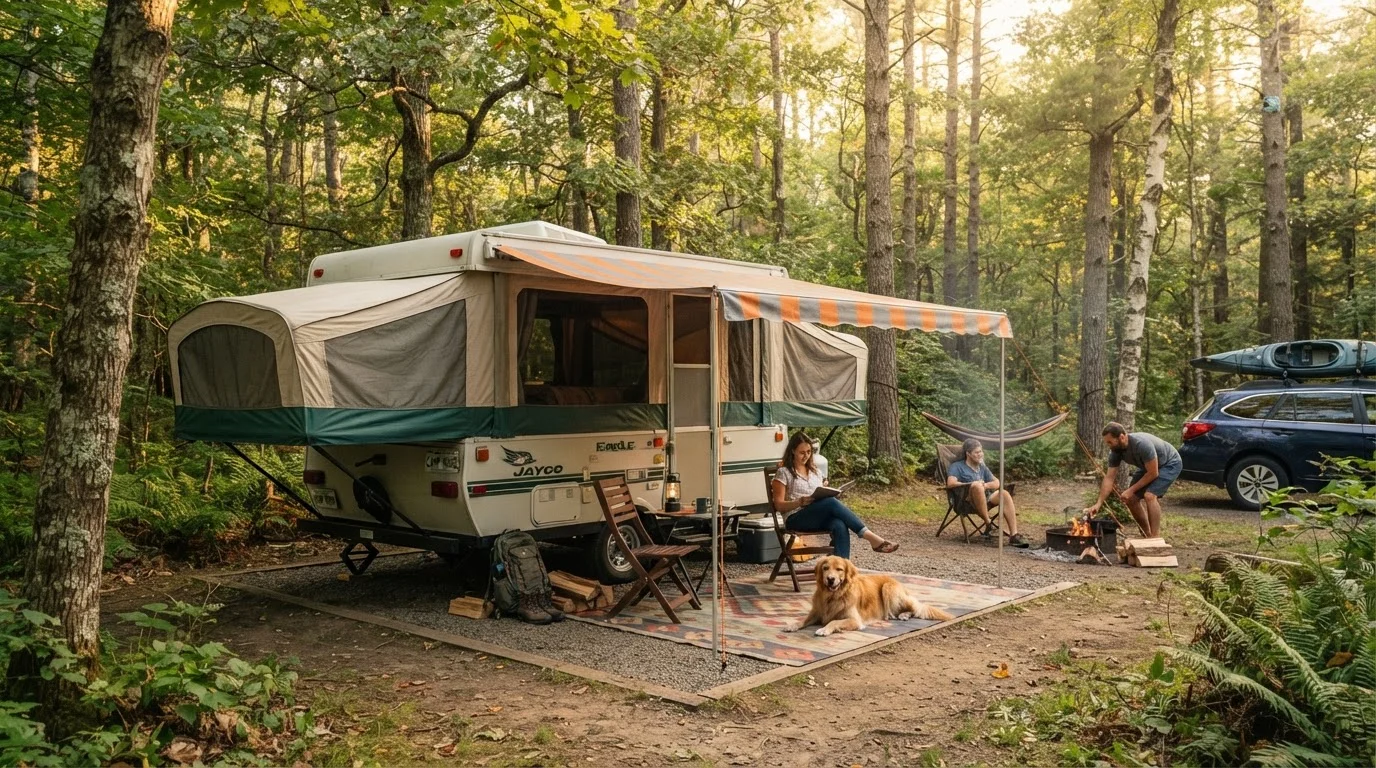
Within the broader RV spectrum, pop-up campers occupy a well-defined niche: they are fully towable units that collapse to road height for transport, then expand into usable living space at the campsite. That collapsible design is their defining trait - and the source of both their strengths and their limitations. To see how they fit within the full picture, every major RV type at a glance provides a useful overview.
In their folded state, most pop-ups stand roughly 4 to 5 feet tall. This dramatically reduces wind drag during towing and allows storage in a standard garage - advantages no hard-sided travel trailer or motorhome can match. When deployed, the same unit can span 16 to 22 feet in length with sleeping capacity for four to eight people spread across folding bunk ends and a central dinette that converts to a bed.
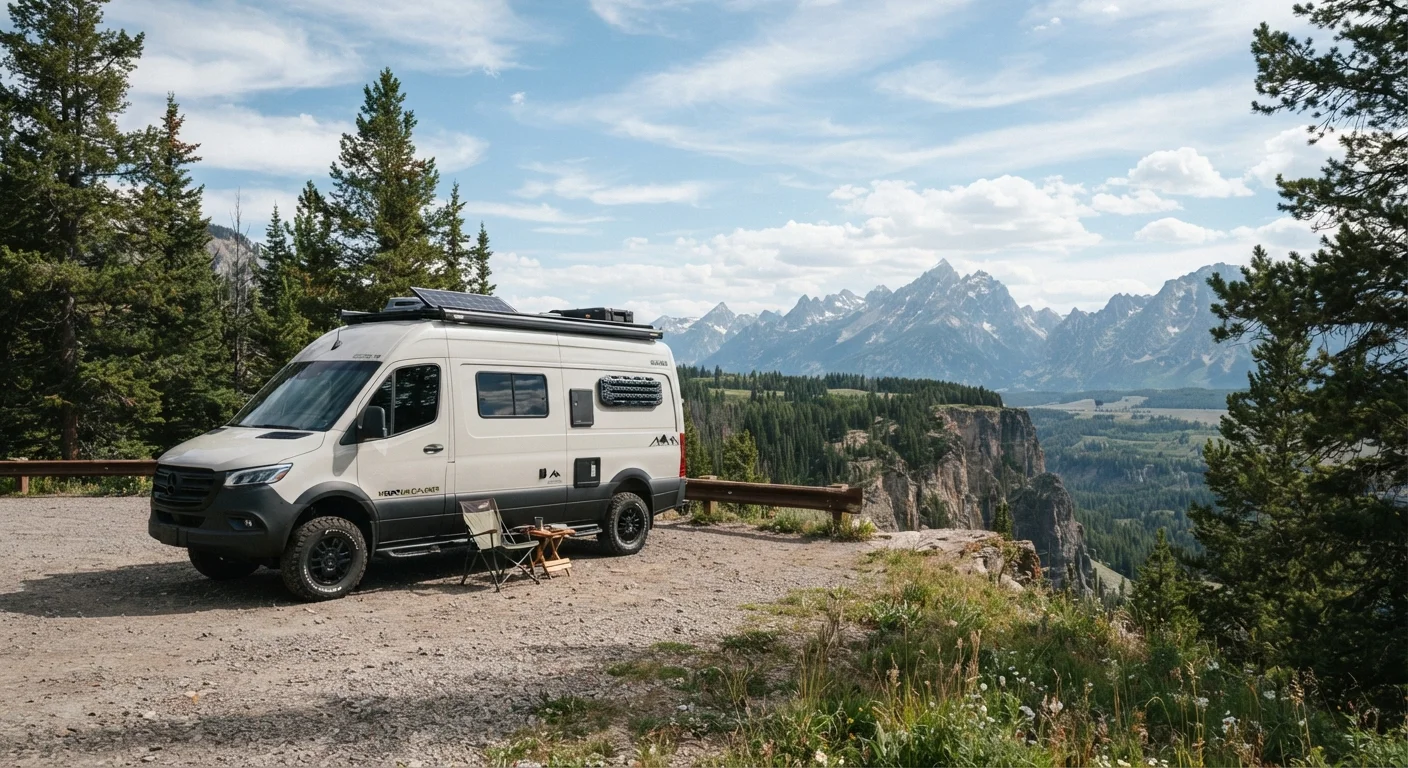
Hard-sided RVs - including Class B campervans and conventional travel trailers - maintain a fixed interior volume. Pop-ups trade that rigidity for portability. The tradeoff shapes nearly every aspect of the ownership experience.
Hard-Sided Pop-Ups Are a Distinct Variant
Some manufacturers produce 'hard-sided' folding trailers that use rigid aluminum or composite panels instead of canvas walls. These units offer better weather resistance and insulation than traditional canvas pop-ups, while still collapsing for compact towing and storage. They typically weigh more and cost more than canvas equivalents, but close part of the gap with conventional travel trailers.
The Setup Process: What to Expect
Setting up a pop-up camper is a hands-on process that new owners should practice before their first trip. The basic sequence involves unhitching from the tow vehicle, deploying stabilizer jacks at each corner, and cranking the roof upward - either with a hand crank or an electric lift system. As the roof rises, the canvas or vinyl walls stretch taut and the folding bed ends slide outward.
From there, most campers connect shore power or set up a portable battery, unfold the sleeping surfaces, and run any slide-outs if the model includes them. Water connections and propane systems follow the same principles used in conventional trailers.
Practice Setup Before Your First Trip
Run through the complete setup and teardown sequence at home at least once before heading to a campground. Pay particular attention to the canvas tension points and lift mechanism - these are the most common sources of first-trip frustration. Arriving at a site already familiar with your unit's quirks makes the experience considerably smoother.
Experienced pop-up owners emphasize one consistent lesson: practice the full setup and teardown at home before arriving at a campground. Troubleshooting a stuck lift mechanism or misaligned canvas in the dark, at an unfamiliar site, is considerably more stressful than solving the same problem in your driveway on a Saturday afternoon.
Teardown is effectively the reverse sequence. Bedding must be removed or secured before the beds fold inward, and the canvas must be dry to prevent mold during storage - a maintenance discipline that hard-sided RV owners do not face.
Capabilities, Limitations, and Ideal Conditions
Pop-ups perform best in mild, dry weather. Their canvas walls - typically treated for water resistance - can handle moderate rain, but they are not vapor barriers. Interior humidity rises in wet conditions, and canvas degrades faster when stored damp. Cold-weather use is possible but requires active heating; insulation values are far lower than any hard-sided class.
1,500-4,000 lbs
Typical GVWR range for pop-up campers
The Recreational Vehicle Industry Association (RVIA) categorizes folding trailers within this weight range, enabling towing by a wide range of non-truck vehicles.
4-5 ft
Collapsed tow height (approximate)
This low profile significantly reduces aerodynamic drag compared to hard-sided trailers and allows garage storage in many residential settings.
10-30 min
Typical campsite setup time
Setup time varies by model complexity and owner experience; powered lift systems and practiced routines reduce it toward the lower end of this range.
On the positive side, pop-ups access campsites that larger rigs cannot. Their compact tow profile makes them manageable on forest roads and in campgrounds with tight pull-through restrictions. For families who camp primarily in summer at established campgrounds with hookups, the limitations rarely become dealbreakers.
Amenity levels vary significantly across the category. Entry-level models may include only folding beds, a dinette, and a two-burner propane stove. Mid-range units add a refrigerator, indoor sink, awning, and exterior storage. Higher-spec folding trailers - sometimes called hard-sided pop-ups - use rigid panels instead of canvas, closing some of the weather-resistance gap while retaining the collapsible profile.
For a direct comparison with the smallest motorhome class, Class B campervans offer always-ready, hard-sided shelter at a significantly higher price point and with no setup time required.
Who Pop-Up Campers Genuinely Serve Well
The folding trailer class is well-matched to a specific buyer profile: someone who camps seasonally, values low cost of entry, has limited garage or storage space, and tows with a vehicle that cannot handle a heavier trailer. First-time RV buyers frequently find pop-ups a practical way to learn systems - water, propane, leveling, electrical - before committing to a larger rig.
Families with children who have outgrown tent camping often find pop-ups a natural step up. The covered sleeping area, camp kitchen, and protected space offer meaningful comfort upgrades without the complexity of managing a full-size travel trailer. Comparing RV classes across space, cost, and campsite fit can help clarify where pop-ups land relative to alternatives.
Pop-ups are less suited to full-time or extended RV living, cold-climate use, or travelers who prioritize arriving-and-going-without-setup convenience. For those transitioning into deeper RV engagement, RV living fundamentals for beginners addresses the broader lifestyle considerations that follow any RV purchase decision.