Why RV Life Works - and Where It Gets Complicated - for Pet Owners
Millions of RV travelers bring pets along for part-time trips or full-time living, and for good reason: pets benefit from proximity to their owners, time outdoors, and varied environments. But the compressed square footage, moving schedules, and climate variability of RV life create challenges that don't exist in a fixed home.
The good news is that most of these challenges are manageable with deliberate planning. The floor plan you choose plays a larger role than many owners anticipate. Layouts with slide-outs or rear living areas can more than double usable floor space when parked, giving pets room to move independently of the kitchen or sleeping area. For a deeper look at how layout configurations affect everyday living, see our guide to reading an RV layout as a pet owner.
Understanding the specific friction points - heat, confinement, unfamiliar environments, and variable park rules - lets you build routines that minimize stress for both you and your animal.
Best Practices for Safe, Comfortable Pet Travel
The following practices reflect the realities of traveling with pets across varied climates, campgrounds, and RV configurations. Apply them consistently to reduce risk and improve quality of life on the road.
Never rely solely on shore power to keep pets cool when leaving them in the RV unattended.
Shore power connections can fail, breakers can trip, and generators run out of fuel. Interior temperatures in a parked RV can reach dangerous levels within minutes in warm weather, posing a serious health risk. Redundant cooling systems - such as a battery-powered backup fan, a temperature alarm, or a remote monitoring device - significantly reduce risk.
Research campground and RV park pet policies before booking every site.
Pet restrictions vary widely: some parks prohibit certain breeds entirely, cap the number of pets per unit, or require proof of vaccination. Arriving without this information can mean turning away or paying unexpected fees. Confirming policies in advance eliminates avoidable surprises.
Establish and maintain a consistent daily routine for feeding, exercise, and rest stops.
Pets - particularly dogs - regulate stress through predictability. Irregular schedules during travel days can cause anxiety, digestive upset, or behavioral changes. Anchoring feeding times and walk schedules to the clock rather than to the itinerary helps animals stay settled across changing environments.
Identify veterinary clinics along your planned route before departing, not after an emergency arises.
Emergency veterinary care in unfamiliar regions is slower to access and often more expensive when you have no established relationships or records. Knowing the nearest clinic at each destination - and keeping digital copies of vaccination and medical records - dramatically improves response time when something goes wrong.
Secure pets during travel using a crash-tested crate or vehicle harness rated for your pet's weight.
An unsecured animal in a moving RV is at risk during sudden braking or collision, and can also distract the driver. Crates bolted or strapped to a fixed surface and harnesses attached to seatbelt anchors are two practical containment methods. Not all harnesses on the market have been independently crash-tested - look for products that specify their testing methodology.
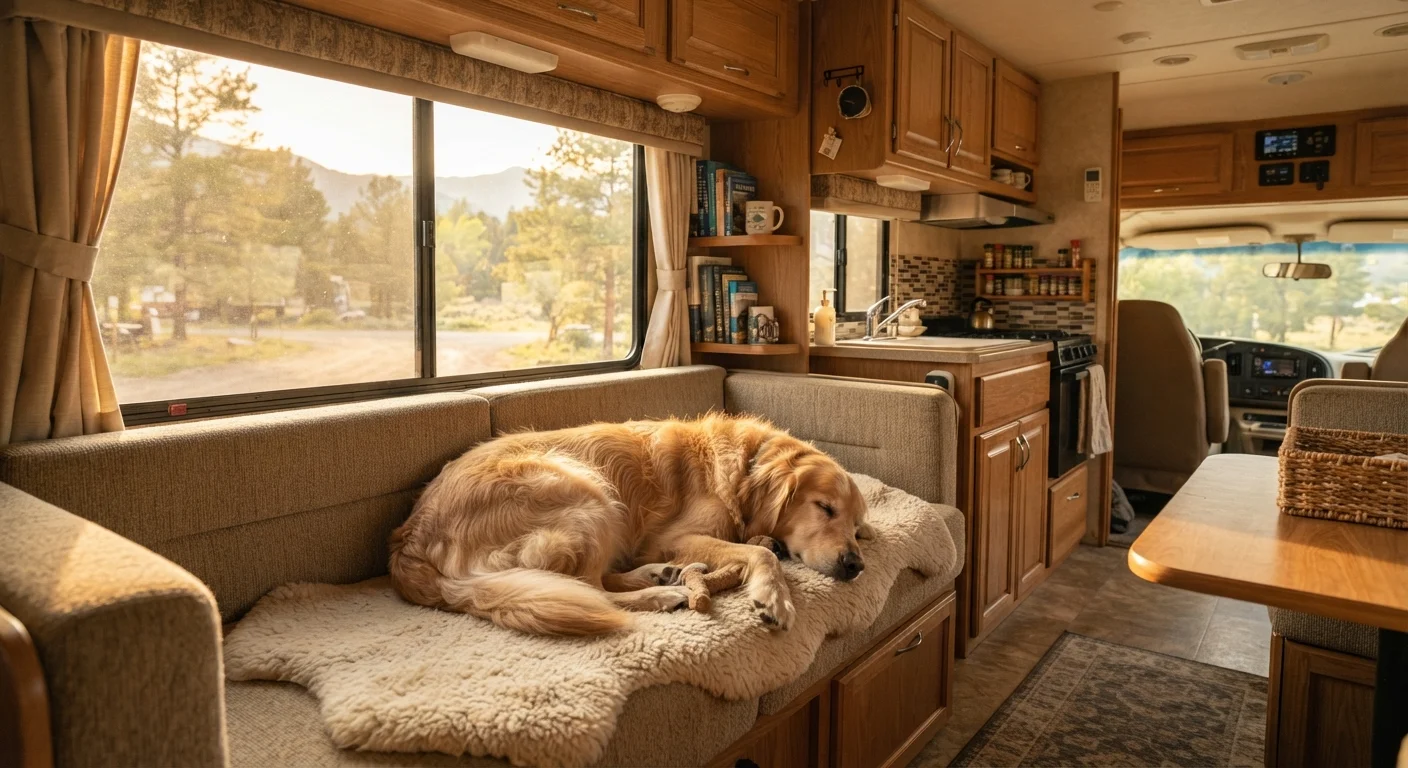
Designate a dedicated, consistent space in the RV that belongs to your pet.
Animals adapt more quickly to new external environments when they have a familiar anchor inside the rig. A specific bed location, crate, or corner - used consistently at every site - gives pets a stable reference point that reduces anxiety caused by location changes.
Start Small and Build From There
The most common mistake new RV pet owners make is attempting long multi-week trips before their animal has adjusted to the vehicle itself. Short overnight shakedowns - even in a driveway - allow pets to acclimate to engine sounds, generator noise, and the motion of travel before adding the stress of new locations.
Storage space is another practical constraint that compounds quickly with pets. Food, crates, bedding, medications, and grooming supplies require dedicated space that competes with your own gear. Our RV storage solutions guide covers practical approaches for organizing a small space without sacrificing accessibility.
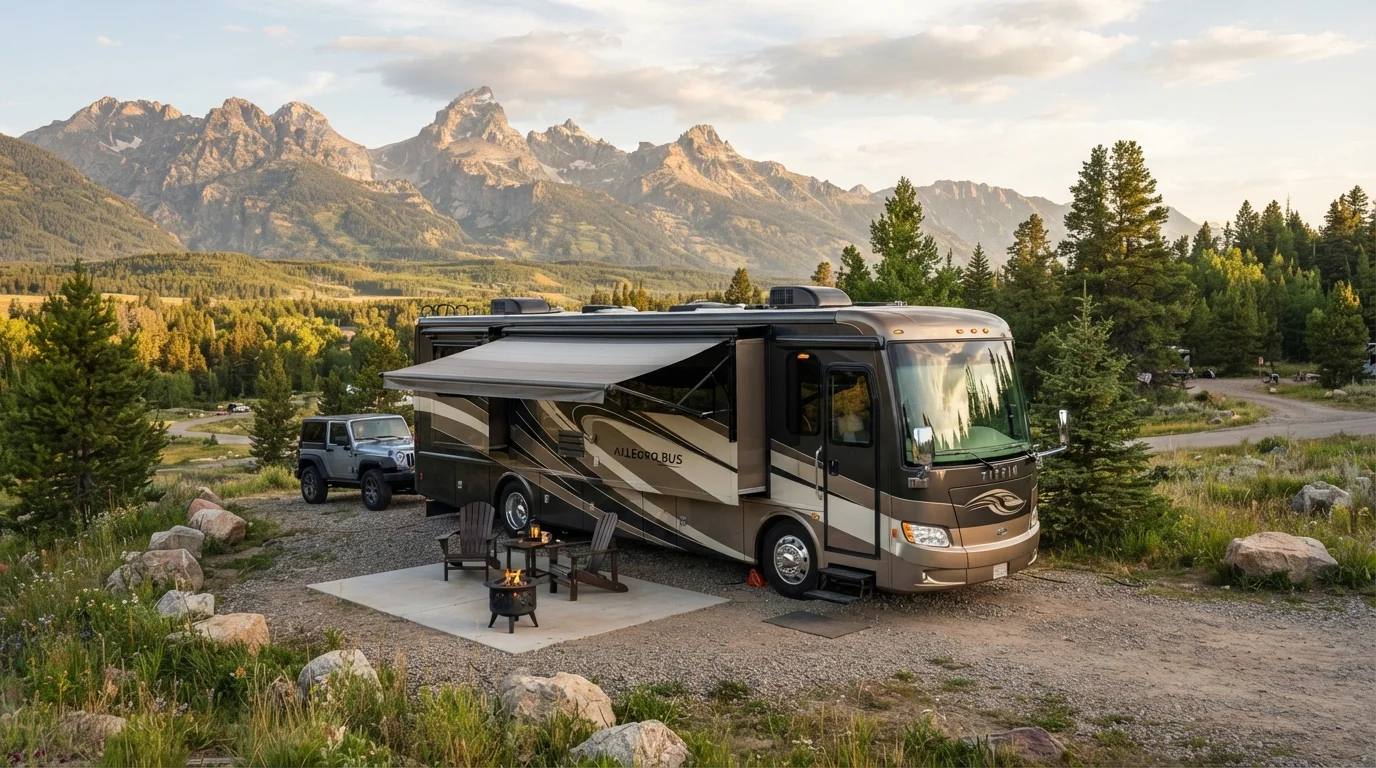
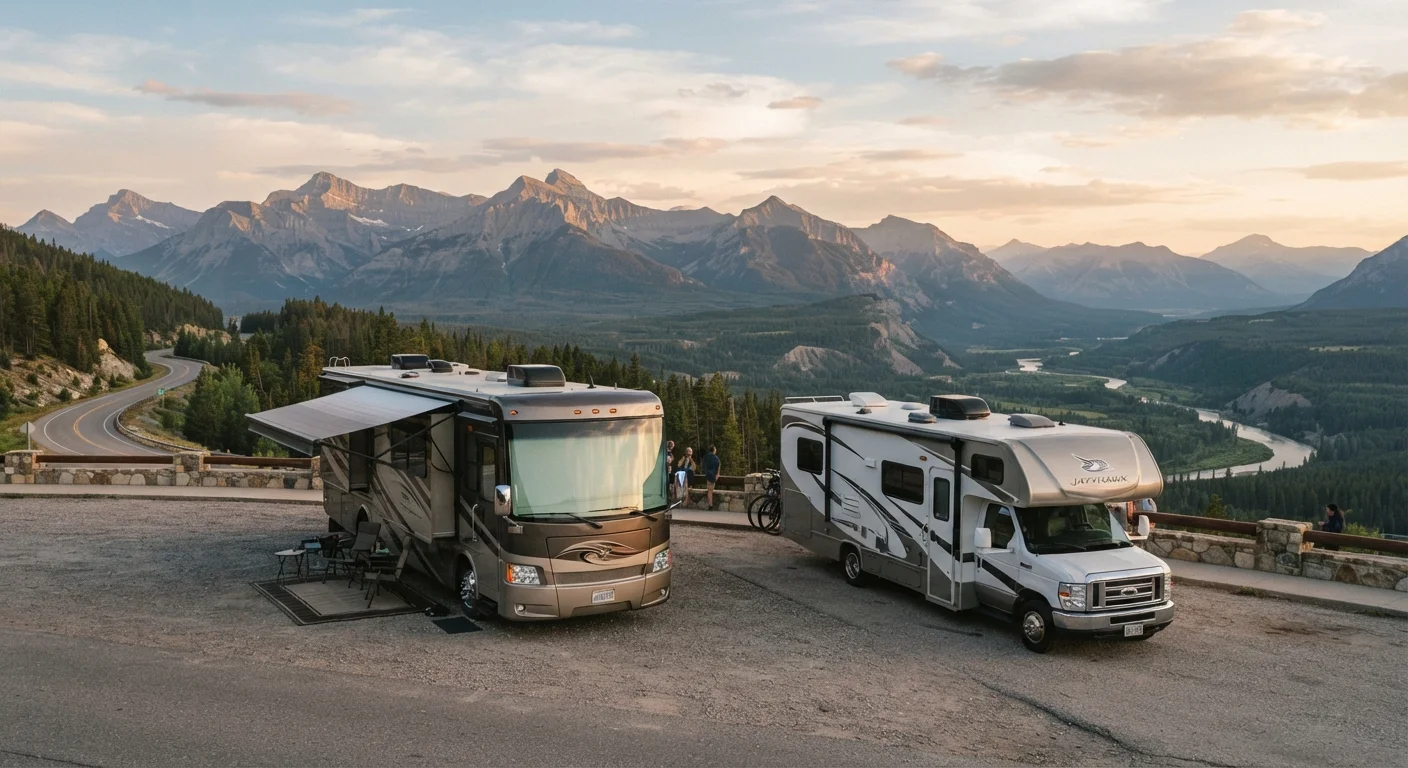
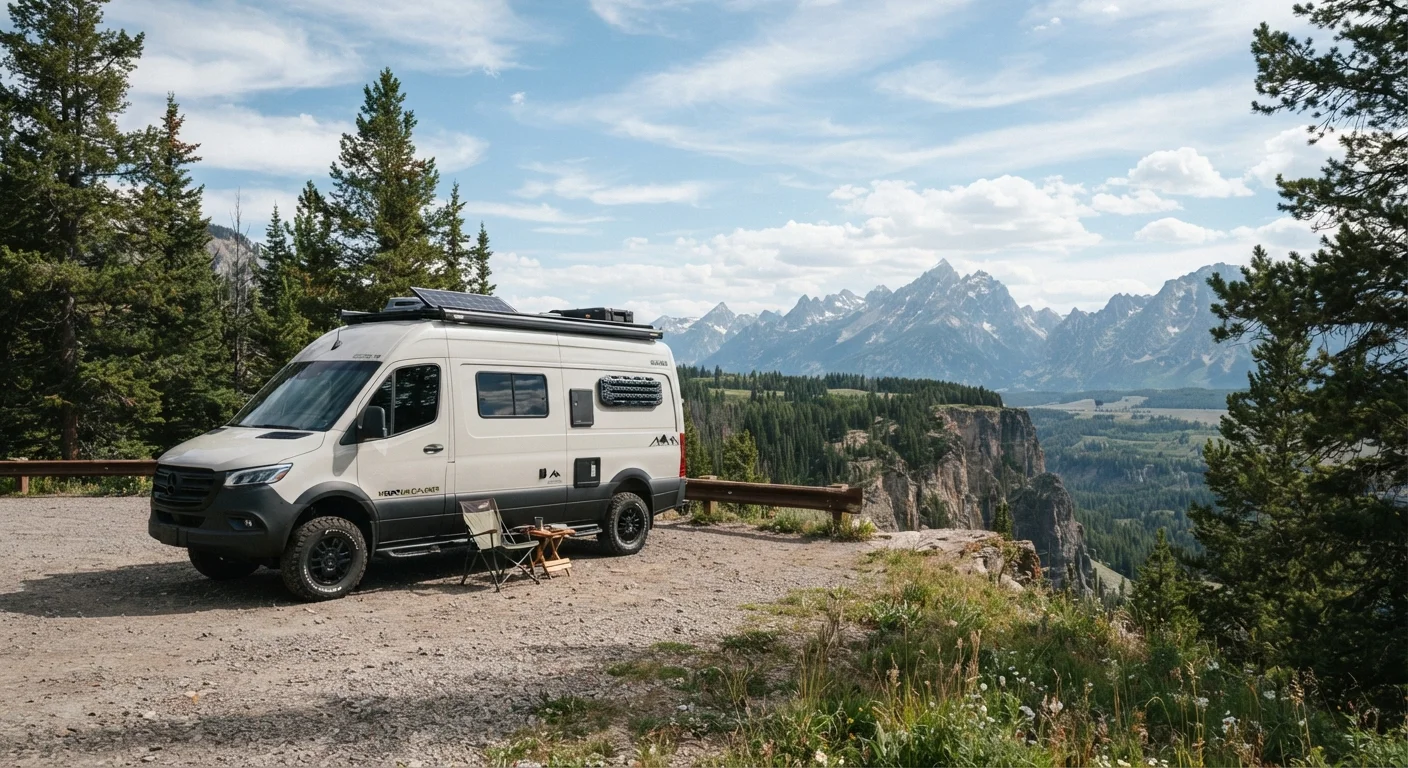
Finally, remember that your RV class shapes what's realistically possible. Class A and Class C motorhomes typically offer more interior flexibility for pets, while Class B campervans demand creative solutions. The RV classes hub is a useful starting point if you're still evaluating which platform fits your travel style.