How Each System Works
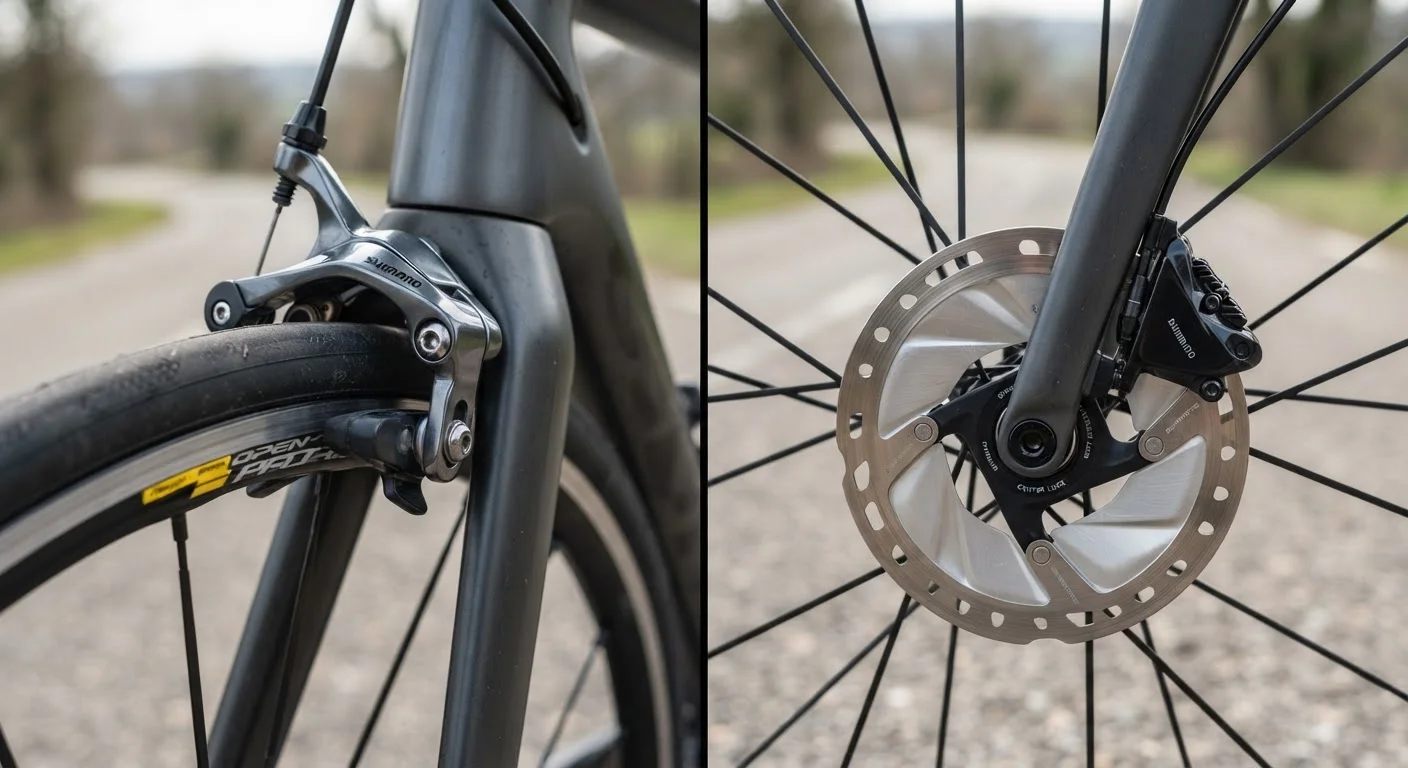
Understanding the difference begins at the point of contact. Rim brakes - including caliper, cantilever, and V-brake designs - use brake pads mounted on calipers that squeeze against the sidewall of the wheel rim when you pull the lever. The rim's braking surface doubles as the friction zone.
Disc brakes move that friction zone entirely away from the rim. A metal rotor bolted to the wheel hub is gripped by a caliper fixed to the fork or frame. Disc systems come in two forms: mechanical, where a cable actuates the caliper, and hydraulic, where sealed fluid transmits lever force. Hydraulic systems use dedicated brake fluid - for background on why that fluid matters, see why brake fluid matters.
This fundamental difference in where stopping force is applied has cascading effects on performance, wheel compatibility, weight, and servicing.
| Criterion | Rim Brakes | Disc Brakes |
|---|---|---|
| Friction point | Wheel rim sidewall | Dedicated hub rotor |
| Wet-weather performance | Reduced; slow to clear water | Consistent; sheds moisture quickly |
| Modulation | Moderate | High (especially hydraulic) |
| System weight | Lighter overall | 150-300g heavier typically |
| Maintenance complexity | Low - cable and pad adjustment | Moderate - bleeding required (hydraulic) |
| Wheel wear | Rim surface wears over time | Rim unaffected; rotor wears separately |
| Wheel compatibility | Requires machined rim surface | Requires rotor mount and disc hub |
| Typical use case | Road, track, dry-weather riding | Gravel, MTB, commuting, loaded touring |
Stopping Power and Modulation in Real Conditions
On dry pavement, a well-tuned rim brake is entirely capable of locking a wheel - the limiting factor is usually tire traction, not the brake itself. In that scenario, both systems can stop a bike effectively.
Where the gap widens is in wet, muddy, or contaminated conditions. Water on a rim takes one to two full wheel rotations to clear enough for the brake pad to bite effectively. A disc rotor, positioned away from road spray and debris, sheds contamination much faster, restoring braking force with minimal delay.
Hydraulic disc brakes also offer superior modulation - the ability to apply graduated, precise force rather than an on/off feel. This matters on technical descents, mixed-surface riding, and situations requiring controlled slowing rather than sudden stopping. Mechanical disc brakes improve on rim brakes in wet conditions but generally deliver less modulation than their hydraulic counterparts.
1-2 rotations
Rim brake water-clearance delay in wet conditions
Industry testing and field observations consistently show rim brakes require one to two full wheel rotations to regain meaningful braking force after water contact.
150-300g
Typical weight penalty of disc vs. rim brake setup
The added mass of rotors, disc-specific hubs, and heavier calipers accounts for an estimated 150-300 gram difference on comparable builds.
2 types
Disc brake actuator types: mechanical and hydraulic
Mechanical disc systems use cables like rim brakes; hydraulic systems use sealed fluid lines for greater force consistency and modulation.
For riders exploring gravel or off-road routes, this plays directly into the wider geometry and component decisions covered in our look at road bikes vs. gravel bikes.
Maintenance, Weight, and Wheel Compatibility
Rim brakes earn their continued loyalty through straightforward maintenance. Pad replacement is quick, cable adjustments require only a hex key, and the system is transparent enough to diagnose and fix roadside. The trade-off: repeated braking gradually wears the rim's braking surface, which can eventually compromise structural integrity - particularly relevant on long, loaded descents.
Disc brakes separate wear items from the wheel itself. Pads and rotors are replaced independently, and a worn rotor has no bearing on rim strength. However, hydraulic systems require periodic bleeding to remove air bubbles and moisture from the fluid line - a process that calls for specific tools and the correct fluid type. Mechanical disc systems avoid bleeding but need regular cable tension management.
On weight, rim brakes hold a clear advantage. A quality caliper rim brake setup can be 150-300 grams lighter than a comparable disc setup when factoring in rotors, heavier hubs, and calipers. For weight-sensitive road and criterium riders, this remains a meaningful consideration.
Wheel compatibility is also a hard constraint: disc-specific wheels use rotor mounts and heavier hub flanges, while rim-brake wheels require a machined braking surface. The two systems are not interchangeable, which affects upgrade paths. Your tire system interacts with this too - clincher, tubeless, and tubular tire trade-offs vary by rim type and brake compatibility.
Switching Systems Is Not a Simple Upgrade
Moving from rim brakes to disc brakes on an existing bike is rarely a straightforward swap. The frame and fork must have disc brake mounts, and the wheels must be disc-compatible with appropriate hub flanges and rotor attachment points. In most cases, a full wheelset change and a compatible frame are required. Factor this into any comparison of long-term costs between the two systems.