Same Silhouette, Different DNA
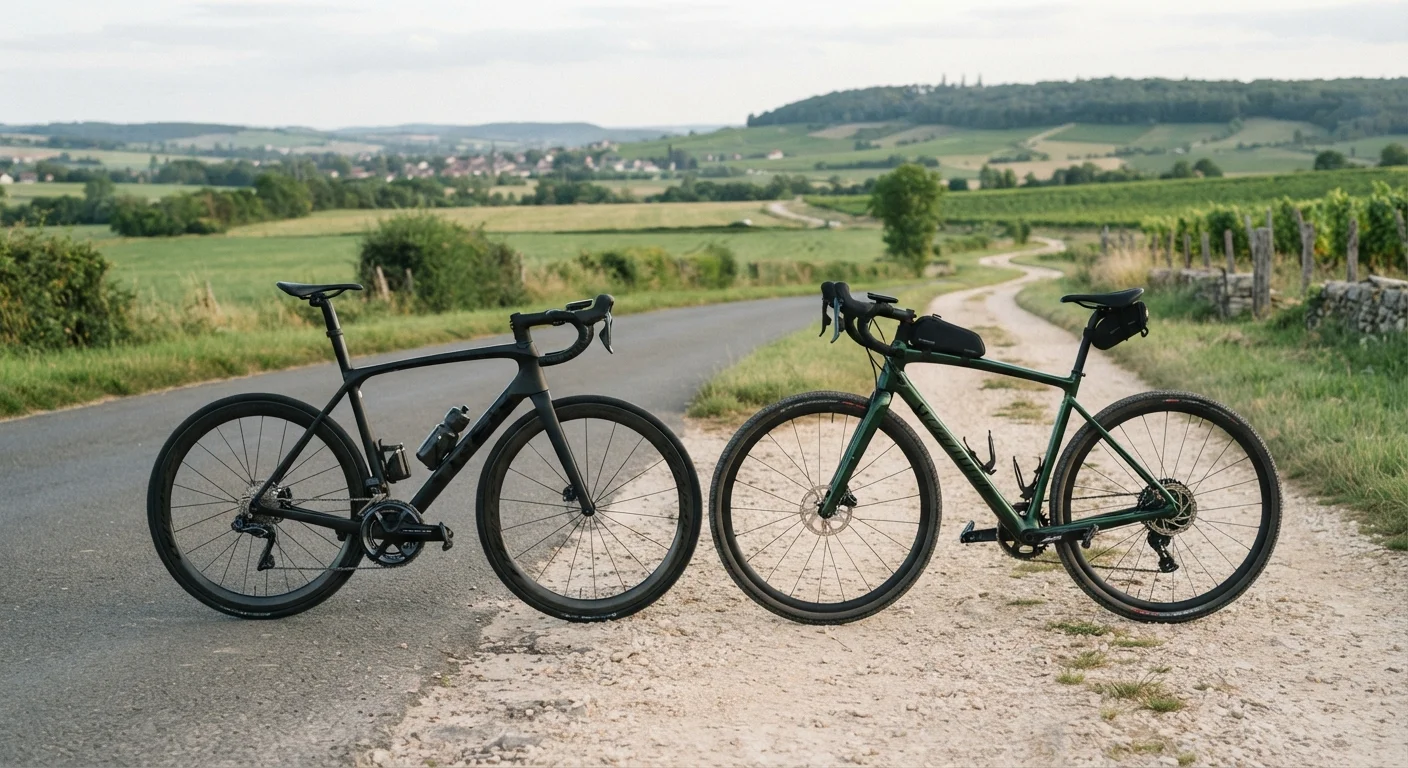
At first glance, road bikes and gravel bikes look nearly identical - both sport drop handlebars and a similar overall profile. That surface resemblance leads many riders to underestimate how differently these two bike styles are actually engineered. Understanding the distinctions helps you avoid buying a bike that fights your riding rather than enabling it. For a broader look at where these styles sit within cycling as a whole, see The Bicycle Style Spectrum.
The clearest differences show up in three areas: frame geometry, tyre clearance, and component selection. Each reflects a deliberate design priority - pure paved-surface performance for road bikes, and adaptable mixed-terrain capability for gravel bikes.
| Criterion | Road Bike | Gravel Bike |
|---|---|---|
| Tyre width range | 23 mm - 32 mm typical | 35 mm - 50 mm typical |
| Frame geometry | Aggressive, low front end | Relaxed, higher stack height |
| Primary terrain | Paved roads | Mixed: paved and unpaved |
| Gear range | Narrow, speed-focused | Wide, includes low gears |
| Brake system | Rim or disc | Disc (standard) |
| Frame mounts | Minimal | Bags, cages, racks |
| Ride comfort | Firm, efficiency-focused | More compliant, all-day capable |
| Competitive use | Road racing, gran fondos | Gravel events, bikepacking |
Geometry: How the Bike Positions You
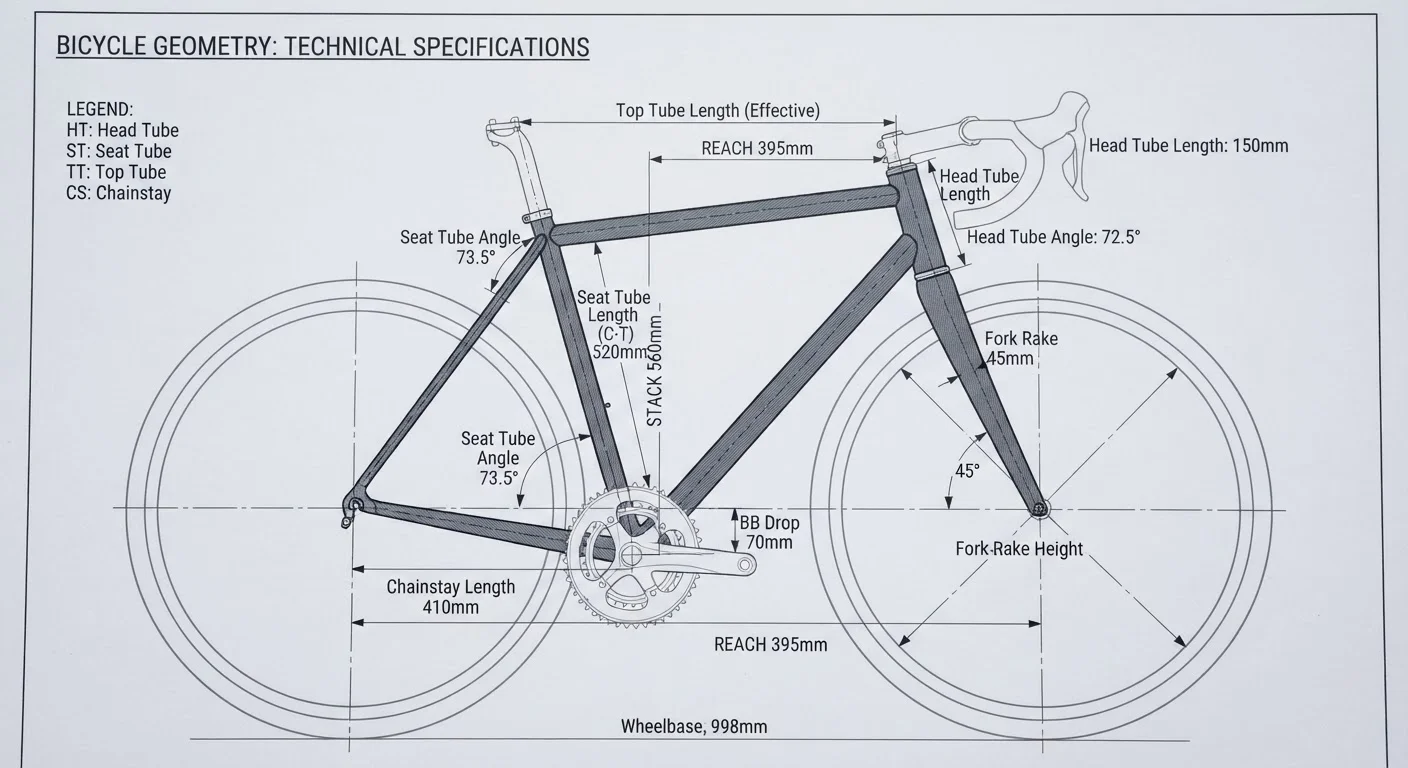
Road bikes are built around an aggressive, forward-leaning riding position. A steeper head tube angle and a lower front end place the rider's weight over the pedals and reduce aerodynamic drag - ideal when every watt counts on a smooth climb or a fast descent. The tradeoff is reduced comfort on longer rides and less tolerance for rough surfaces.
Gravel bikes use a slacker head tube angle and a taller stack height, meaning the rider sits more upright. The wheelbase is typically longer, which distributes weight more evenly and adds straight-line stability on loose or uneven surfaces. This geometry also absorbs trail chatter better, reducing fatigue over hours in the saddle. It's worth noting that gravel geometry overlaps with - but is distinct from - cyclocross and adventure bikes; Cyclocross, Gravel, and Adventure Bikes: Spotting the Differences explains those nuances in detail.
Tyres and Clearance: Where Performance Diverges
Tyre width is arguably the single biggest functional difference between these two styles. Road bike frames are designed around tyres typically ranging from 23 mm to 32 mm wide. Narrower tyres roll faster on pavement by reducing rolling resistance, but they offer limited grip and cushioning on anything rougher.
Gravel bike frames provide clearance for tyres starting around 35 mm and often accommodating 45 mm or wider, depending on the frame. Wider tyres can be run at lower air pressure, which increases the contact patch with the ground, improves traction on loose surfaces, and absorbs vibration more effectively. This tyre volume difference is the core reason a gravel bike can handle a gravel road that would be genuinely hazardous on a road bike. Common Misconceptions About Bike Categories addresses the popular idea that a gravel bike is simply a road bike with bigger tyres - it's a more fundamental design difference than that.
~40%
Rolling resistance reduction with narrower tyres on smooth pavement
Research in cycling biomechanics consistently shows narrower, higher-pressure tyres reduce rolling resistance on perfectly smooth surfaces, though the advantage diminishes on rougher road textures.
35-50 mm
Typical gravel bike tyre clearance
Most contemporary gravel bike frames are designed to accommodate tyres in this range, enabling lower operating pressures and better trail traction compared to road-specific frames.
Components, Mounts, and Practicality
Beyond geometry and tyres, component choices reflect each bike's intended use. Road bikes prioritise lightweight drivetrains with close gear ratios suited to maintaining speed on pavement. Gravel bikes typically use wider gear ranges - including lower gears - to handle steep, loose climbs where maintaining traction matters more than cadence efficiency.
Braking systems have converged somewhat: disc brakes are now standard on gravel bikes and are increasingly common on performance road bikes. For a thorough look at how disc and rim brakes differ in real-world riding conditions, Rim Brakes vs Disc Brakes covers the practical tradeoffs. Gravel bikes also commonly include threaded mounts for frame bags, fork cages, and racks - features that road frames rarely offer. If you're still deciding which style fits your actual routes, Picking a Bike Style When You Ride Mixed Terrain offers a practical framework, and Questions to Ask Before Settling on a Bike Style provides a structured checklist to work through before committing.