What Each Sensor Actually Measures
Both sensor types serve the same fundamental job: telling the motor when to activate pedal assist. However, the information each one gathers - and how the motor responds - is meaningfully different.
A cadence sensor detects rotation. It typically uses a ring of magnets on the crank arm paired with a stationary pickup. When the crank spins, the sensor registers pedaling is happening and signals the motor to engage at the assist level you've selected. It does not measure force - only that rotation is occurring.
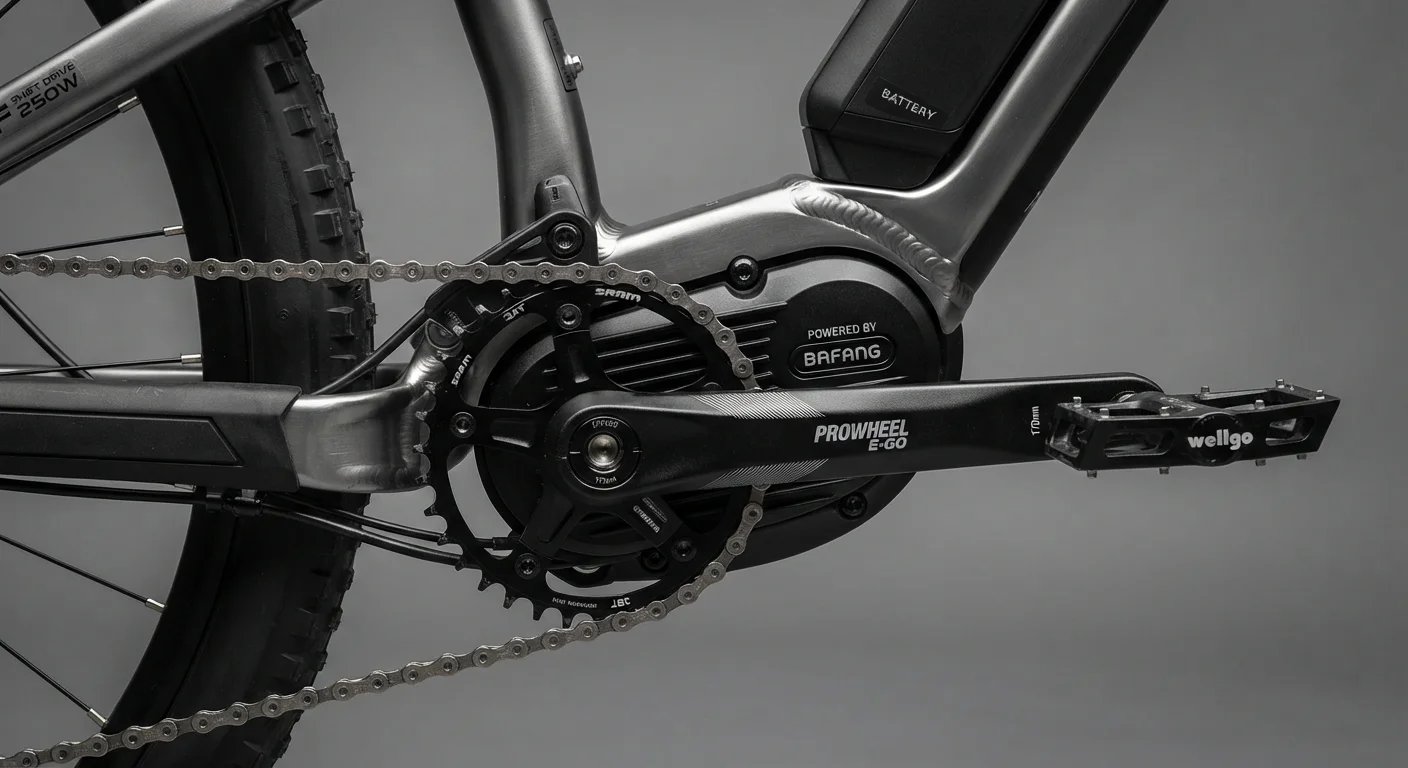
A torque sensor measures the actual force you apply to the pedals, usually through a strain gauge built into the bottom bracket spindle or crank spider. The harder you push, the higher the torque reading, and the motor scales its output proportionally. Stop pushing hard and assist drops; push harder up a hill and it rises to match.
Understanding this distinction explains almost everything about the difference in feel. For broader context on how assist mode itself works, see pedal assist vs throttle.
| Criterion | Torque Sensor | Cadence Sensor |
|---|---|---|
| What it measures | Pedaling force (effort applied) | Pedaling rotation (motion detected) |
| Assist response | Proportional and immediate | On/off at selected level |
| Riding feel | Natural, effort-matched | Fixed, can feel abrupt |
| Typical response lag | Milliseconds | Partial crank revolution |
| Battery efficiency | Generally higher | Draws consistent power |
| Common price tier | Mid-range to premium | Entry-level to mid-range |
| Mechanical complexity | Higher (strain gauge required) | Lower (magnet ring only) |
How the Difference Feels While Riding
Riders switching between sensor types often describe the contrast as immediately noticeable, even on their first outing.
With a cadence sensor, there is typically a brief lag after you begin pedaling - the sensor needs a partial crank revolution before it registers motion. Once triggered, the motor delivers its set assist level regardless of whether you're coasting lightly or grinding uphill. On flat ground this feels adequate; on sudden climbs it can feel abrupt, almost like a push from behind arriving slightly after you needed it.
Torque-sensor assist, by contrast, responds within milliseconds of force being applied. The motor output rises and falls in real time with your effort, creating what many riders describe as a seamless amplification of their own pedaling. The e-bike feels less like a motorized vehicle and more like a bike that simply makes you stronger. This quality is particularly valued on technical trails and varied urban terrain.
~10ms
Typical torque sensor response time
Industry specifications for quality torque-sensing systems commonly cite response times under 10 milliseconds, enabling near-instant assist adjustment.
180°
Crank rotation before cadence trigger
A basic cadence sensor with a single magnet may require up to half a crank revolution before detecting pedaling and engaging the motor.
For commuters weighing these differences alongside other comfort factors, commuter e-bike considerations explores how sensor type fits into the broader spec picture.
Cost, Complexity, and Where Each System Appears
Torque sensors involve precision strain-gauge technology that adds to manufacturing cost and assembly complexity. As a result, they appear predominantly on mid-range and premium e-bikes, and are particularly common in quality mid-drive systems. Cadence sensors are simpler and less expensive to produce, making them the standard choice on entry-level and budget-oriented models.
This doesn't mean cadence-sensor bikes are poor products - many riders find them entirely satisfying, especially on flat routes where the fixed assist behavior is less pronounced. However, if you test-ride two similarly priced e-bikes and one feels noticeably more natural, sensor type is often the explanation.
Sensor Type Isn't Always Listed Prominently
Many e-bike product pages highlight motor wattage and battery capacity without explicitly naming the sensor type. It is worth asking a retailer or checking the drivetrain specifications directly. Some manufacturers list the bottom bracket or motor unit model number, which can be cross-referenced to confirm whether torque sensing is included.
Motor placement also interacts with sensor choice. Hub motor vs mid-drive explains how the motor's location affects how assist translates to the wheel, which compounds the sensor effect.
When evaluating any e-bike, ask specifically which sensor type is installed - marketing terms like "pedal assist" don't distinguish between the two, and the answer makes a real difference to daily riding experience.