Why Battery Longevity Deserves Attention
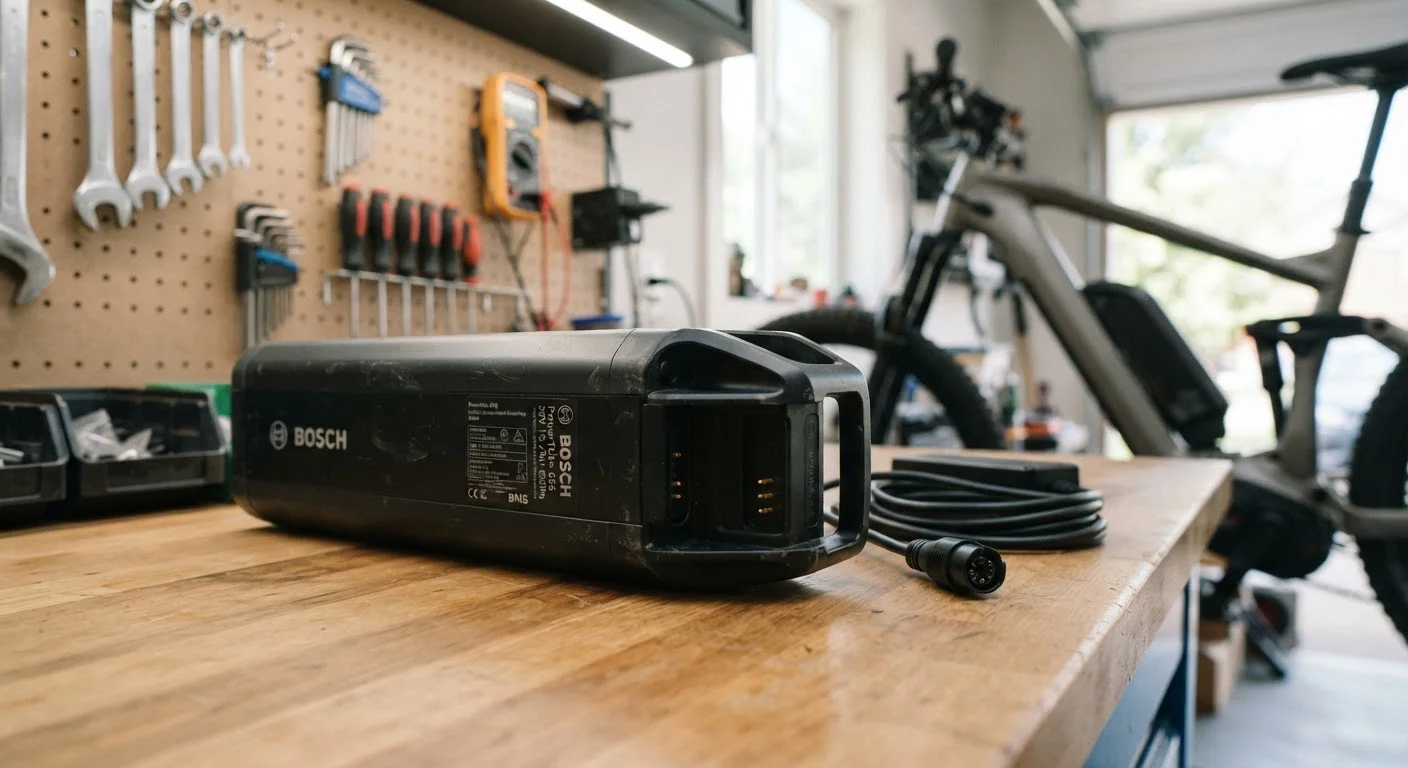
An e-bike battery is typically the most expensive single component on the bike - replacement costs commonly range from several hundred dollars upward depending on capacity and manufacturer. Understanding what degrades lithium-ion cells isn't just academic; it translates directly into years of additional usable life and avoided expense.
Lithium-ion cells degrade through two mechanisms: calendar aging (chemical breakdown over time, regardless of use) and cycle aging (wear from repeated charging and discharging). Riders can't stop calendar aging, but the habits covered below meaningfully slow both processes. For a fuller understanding of how battery capacity is measured and what range figures actually mean, see our guide to e-bike battery capacity and watt-hours.
Charging Habits That Protect Cell Chemistry
How you charge the battery matters as much as how often you charge it. The electrochemical stress on lithium cells is highest at the extremes - a battery held at 100% charge experiences more strain than one resting at 60%. Similarly, deep discharges below 10-15% accelerate wear on individual cells.
Use Your System's Charge Limit Feature
Many mid-drive and hub-motor e-bike systems allow users to set a maximum charge percentage through the display unit or a paired smartphone app. Setting this to 80% for day-to-day use is one of the highest-impact steps you can take. Reserve charges to 100% for rides where you genuinely need maximum range.
Many modern e-bike systems include a charge-limit setting in the display or companion app, allowing riders to cap charging at 80% for everyday use and reserve full charges for long-ride days. If your system supports this, use it consistently.
Temperature: The Factor Most Riders Underestimate
Heat accelerates the chemical reactions inside lithium cells in ways that permanently reduce capacity. Charging a warm battery - one just returned from a summer ride - compounds this effect. Where possible, allow the battery to cool to ambient temperature before plugging in.
Cold is less damaging to storage but does temporarily reduce available capacity and increases internal resistance. Charging a battery that is below roughly 32°F (0°C) can cause lithium plating on the anode, a form of permanent damage. In winter conditions, bring the battery indoors to warm before charging.
Cold Weather and Range: What to Expect
Reduced range in cold temperatures is a normal characteristic of lithium-ion chemistry, not a sign of permanent damage. As the battery warms during use, available capacity typically recovers within the same ride. Permanent cold-weather damage is primarily caused by charging at sub-freezing temperatures, not by riding in the cold itself.
Storing the Battery Safely
If you're stepping away from riding for several weeks or through a season, storage conditions matter considerably. Leaving a lithium battery fully charged or fully depleted during a long idle period both cause measurable capacity loss. The general guidance from battery engineers is to store at roughly 40-60% state of charge in a cool, dry environment - a temperature range of around 50-68°F (10-20°C) is broadly considered favorable.
Remove the battery from the bike if storing the whole bike in an uninsulated garage or shed through extreme weather. This mirrors principles used in other vehicle contexts - off-season storage practices for classic cars also emphasize controlled environments as a core preservation strategy.
Building Habits Into Your Riding Routine
Battery care is most effective when integrated into ordinary riding habits rather than treated as occasional maintenance. Pair a monthly charge-level check with your regular pre-ride inspection - our pre-ride checklist covers battery, brakes, and tire pressure in a quick routine you can build into every outing.
Tracking your charge cycles over time is also worthwhile. Some e-bike systems display cycle count or state-of-health estimates in a companion app; where that's unavailable, a simple log of charging dates gives a rough sense of cumulative use. These habits form a core part of responsible e-bike ownership - a broader look at e-bike ownership trade-offs addresses how ongoing care fits into the full picture of what owning an e-bike involves.