The Core Anatomy of an MTB
Mountain bikes share a recognizable set of hardware that distinguishes them from every other bicycle category. Understanding these components helps you evaluate whether a given bike is genuinely trail-ready or simply trail-adjacent.
Suspension
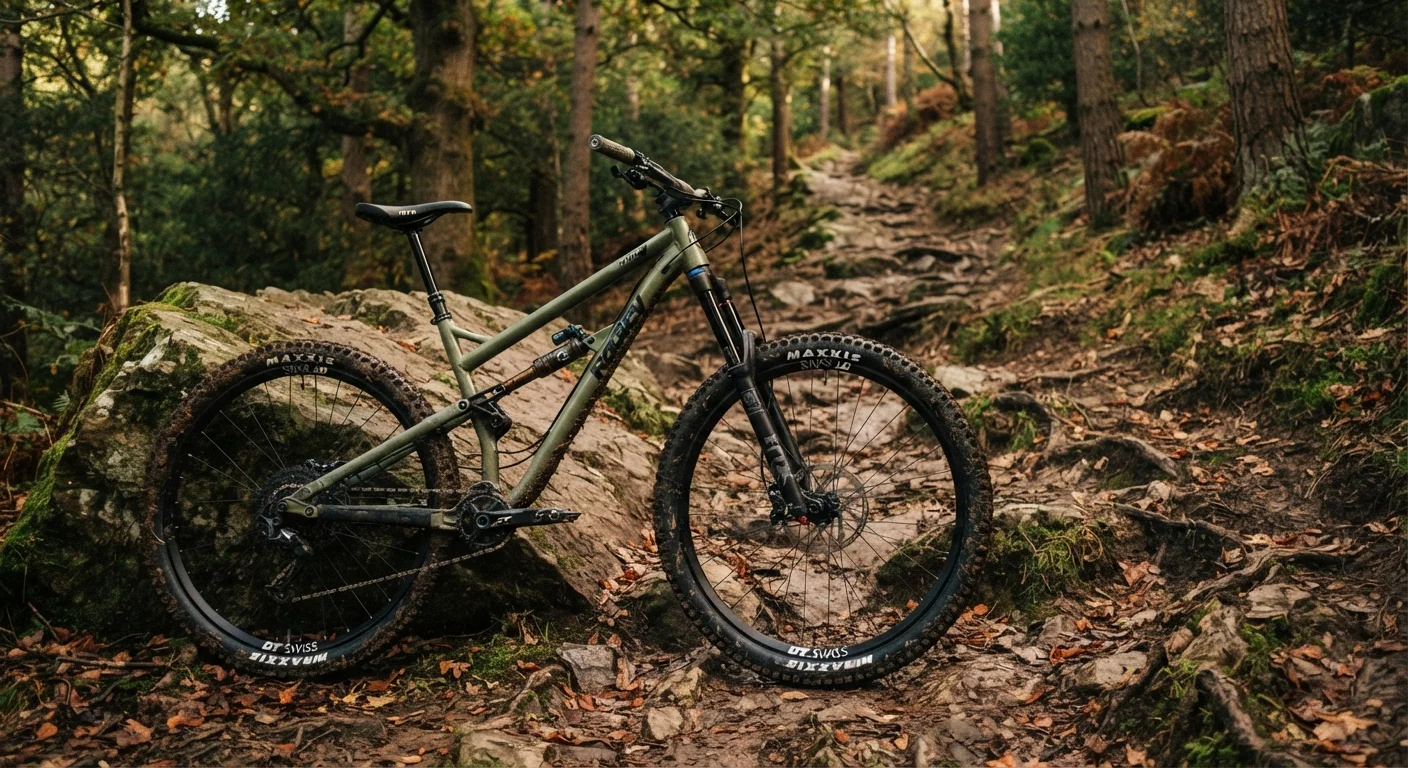
Suspension is the most defining characteristic. A hardtail MTB has a suspension fork at the front, absorbing trail chatter and impacts through the front wheel. A full-suspension (or "full squish") MTB adds a rear shock, providing bump absorption at both wheels. Suspension travel — the distance the fork or shock can compress — is measured in millimeters and determines how aggressive the terrain the bike can handle.
Tires
MTB tires are wide and knobby by design. The lugs on the tread dig into dirt, mud, and loose rock for grip that a smooth road tire cannot provide. Most trail-oriented mountain bikes run tires between 2.3" and 2.6" wide, though cross-country bikes may use narrower profiles and downhill rigs go wider still. Many modern MTBs are also tubeless-ready, allowing riders to run lower pressures without pinch flats — a meaningful traction advantage on rough ground.
Geometry
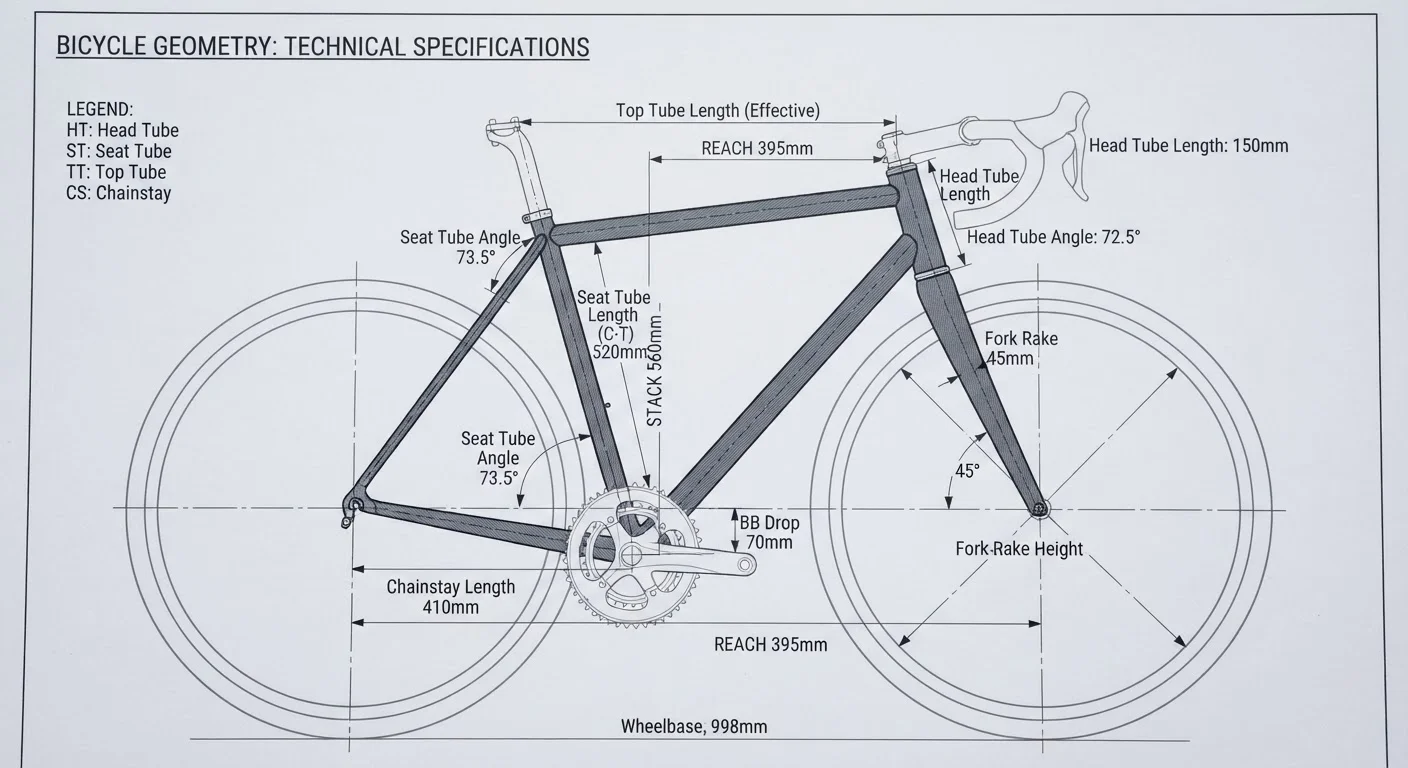
MTB geometry is engineered around control, not speed. A slack head tube angle (typically 64–68°) keeps the front wheel further out ahead, improving stability on steep descents. A low bottom bracket lowers the rider's center of gravity. Longer chainstays and reach measurements keep the rider centered over the bike on technical terrain. These proportions feel unwieldy on pavement but become intuitive on trail.
Match Travel to Your Terrain
More suspension travel is not automatically better. Bikes with 170mm+ of travel are heavy and less efficient to pedal uphill, making them poorly suited to trail riding that involves significant climbing. Assess the actual terrain you ride most often, then select a suspension travel range designed for those conditions. Most riders on natural singletrack are well-served by 120–140mm.
MTB Subcategories: Not All Mountain Bikes Are the Same
The term "mountain bike" covers a wide spectrum of purpose-built designs. Grouping them together without distinction misses important differences in what each bike is actually meant to do.
80–200mm
Suspension travel range across MTB categories
Cross-country bikes start around 80mm while downhill-specific bikes can exceed 200mm of travel front and rear.
2.3"–2.6"
Typical trail MTB tire width
Wider tires increase the contact patch with the ground, improving traction on loose and uneven surfaces compared to hybrid or road tires.
- Cross-Country (XC): Lightweight bikes with 80–100mm of travel, optimized for climbing efficiency and covering distance. Often used for racing and endurance riding on smoother singletrack.
- Trail: The most versatile MTB category, with 120–140mm of travel front and rear. Capable climbers that still handle technical descents confidently.
- Enduro / All-Mountain: 140–170mm of travel, built for aggressive descending while remaining pedal-able on climbs. Used in timed downhill stages with self-powered uphill transfers.
- Downhill (DH): 180–200mm+ of travel, designed exclusively for lift-accessed or shuttled descents. Heavy, stiff, and not intended for climbing under pedal power.
Choosing within the MTB category means matching suspension travel and geometry to your actual riding — not just buying the most capable bike available. For specialty riding disciplines that sit outside the MTB umbrella entirely, see our article on BMX, dirt jump, and trials bikes.
How Mountain Bikes Differ from Hybrid and Trail-Capable Bikes
Marketing language often blurs the line between a true mountain bike and a hybrid or fitness bike with wider tires. The distinction matters when the trail gets technical.
A hybrid bike borrows visual cues from both road and mountain designs — flat handlebars, moderate tire clearance, and occasionally a basic suspension fork — but it is engineered primarily for pavement and light gravel. Its geometry is more upright, its tires narrower, and any suspension forks it carries typically offer minimal travel (50mm or less) with limited damping quality. For a deeper look at where hybrids fit, our explainer on hybrid bikes covers the trade-offs in detail.
A genuine mountain bike is built to absorb sustained, repeated impacts from rocks, roots, and drops. Its frame, wheels, and components are rated for lateral stress and hard landings. Its drivetrain typically features a wide gear range — often a single chainring with a wide-range cassette (a "1x" drivetrain) — to handle steep gradient changes. These are not cosmetic differences; they reflect fundamentally different engineering priorities. If you're unsure which bike category fits your riding style, the questions to ask before settling on a bike style checklist is a useful starting point.
"Mountain Bike" Is Not a Protected Term
There is no industry-wide standard that legally defines what can be marketed as a mountain bike. This means bikes of very different capability levels — from department-store models to purpose-built trail rigs — may carry the same label. Evaluating a bike by its actual suspension travel, geometry specs, and component standards gives you a more accurate picture than category labeling alone.
It's also worth consulting our guide on common misconceptions about bike categories if you've found the marketing around "all-terrain" or "adventure" bikes confusing — many riders do.