What the Plate Actually Shows
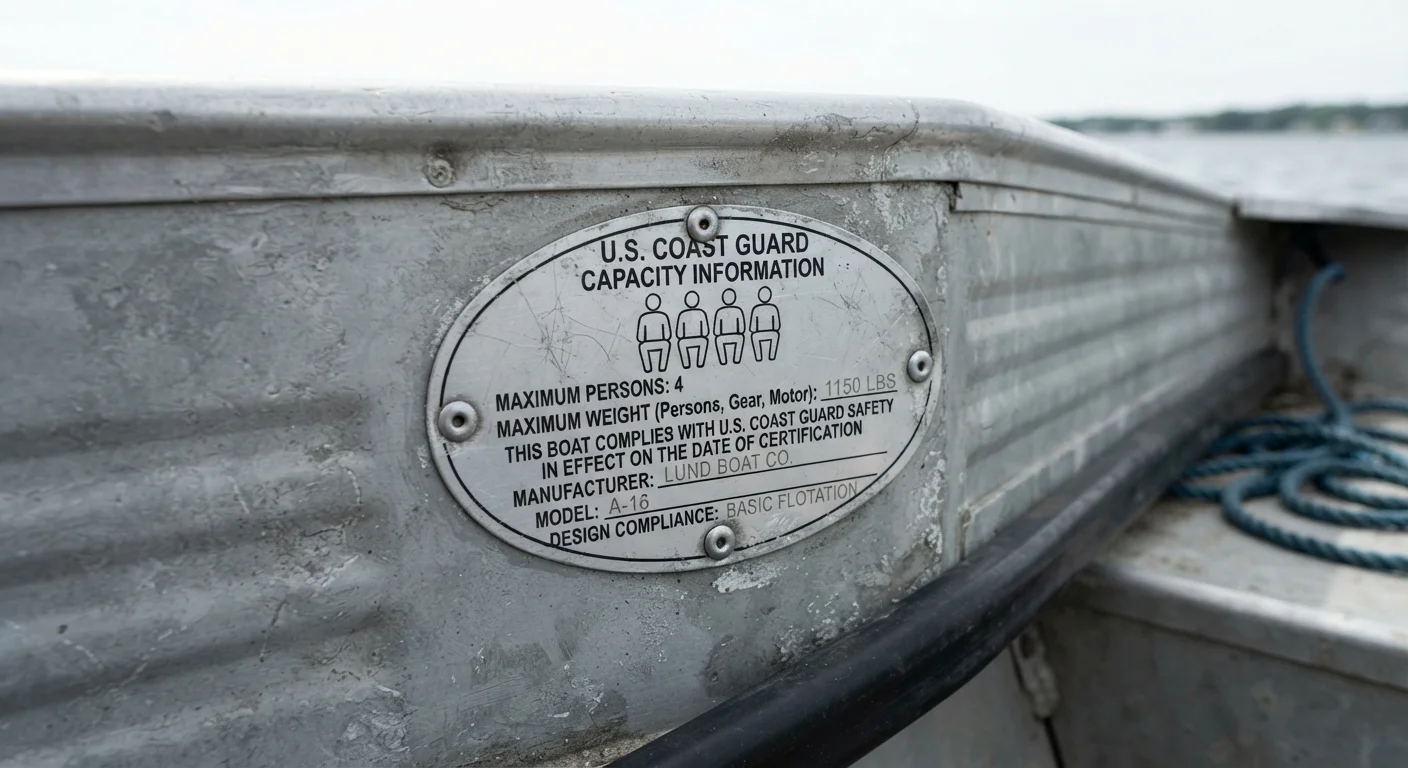
The federal capacity plate found on qualifying recreational boats displays three distinct figures: maximum number of persons, maximum weight of persons (in pounds), and maximum weight capacity - which covers persons, gear, and motor combined. Understanding that these are three separate limits, not a single interchangeable number, is fundamental to reading the plate correctly.
The person count is derived from a formula, not measured empirically. Manufacturers calculate it using cockpit area dimensions and then assign a standard assumed body weight - historically around 141 to 150 pounds per person. If your passengers are heavier than that assumed average, you are effectively at the weight limit before you've reached the person limit. The plate number alone can be misleading without that context.
For a deeper look at how rated numbers translate to real-world limits across different vehicle types, see our explanation of how boat capacity ratings are calculated.
20 ft
Length threshold for required capacity plates
U.S. Coast Guard regulations mandate capacity plates only on motorized monohull boats shorter than 20 feet built after 1972.
141-150 lbs
Assumed average weight per person
Older USCG and ABYC capacity formulas use this per-person weight figure, which can understate real loading on boats carrying heavier passengers.
3 figures
Distinct limits shown on a capacity plate
Maximum persons, maximum person weight, and maximum combined weight (persons + gear + motor) are each separately stated on a compliant plate.
The Variables the Plate Doesn't Capture
A capacity plate is a static document attached during manufacturing. It cannot account for conditions on the water the day you go out. Sea state is the most significant unaddressed variable. A vessel rated for eight passengers in calm, protected harbor water faces a fundamentally different risk profile when those same eight passengers are aboard in two-foot chop on an open lake.
Load distribution matters just as much as total weight. Passengers clustered on one side or in the stern shift the center of gravity in ways that increase instability - even when the total weight is within the rated limit. Fuel load is another factor that shifts throughout a trip. A full tank at departure weighs significantly more than a near-empty tank at return, yet that change is rarely factored into on-water loading decisions.
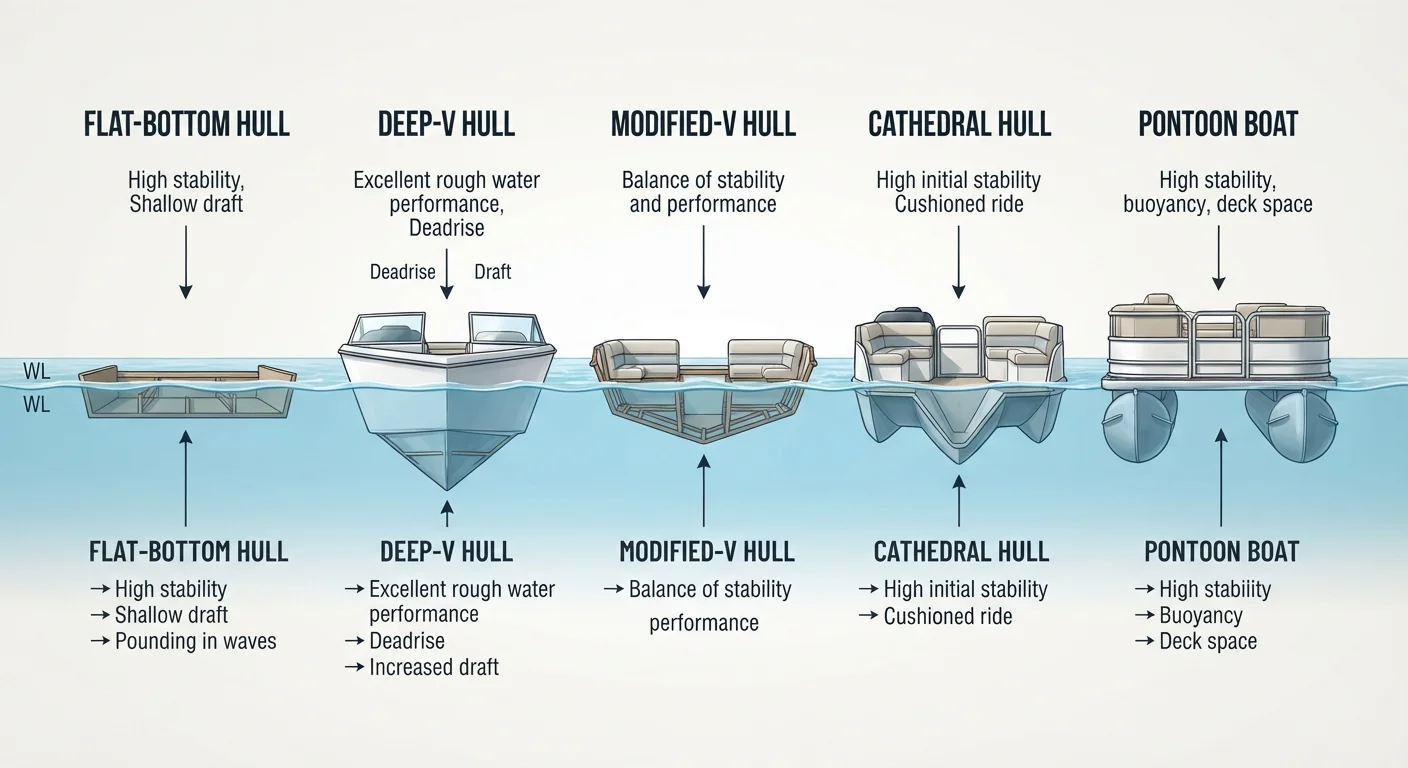
Hull design is also relevant. A flat-bottomed aluminum fishing boat and a deep-V fiberglass hull with identical capacity ratings behave very differently in rough water. The plate does not distinguish between these performance characteristics.
Adjust for Real Passenger Weights
Before departing, add up the actual weights of all passengers and compare that total to the weight limit on your capacity plate - not just the head count. If your group's combined weight is within 10 percent of the posted maximum, treat that as your effective limit regardless of how many people are aboard. Reducing load when conditions are rough is always the safer call.
Which Boats Require a Plate - and Which Don't
Federal regulations require capacity plates only on motorized, monohull boats under 20 feet in length, built after November 1, 1972. This leaves a significant portion of the recreational boating fleet without a posted limit. Canoes, kayaks, personal watercraft, sailboats, and most vessels over 20 feet are not required to display one.
For boats in that unregulated category, manufacturers and industry standards bodies such as the American Boat and Yacht Council (ABYC) often publish loading recommendations in owner documentation. Those figures carry the same practical weight as a plate, even without a legal mandate. Ignoring them carries identical physical and legal risk.
The parallel to other vehicle categories is instructive. Just as a truck's advertised towing or payload number requires additional context to apply correctly - as explored in our piece on payload vs. towing capacity - a boat's posted capacity is a starting point, not the complete answer.
State Regulations May Add Requirements
Several states impose loading or capacity rules that go beyond the federal baseline. Some states require capacity information to be visible on vessels that federal law exempts. Always check the boating regulations for the state in which you operate, as they can be more stringent than U.S. Coast Guard minimums.
Applying Capacity Ratings Practically
A conservative rule used by many experienced boaters: treat the posted weight limit as an absolute ceiling, then reduce actual loading by 20-25 percent in anything other than calm, protected conditions. Count actual passenger weight rather than using the plate's assumed average. Subtract fuel, anchor, cooler, and safety gear before calculating how many people fit comfortably.
Planning your fuel load as part of overall weight management is equally important. Our guide to fuel tank capacity and range planning addresses how fuel weight interacts with total load across a trip.
If you're evaluating a vessel's features and capabilities during the buying process, always verify whether a capacity plate is present on qualifying boats. A missing plate on a sub-20-foot motorized vessel is a red flag worth investigating before purchase. Capacity ratings are one of the first data points to examine when browsing the broader range of boat types available to recreational buyers.