Where Capacity Numbers Come From
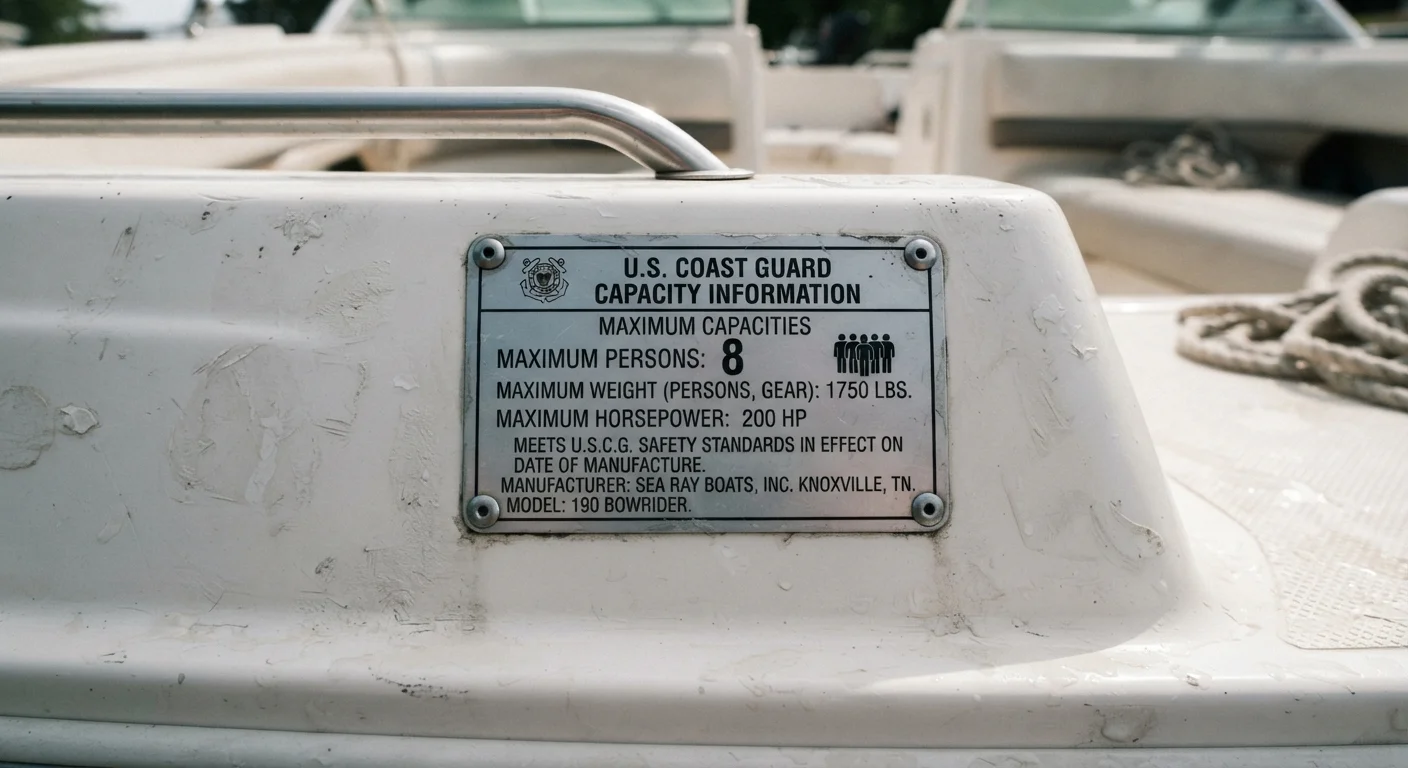
The capacity plate bolted to the transom or helm area of most small motorboats isn't an estimate - it's the result of a standardized federal calculation. For boats under 26 feet, the USCG requires manufacturers to apply a specific formula: the interior hull length (in feet) multiplied by the maximum interior width (in feet), divided by 15. The result is the maximum number of persons the vessel is rated to carry.
The maximum weight capacity - which covers persons and gear combined - is calculated separately, and the plate may also list a maximum horsepower rating that limits engine size. These three figures together define the operating envelope the boat was designed and tested to handle.
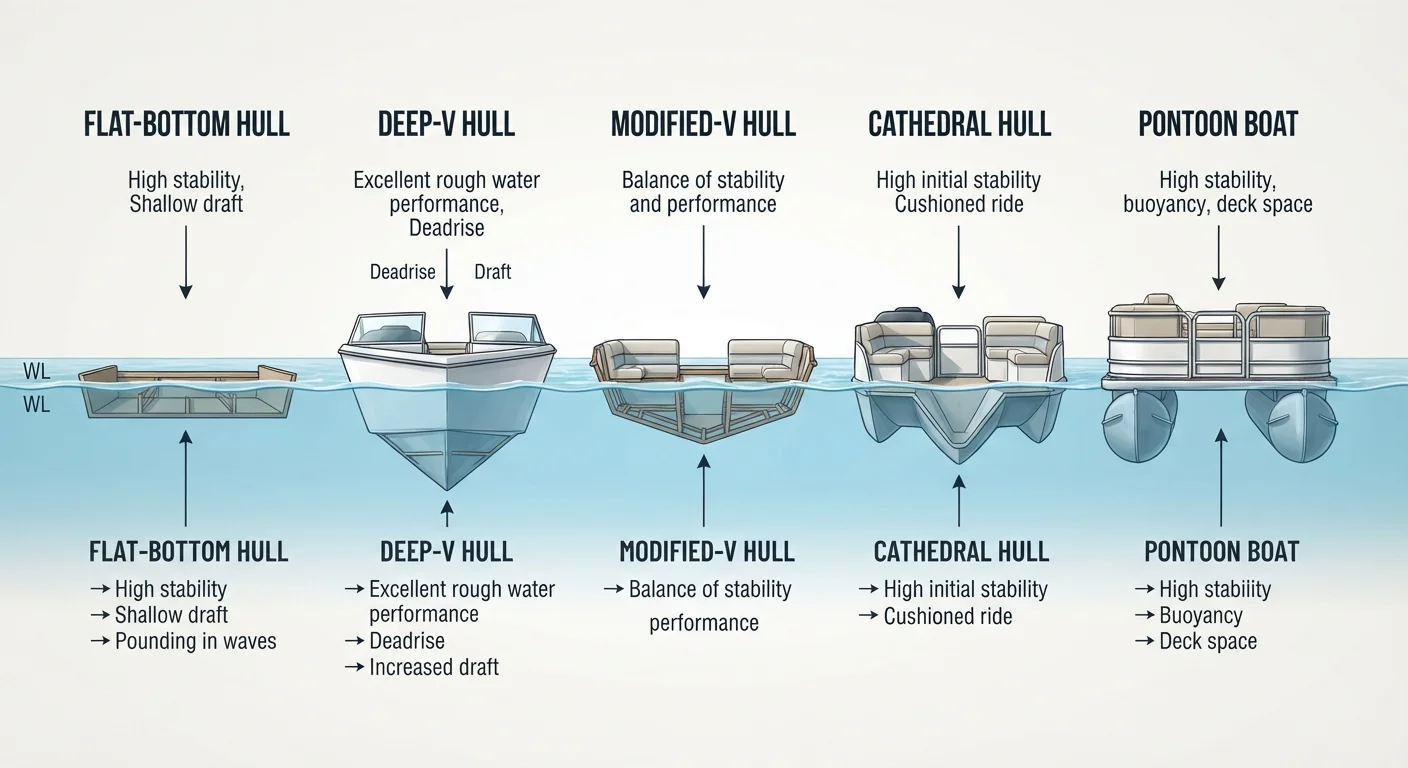
For a deeper look at how hull dimensions affect a vessel's performance and load characteristics, see our guide on reading a boat specification sheet - it explains how beam, draft, and displacement interact with stability.
Horsepower Ratings Are Also Safety Limits
The maximum horsepower figure on a capacity plate is not a suggestion - it caps the engine size the hull was designed to handle. Installing a higher-horsepower engine than rated can compromise steering control and structural integrity at speed, and may void the manufacturer's warranty. Always verify the HP rating before repowering a vessel.
The Hidden Variable: What 'Persons' Actually Assumes
The person count on a capacity plate is based on an assumed average weight per individual. That means if your group trends heavier than that baseline - which is common - you can reach the vessel's weight limit before filling the stated person count. Treat the person count as a ceiling, not a target.
Just as important: weight distribution matters as much as total weight. Four passengers clustered at the stern of a small boat create a dramatically different stress on hull stability than the same four people spread evenly. Uneven loading accelerates the risk of taking on water, especially in any kind of chop.
~700
Capsizing and swamping incidents annually (US)
The USCG Recreational Boating Statistics report consistently shows several hundred capsizing and swamping incidents each year, with overloading cited as a contributing factor in a meaningful share of cases.
26 ft
Length threshold for federal capacity plate requirement
The USCG mandates capacity plates on most motorized monohull boats under 26 feet built after 1972; larger vessels and many specialty craft are not covered by this rule.
÷ 15
Divisor in the USCG person-capacity formula
The standard USCG formula divides the product of interior hull length and width (in feet) by 15 to determine maximum person capacity for regulated motorboats.
When Rated Capacity and Safe Capacity Diverge
Rated capacity is established under controlled conditions. Open-water reality introduces variables the formula doesn't account for - wave height, wind speed, wake from passing vessels, and the behavior of the load itself (passengers moving around a small boat shift the center of gravity continuously). Experienced mariners understand that calm-water capacity is not rough-water capacity.
The USCG's annual boating accident statistics consistently identify overloading and improper weight distribution as contributing factors in capsizing and swamping incidents. Operating at or near rated limits in deteriorating conditions compresses the margin between manageable and dangerous.
This parallels a concept familiar to truck owners: payload and towing ratings set legal and engineering limits, but practical safe loads often fall below those ceilings depending on conditions.
Apply a Practical Loading Buffer
Experienced boaters commonly target 80 percent or less of the rated weight capacity as their practical operating ceiling, especially in open water or variable conditions. This buffer preserves freeboard, improves handling, and provides margin if conditions change unexpectedly. It's a simple habit that meaningfully improves on-water safety.
Vessels Without Capacity Plates - and What to Do
Sailboats, canoes, kayaks, and most inflatables are not subject to the USCG capacity plate requirement. That doesn't mean they have no limits - it means the responsibility shifts more directly to the operator to understand the vessel's characteristics and the manufacturer's published guidance.
For any boat without a posted capacity, consult the owner's manual or manufacturer's documentation. Many reputable builders of exempt vessels still publish recommended load limits. When that data isn't available, conservative loading - well below what the hull appears capable of carrying - is the appropriate default, especially in open or exposed water.
Understanding capacity is one part of a broader picture of what a boat's specs do and don't tell you. Our coverage on what capacity ratings tell you - and what they don't addresses the fuller context of safe loading decisions.
This article is for informational and educational purposes only. Always consult official USCG guidance and qualified marine professionals for safety-critical decisions related to vessel operation and loading.