Why Knowing Boat Categories Matters
Walk into any marina or scroll through a listings site and you'll encounter an overwhelming variety of hull shapes, deck configurations, and powerplant options. Before you can meaningfully compare specifications, you need a working vocabulary for the categories themselves. A boat optimized for shallow-water bass fishing has almost nothing in common with one designed for offshore cruising - yet both might simply be described as "motorboats" in casual conversation.
The eight types below aren't exhaustive - the marine industry encompasses hundreds of specialized variants - but they represent the most commonly encountered categories for recreational and light commercial use on US waterways. For readers who want to go deeper on terminology encountered in listings, the Watercraft Features Glossary is a useful companion. Those entirely new to the subject may prefer to start with The New Boater's Map to Boat Categories before returning here.
Jon Boat
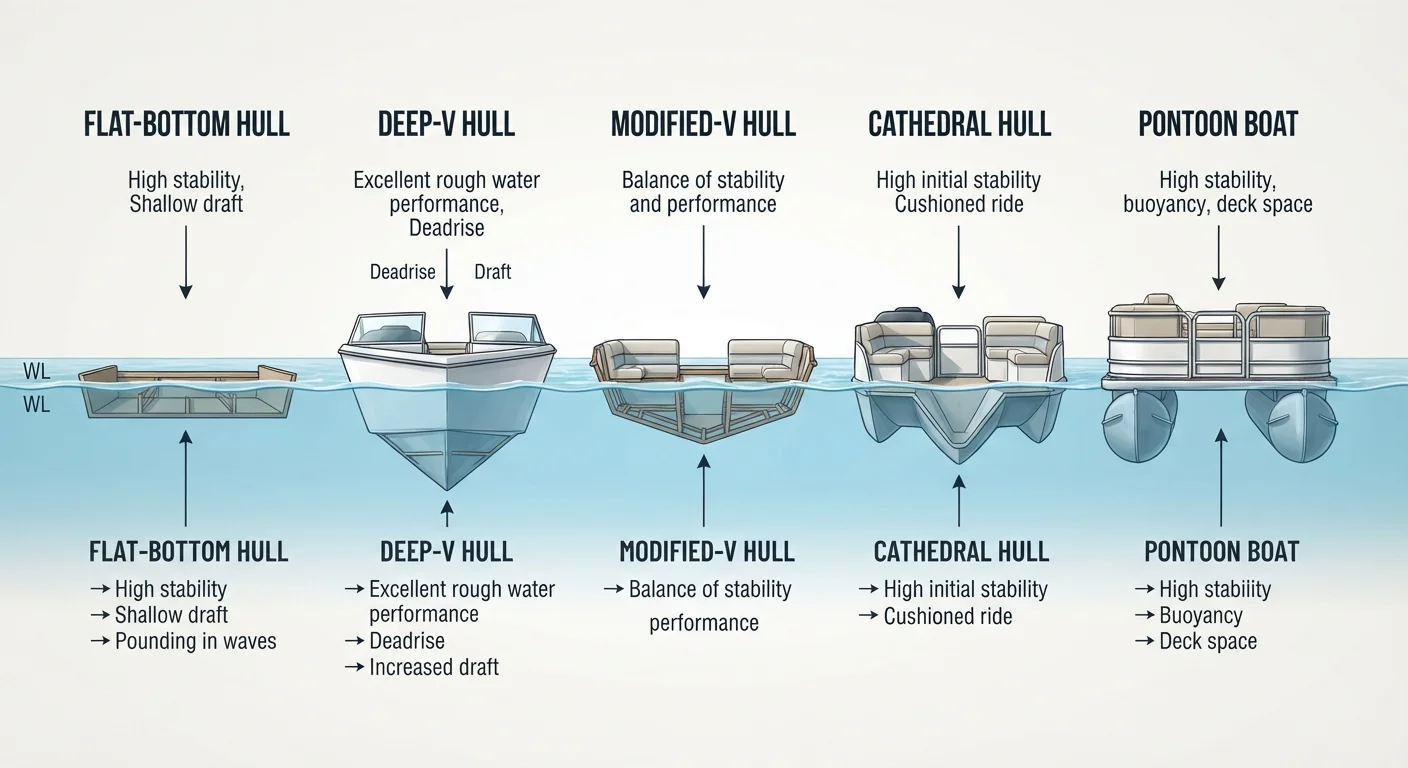
Jon boats are flat-bottomed, open-hull vessels typically constructed from aluminum, though fiberglass and polyethylene versions exist. Their shallow draft - often just a few inches - allows access to water that would stop almost any other hull type. They're lightweight, simple to trailer, and straightforward to maintain.
Primary users include freshwater anglers working rivers, swamps, and flooded timber. Sizes generally range from 10 to 18 feet, and most are powered by small outboard motors or electric trolling motors. The flat bottom trades rough-water performance for unmatched access in calm, shallow environments.
A jon boat's flat hull can float in just a few inches of water - an access advantage no deep-V hull can match.
Pontoon Boat
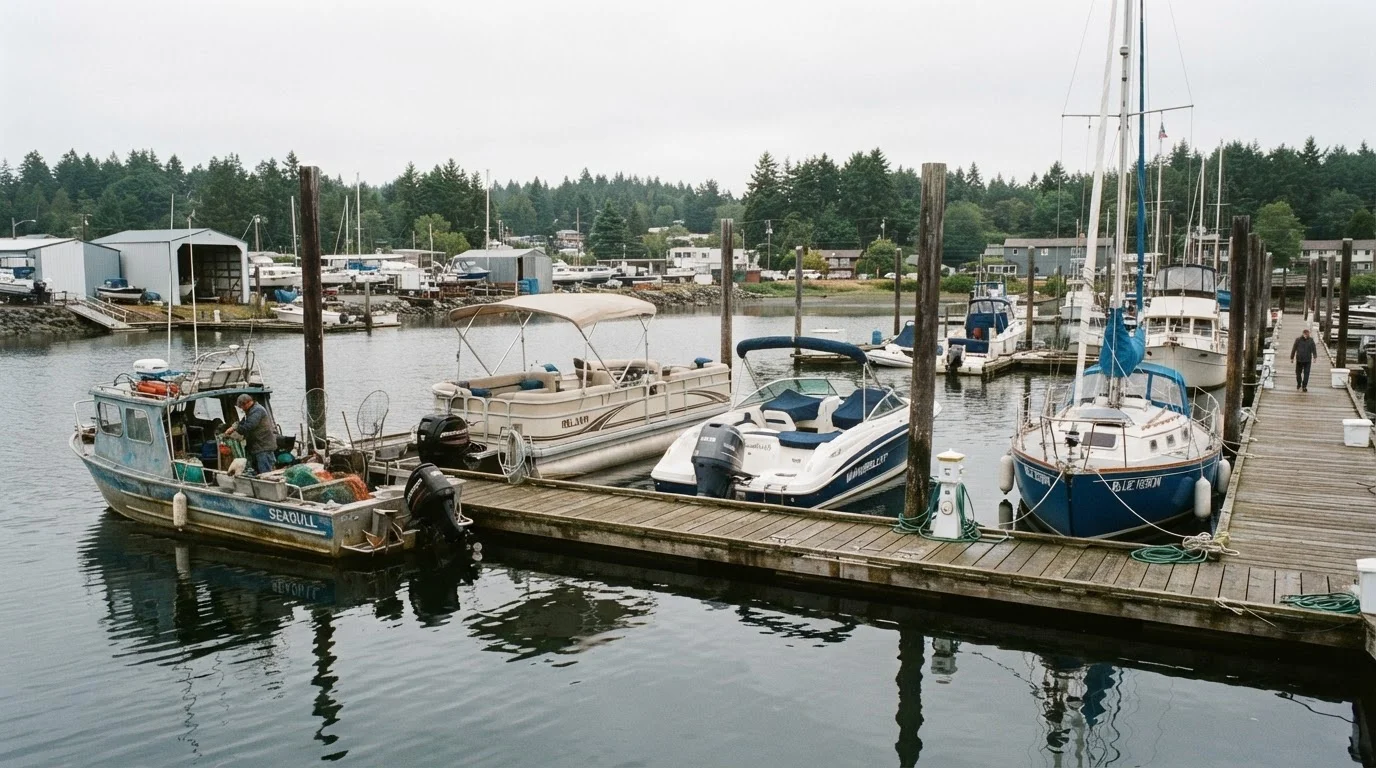
Pontoon boats mount a wide, flat deck over two or three aluminum tubes (pontoons), creating a stable, party-friendly platform. They prioritize passenger capacity and comfort over speed or rough-water capability. Most are powered by outboard motors in the 60-300 hp range.
These vessels are a fixture on lakes, reservoirs, and slow-moving rivers across the US. Configurations range from basic fishing-oriented layouts to full entertainment platforms with lounges, bars, and even water slides. Their broad beam makes them stable at rest but limits performance in choppy conditions.
Pontoon boats trade nimble handling for a stable, spacious deck that accommodates large groups comfortably.
Bowrider
Bowriders are open fiberglass runabouts distinguished by forward seating that extends into the bow, past the windshield. That bow seating is the defining characteristic - it creates a sociable layout that works for watersports towing, day cruising, and general recreation.
Hull lengths typically run 17 to 26 feet, and sterndrive or outboard power is standard. Bowriders are versatile enough to handle moderate chop on larger lakes but are not intended for offshore use. Their open cockpit prioritizes fun and ease of boarding over serious weather protection.
Forward bow seating transforms a runabout into a social platform without sacrificing watersports capability.
Center Console
In a center console boat, the helm station sits on a console mounted at the center of the hull, leaving a 360-degree walkable deck around it. That open layout gives anglers unobstructed access to every side of the boat - critical when fighting a fish or casting to structure.
Center consoles are built for fishing first, ranging from 16-foot bay boats to 40-foot offshore platforms. Deep-V hulls on larger models handle open-water swells well. For a more thorough look at how center consoles compare to bass boats, walkarounds, and other fishing-specific designs, see Fishing Boats Decoded.
A 360-degree walkable deck is the center console's defining advantage, keeping every rail accessible to anglers.
Cuddy Cabin
A cuddy cabin is a small enclosed space built into the bow of an otherwise open runabout or fishing boat. It typically contains a V-berth sleeping area, small storage, and sometimes a portable head (marine toilet). The cabin is not meant for extended liveaboard use - it's shelter for an overnight stay or protection from a squall.
Cuddy cabins occupy the practical middle ground between a fully open boat and a larger cruiser. They're popular with anglers who want the option to stay aboard during a multi-day freshwater or coastal trip without the complexity of a full cabin cruiser.
A cuddy cabin adds overnight capability to a modest hull without the weight and cost of a full cruiser.
Express Cruiser
Express cruisers are mid-to-large powerboats (typically 28-50 feet) with a full enclosed cabin that includes sleeping quarters, a galley, and a head. Unlike flybridge cruisers, the helm is at the main deck level rather than elevated above the cabin. That low profile contributes to a sporty appearance and responsive handling.
These vessels are designed for weekend and extended coastal cruising. They typically carry twin gasoline or diesel inboard engines and are capable of handling moderate offshore conditions. The emphasis is on comfortable overnight accommodation combined with meaningful cruising range.
Express cruisers blend offshore capability with comfortable overnight accommodations in a streamlined, single-level layout.
Trawler
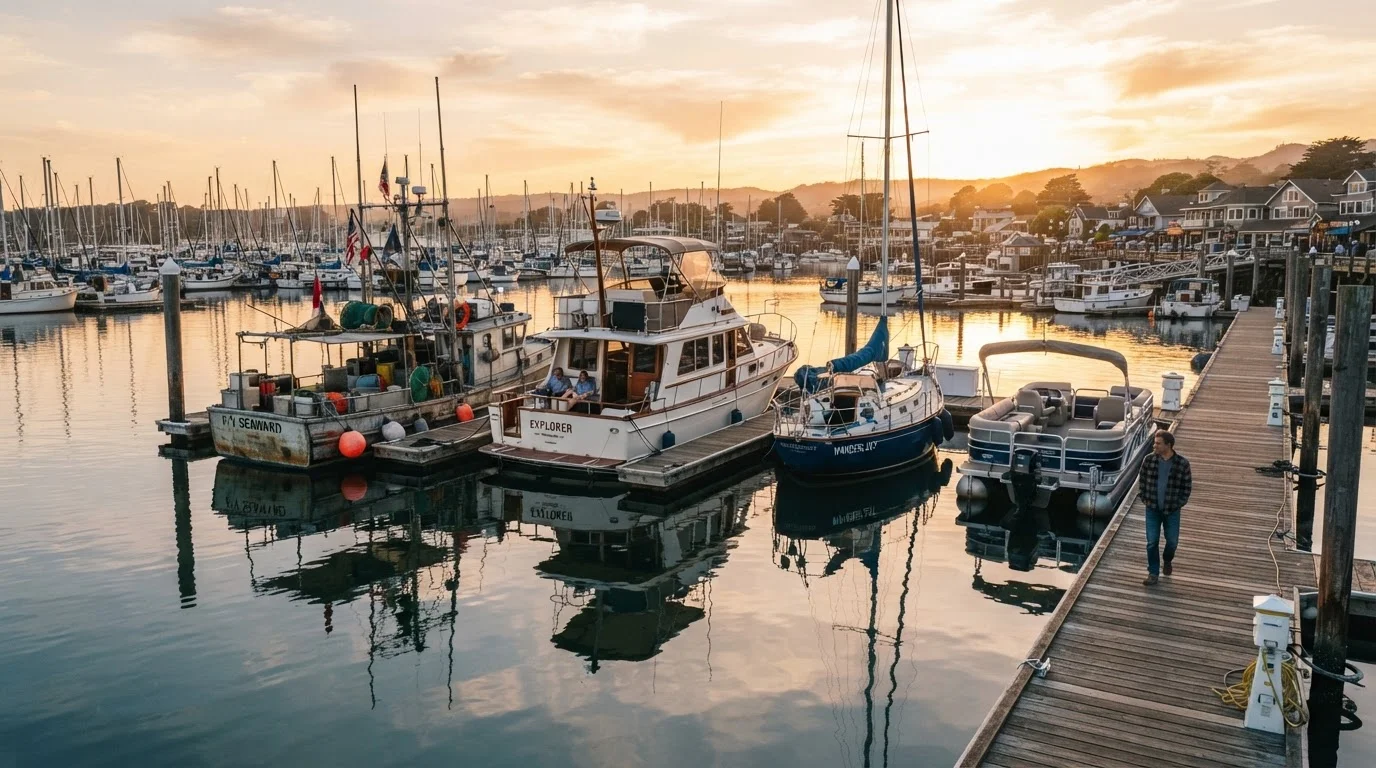
Trawlers are displacement or semi-displacement hull powerboats designed to travel efficiently at moderate speeds - typically 8-12 knots - rather than planning fast across the water. Their deep, narrow hulls and fuel-efficient engines make them capable of long passages with large fuel and water tankage.
The term originally described commercial fishing vessels, but the recreational trawler now refers to a seaworthy liveaboard passage-maker. Interiors are typically roomy and practical, prioritizing storage, stability at anchor, and range over speed. They're a common choice for extended coastal or bluewater cruising itineraries.
Trawlers sacrifice raw speed for fuel efficiency and range - the right tradeoff for extended passage-making.
Expedition and Exploration Vessel
At the far end of the spectrum sit purpose-built expedition vessels - heavily constructed powerboats or motorsailers designed to operate in remote, exposed waters for weeks or months at a time. They feature reinforced hulls, redundant mechanical systems, extended fuel and water capacity, and full liveaboard interiors.
These are not mass-market consumer products; many are custom builds or semi-custom designs from small-volume yards. Their buyers are committed long-range cruisers, researchers, or adventurers targeting high-latitude or offshore routes where reliability and self-sufficiency are non-negotiable. Understanding the full feature set of such vessels is a significant undertaking - the complete watercraft features guide provides a structured starting point.
Expedition vessels are engineered for self-sufficiency in remote waters - redundancy and range define the category.
Choosing the Right Starting Point
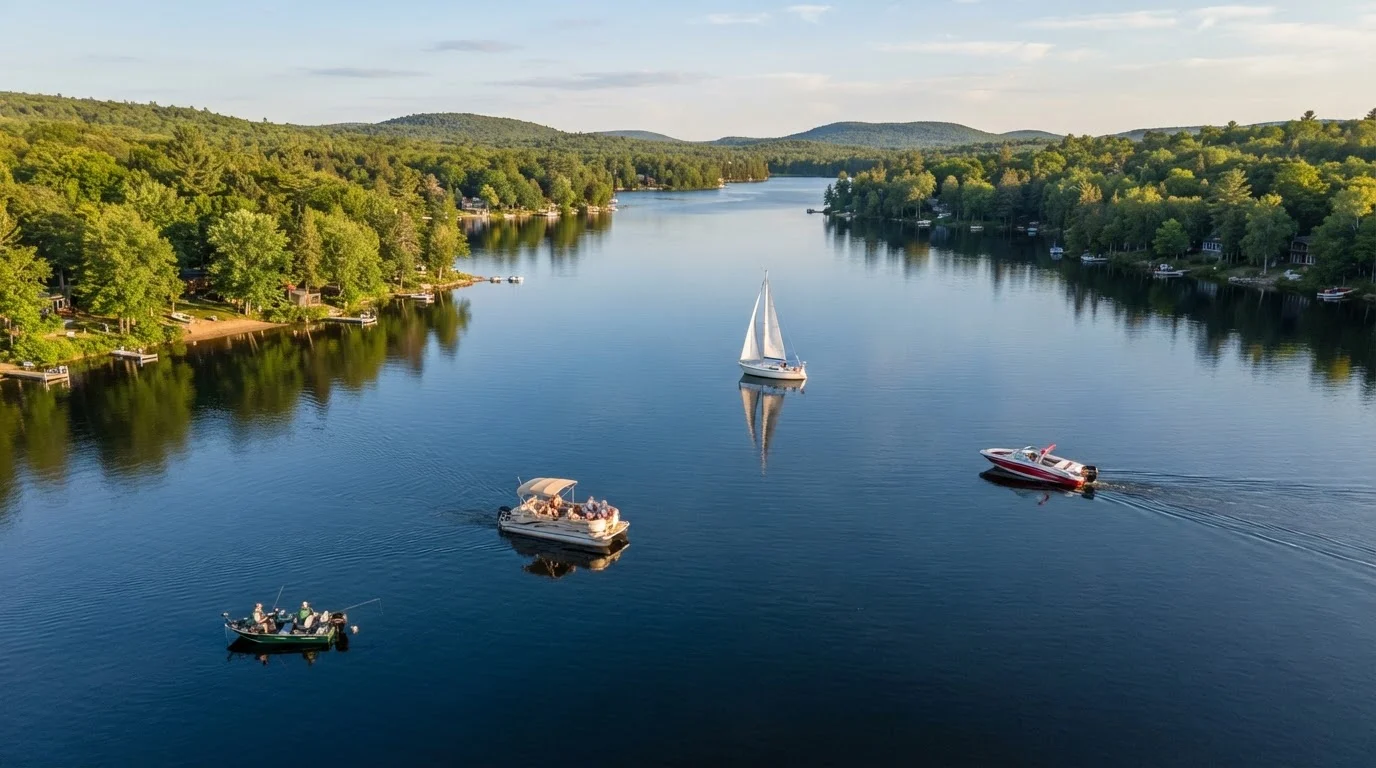
No single category dominates every situation. A pontoon boat that hosts a dozen passengers comfortably on a reservoir would be poorly suited to an inlet with a four-foot chop; a center console that handles offshore waves with ease is often overkill for a calm, shallow lake. The most useful exercise before any serious shopping is to list your most frequent use case, your typical water conditions, and the number of people you plan to carry regularly.
Consider a Boater Education Course First
If you're new to boat ownership, spending time on the water across different hull types before committing to a purchase will sharpen your instincts considerably. Many boater education courses include hands-on boat-handling segments. See why a boater education course is worth taking even where it isn't legally required.
Once you've identified a likely category, the next layer of research involves specific features within that type - hull deadrise, fuel tank capacity, electronics packages, and seating layouts. Our guide to watercraft features end to end walks through those decisions in detail. And if you're considering a vessel with sails rather than an engine as the primary propulsion, The World of Sailboats covers that spectrum separately.
Before your first time at the helm, it's also worth reviewing the anatomy of a boat so that conversations with sellers, surveyors, and marina staff make immediate sense.