Hull Architecture: One Keel vs Two Hulls
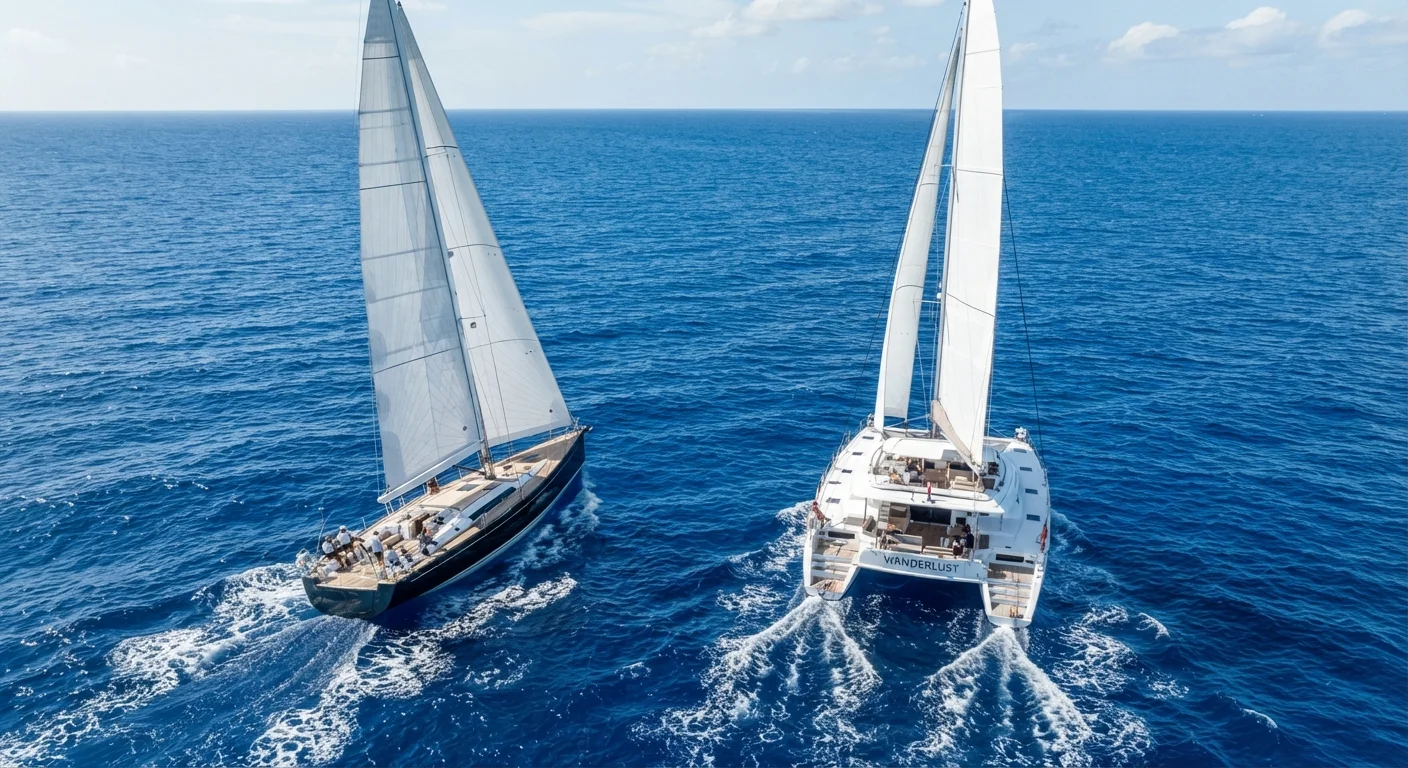
At the most fundamental level, a monohull is a single-displacement hull that achieves stability through a combination of hull shape, ballast - typically a lead or iron keel - and the righting moment generated when the vessel heels. A catamaran achieves stability through beam: two separate hulls connected by a bridgedeck spread the vessel's weight across a wide platform, producing what engineers call form stability rather than ballast-dependent stability.
This difference in approach has cascading effects on every other characteristic - draft, motion, speed, and safety behavior. Understanding the structural logic is the starting point for any honest comparison. For a broader look at how geometry shapes performance, see our guide to hull design and ride characteristics.
| Criterion | Monohull | Catamaran |
|---|---|---|
| Stability type | Ballast/righting moment | Form stability (beam) |
| Typical draft | 5-7+ ft (keelboat) | 2-4.5 ft |
| Upwind performance | Superior pointing ability | Wider tacking angles |
| Downwind/reach speed | Moderate | Often faster |
| Interior volume | Limited by single hull | Generous; two hull cabins |
| Self-righting ability | Yes (ballasted keel) | No - can invert if capsized |
| Marina beam/slip fit | Standard slips | Double slip often required |
| Purchase price (equivalent LOA) | Generally lower | Generally higher |
| Motion comfort off the wind | Moderate roll possible | Level, reduced motion |
| Bridgedeck slamming | Not applicable | A concern in steep chop |
Stability, Motion, and Capsize Behavior
Catamarans have a very high initial stability - the wide stance resists heeling strongly. On a keelboat monohull, heeling is not only normal, it is a functional part of generating lift through the keel. Many experienced sailors regard a heeling monohull as responsive and communicative; those unaccustomed to it often find the motion uncomfortable.
The capsize profiles of the two types are starkly different. A monohull with a ballasted keel has positive righting moment well past 90 degrees of heel - many offshore designs remain self-righting even when fully inverted, which is why offshore racing rules and bluewater cruising guides treat self-righting ability as a key safety criterion. A catamaran, by contrast, has a stability curve that drops sharply once it crosses its capsize threshold - a rare but serious event in extreme conditions - and an inverted catamaran does not self-right.
Bridgedeck Clearance Matters
The height of a catamaran's bridgedeck - the structure connecting the two hulls - directly determines how susceptible the vessel is to slamming in rough conditions. Higher bridgedeck clearance reduces slamming but raises the center of gravity slightly. Buyers evaluating cruising catamarans should compare bridgedeck clearance specifications as part of their seakeeping assessment, not just interior layout.
Motion comfort underway favors the catamaran in most downwind and beam-reach conditions: the platform stays level, reducing the rolling that can cause fatigue and seasickness. In steep, short chop, bridgedeck slamming can be a significant drawback, however - the flat underside of the connecting structure impacts waves, creating noise and structural stress that monohulls avoid.
Speed, Pointing Ability, and Sailing Performance
Catamarans are typically faster on downwind and reaching points of sail. Their light displacement relative to waterline length, combined with low hull resistance, can produce speeds that match or exceed wind speed in favorable conditions. Upwind, the picture changes: a well-designed monohull with a ballasted keel generates more lateral resistance and can point closer to the wind - often 5 to 10 degrees higher than a cruising catamaran of similar size.
5-10°
Upwind pointing advantage for monohulls
Marine architects and performance sailing texts consistently cite this range as the typical pointing difference between cruising catamarans and equivalent-length monohulls.
40-50%
Typical catamaran beam-to-length ratio
Most production cruising catamarans have a beam that equals 40 to 50 percent of their overall length, directly affecting slip requirements and marina fees.
2x
Approximate underwater surface area vs monohull
Two separate hulls roughly double the wetted surface requiring bottom paint and antifouling treatment compared to a monohull of similar length.
For powerboat versions of each type, twin-engine catamarans gain a significant maneuverability advantage, as explored in our single vs twin engine comparison. Monohull powerboats can achieve comparable top speeds but typically run deeper in the water and are more sensitive to sea state at speed.
Space, Draft, and Practical Cruising Considerations
A catamaran's bridgedeck and twin hulls create interior volume that a monohull of the same overall length simply cannot match. Two separate hulls each house a cabin, head, and often an engine room - providing privacy and separation that appeals strongly to families and charter crews. The wide cockpit and flat deck of a catamaran also make it an appealing platform for socializing and short passages where comfort outweighs sailing purity.
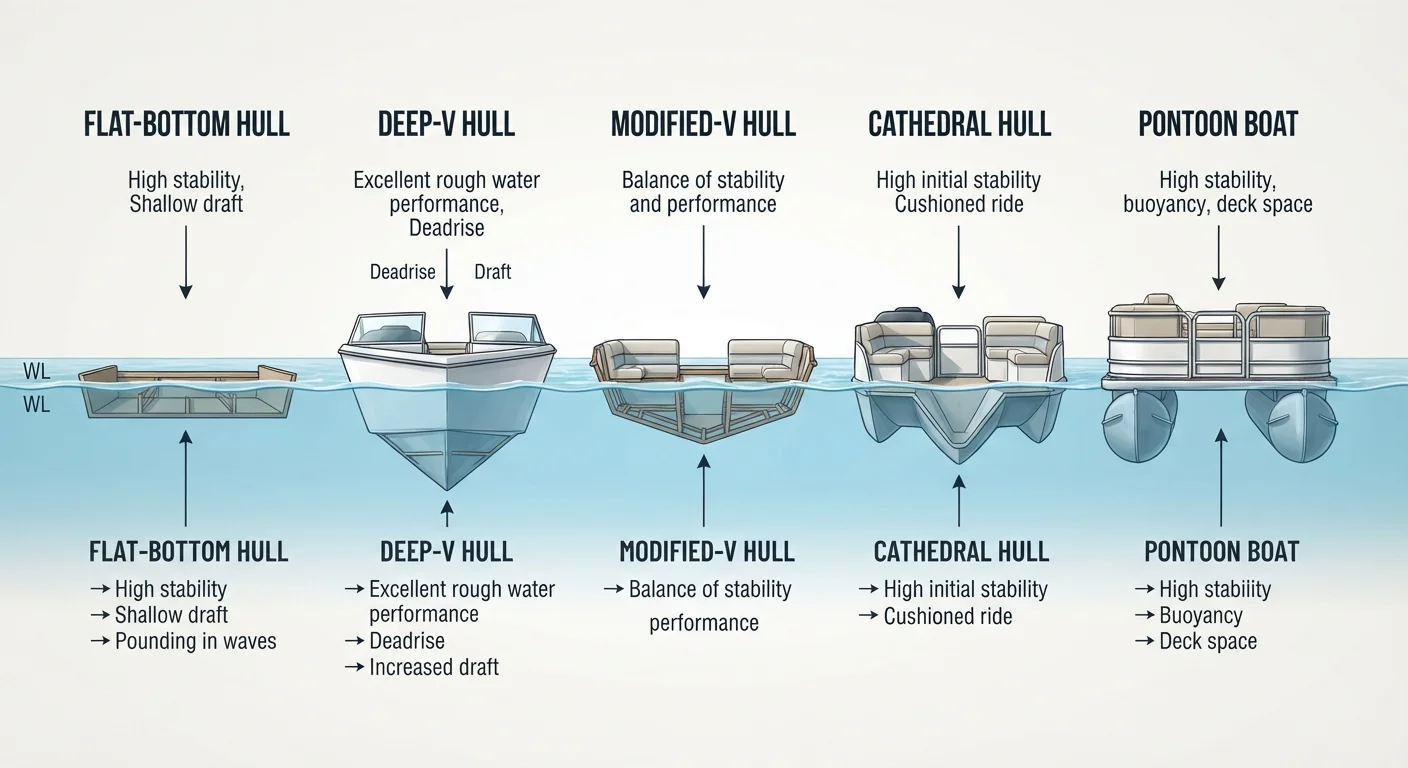
Draft is where catamarans offer their most operationally significant advantage. Many cruising cats draw between 3 and 4.5 feet, while comparable monohulls with full-length keels may draw 6 to 7 feet or more. In the Bahamas, the Florida Keys, or the Pacific island groups, this difference directly determines which anchorages are accessible. Shallow-draft recreational hull types share some of this advantage on inland waters.
Marina access and storage costs cut the other way. A catamaran's beam - often 40 to 50 percent of overall length - may require a double slip or a specialty berth, increasing per-night and annual fees substantially. Haulout and bottom paint for two hulls also doubles the surface area relative to a monohull, raising maintenance costs. These practical financial realities often surprise first-time catamaran buyers. For additional context on how hull type influences a vessel's overall operating profile, see our overview of key watercraft features and capabilities.