Hull Design and Wake Philosophy
The most fundamental difference between wakeboard boats and ski boats lies in their hull geometry and the wake each is designed to produce. These aren't cosmetic distinctions - they reflect completely different engineering goals.
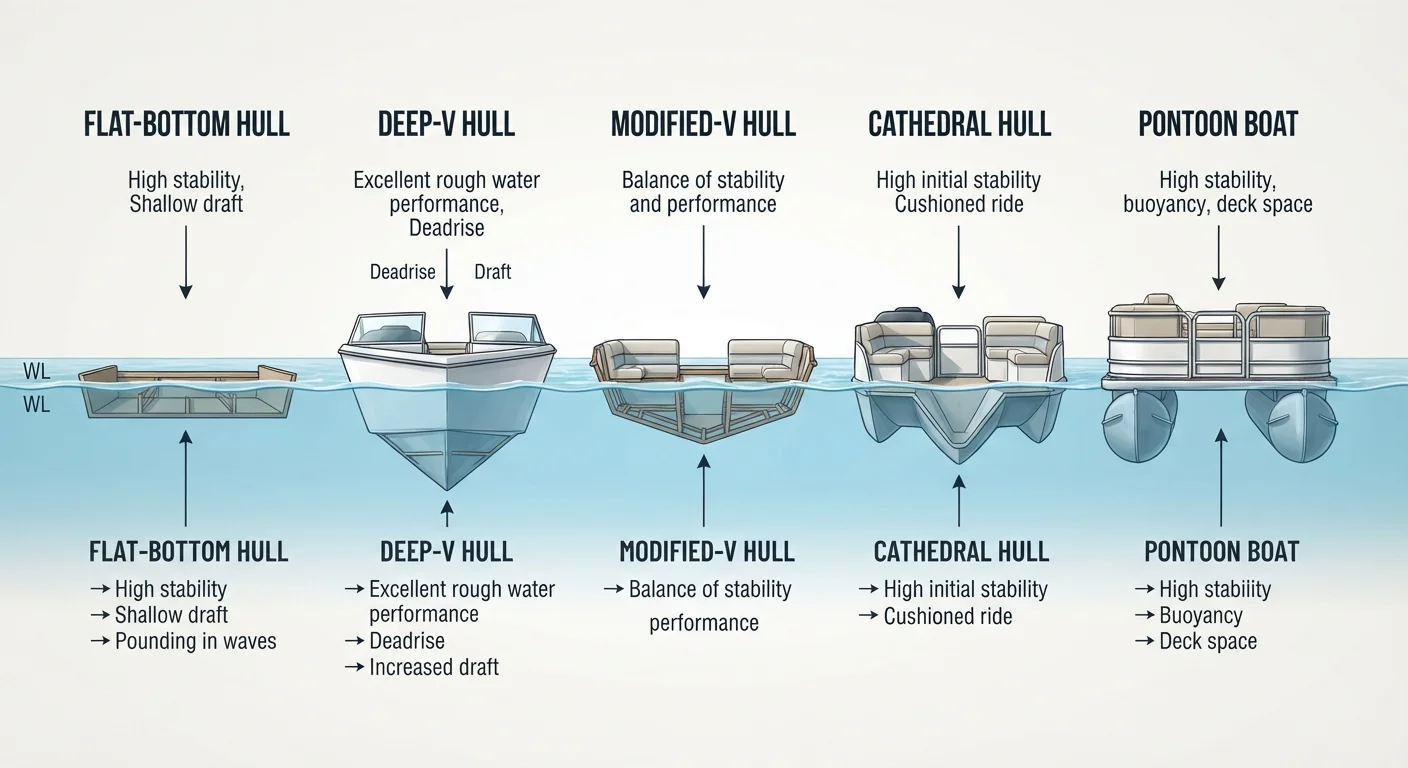
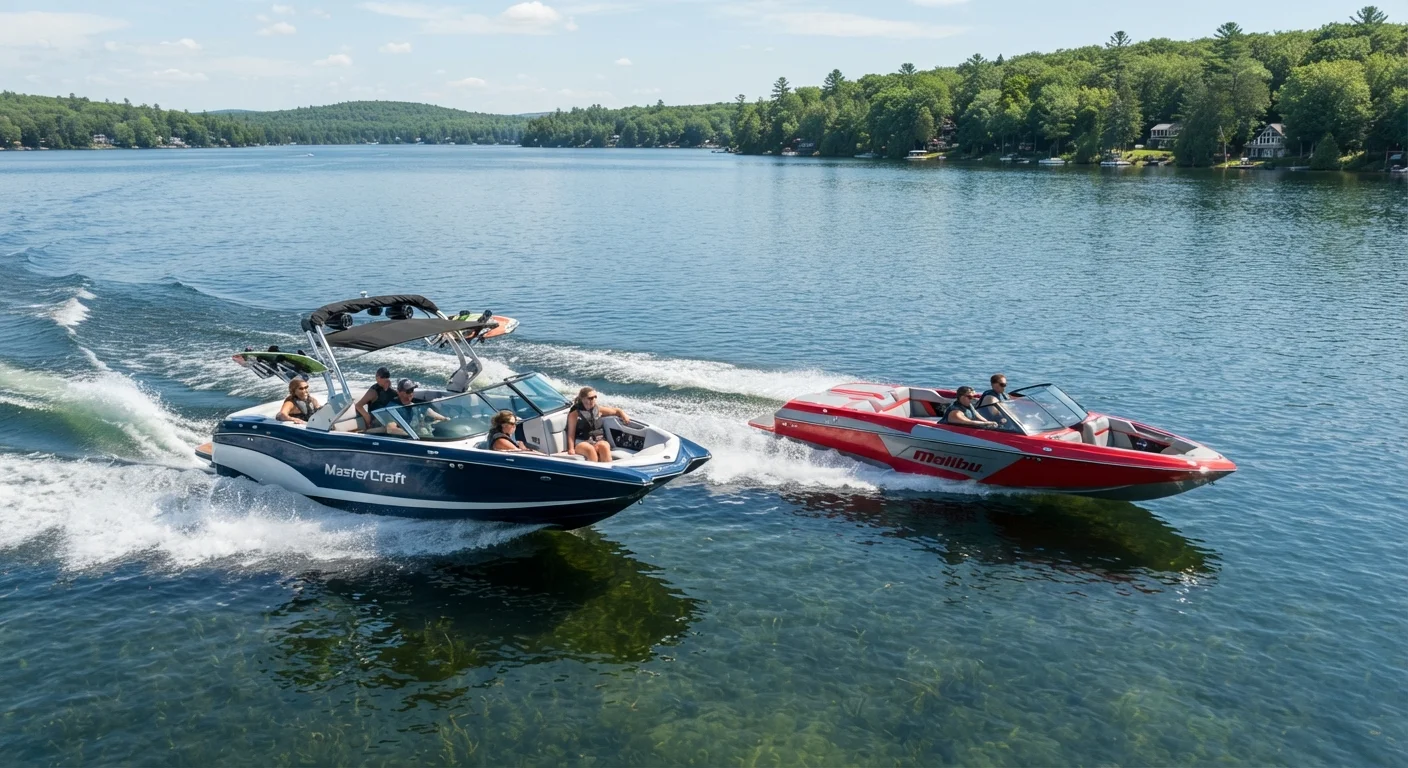
Wakeboard boats typically feature a deeper V-hull or modified V-hull with a broader beam. Combined with onboard ballast systems - tanks that can be filled with hundreds of gallons of water - these hulls sit lower in the water and displace more, generating a taller, steeper, and more defined wake. That wake shape gives wakeboarders the ramp-like edge they need to launch aerial maneuvers.
Ski boats, by contrast, are built to produce the flattest wake possible. Slalom and trick skiers need a clean water surface with minimal rooster tails. Ski boat hulls tend to be narrower, run shallower, and use forward-biased weight distribution to keep the stern from squatting. Many feature a concave or tunnel hull design specifically engineered to reduce wake height and spread it as thinly as possible across the water column.
For a broader look at how hull geometry influences performance, see our complete watercraft features guide.
| Wakeboard Boat | Ski Boat | |
|---|---|---|
| Primary Wake Goal | Large, steep, defined wake | Flat, minimal wake |
| Hull Profile | Deeper V, wider beam | Narrow, shallow-running hull |
| Ballast System | Integrated tanks + optional sacs | Minimal to none |
| Tow Point | Tall tower (6-8 ft) | Low center pylon (18-24 in) |
| Engine Layout | V-drive (stern-heavy) | Direct-drive (midship) |
| Wake Surfing Capability | Yes, with surf tabs | Not designed for this |
| Typical Tow Speed Range | 18-25 mph | 28-36 mph (slalom) |
Ballast Systems and Wake-Shaping Technology
Wakeboard boats are distinguished by sophisticated ballast and wake-shaping systems that have no equivalent on ski boat platforms. Integrated hard tanks - typically located in the bow, stern, and sometimes under the floor - allow the operator to dial in wake size and shape by adding or removing weight while underway. Many contemporary wakeboard designs also accommodate aftermarket ballast sacs for additional displacement.
Beyond ballast, dedicated surf tabs and adjustable hull appendages allow operators to push the wake to one side, creating the persistent, surf-able wave that wake surfing requires. This asymmetric capability is a defining feature of the modern wakeboard/wake surf crossover platform.
Adjustable Ballast Adds Versatility
If your household includes both wakeboarders and skiers, look for wakeboard boats with fully pumpable ballast tanks that can be emptied underway. Draining all ballast and trimming the bow forward can meaningfully flatten the wake for a casual skiing pass, though it won't replicate a purpose-built ski boat's performance. Understanding this compromise upfront helps set realistic expectations for mixed-use families.
Ski boats intentionally omit most of this hardware. Adding ballast to a ski boat degrades its core function by increasing wake height and introducing inconsistency. Instead, ski boats focus on precision throttle mapping and hull trim angle, allowing drivers to maintain exact speeds - typically 28-36 mph for slalom - with minimal variance.
400-4,000 lbs
Ballast capacity range on wakeboard boats
Ballast capacity varies widely by model size and configuration, influencing wake height and surf wave quality.
6-8 ft
Typical wakeboard tower height above gunwale
Tower height directly affects rope angle and rider lift, a key ergonomic variable in wakeboard platform design.
Tower Design and Rope Angle
Walk up to a wakeboard boat and the most visible difference is the wakeboard tower - a rigid arch structure rising 6 to 8 feet above the gunwale. Tower height is not aesthetic; it directly affects rope angle. A higher attachment point keeps the tow rope elevated throughout a rider's approach to the wake, reducing the downward pull that would otherwise pull a wakeboarder's weight forward prematurely.
Wakeboard towers also serve as mounting platforms for board racks, bimini tops, speakers, and lighting - turning the structure into a functional hub for the sport's lifestyle elements.
Ski boats use a low-profile tow pylon positioned amidships, closer to the boat's center of gravity. This placement is deliberate: a centrally located pull point creates cleaner load transfer to the hull and reduces yaw (sideways rotation) as skiers cut hard across the wake. Ski pylons are typically 18-24 inches tall - functional, not towering.
If you're exploring how different recreational hull styles handle these trade-offs, our overview of pontoon, bowrider, and deck boat designs provides useful context on how purpose shapes platform architecture.
Engine Placement and Propulsion Considerations
Both boat types predominantly use inboard engines with direct-drive or V-drive configurations, which keep the propeller tucked safely beneath the hull rather than exposed at the transom. This matters significantly for rider safety in the event of a fall close to the boat.
Wakeboard boats frequently use a V-drive layout, where the engine sits toward the stern and the driveshaft runs forward-then-back through a V-angle gearbox. This shifts mechanical weight rearward, contributing to a heavier stern that enhances wake size - another intentional design choice aligned with the discipline's needs.
Ski boats more commonly use direct-drive inboards, positioning the engine amidships for a more neutral weight distribution. That placement, combined with the hull's design, supports the clean water departure essential for competitive skiing.
For buyers considering how operating environment - lake versus coastal inlet - might further influence their choice, our article on inland waters vs. offshore boat selection covers the relevant variables in depth. Both towsport platforms are designed exclusively for protected, calmer inland water use.