Why Spec Sheets Matter Before You Set Foot on a Boat
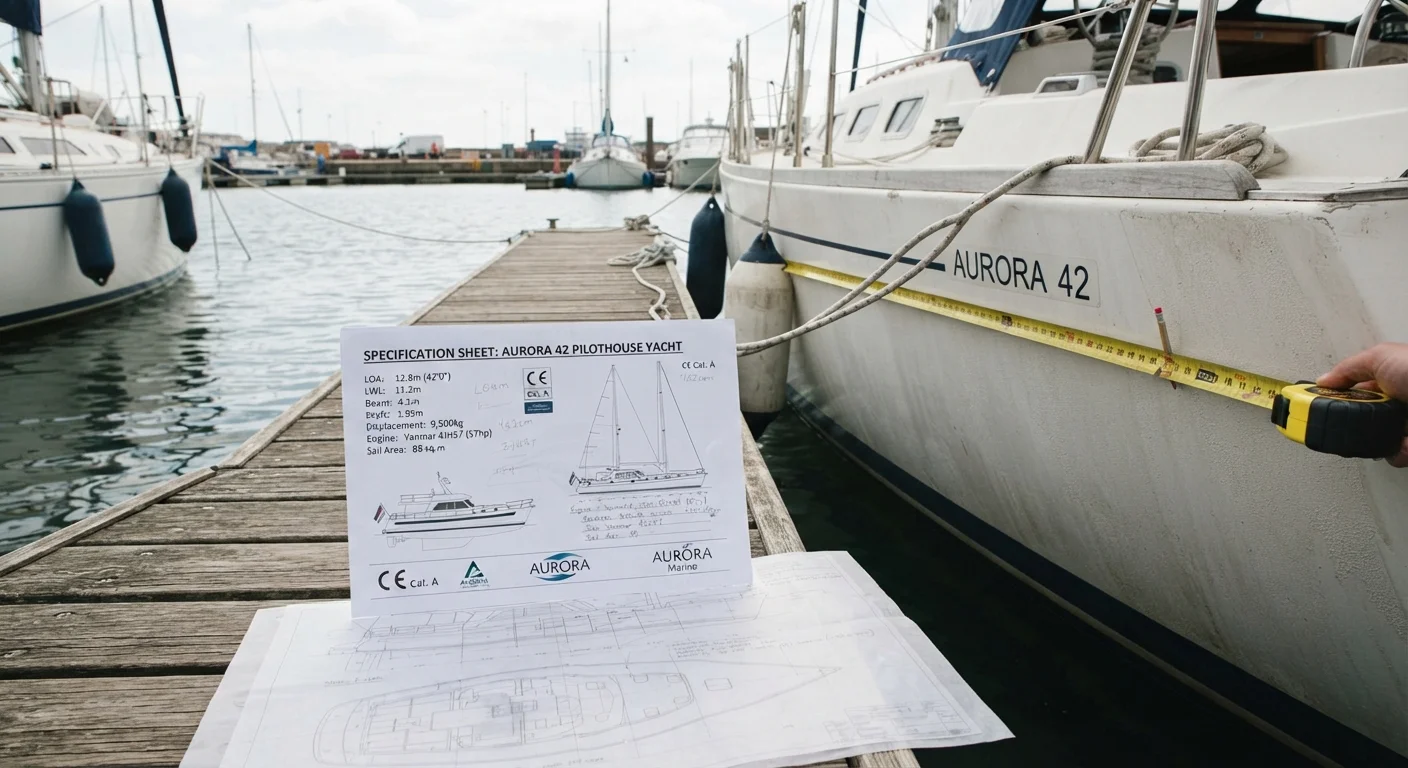
Every manufacturer datasheet and online boat listing includes a block of measurements that can look like alphabet soup to the uninitiated: LOA, beam, draft, dry displacement. These aren't arbitrary filler - they define how a boat behaves in the water, what waterways it can access, and whether it fits your trailer, slip, or intended use. Reading them accurately is an essential part of any serious evaluation. For a broader look at feature categories across all watercraft types, see the complete watercraft features guide.
The terms covered here appear consistently across powerboats, sailboats, and personal watercraft, making this knowledge transferable no matter what vessel type you're researching.
| Beam width: typical runabout | 7-9 ft (2.1-2.7 m) (General marine industry reference range) |
| Draft: typical pontoon boat | 12-24 inches (General marine industry reference range) |
| Draft: typical deep-V offshore boat | 24-36+ inches (General marine industry reference range) |
| Displacement unit in US listings | Pounds (lbs) or pounds dry weight (Standard US marine industry convention) |
| LOA measurement includes | Fixed bow pulpits, swim platforms, and outboard motors (ABYC and NMMA measurement standards) |
Hull: Shape, Material, and What It Signals
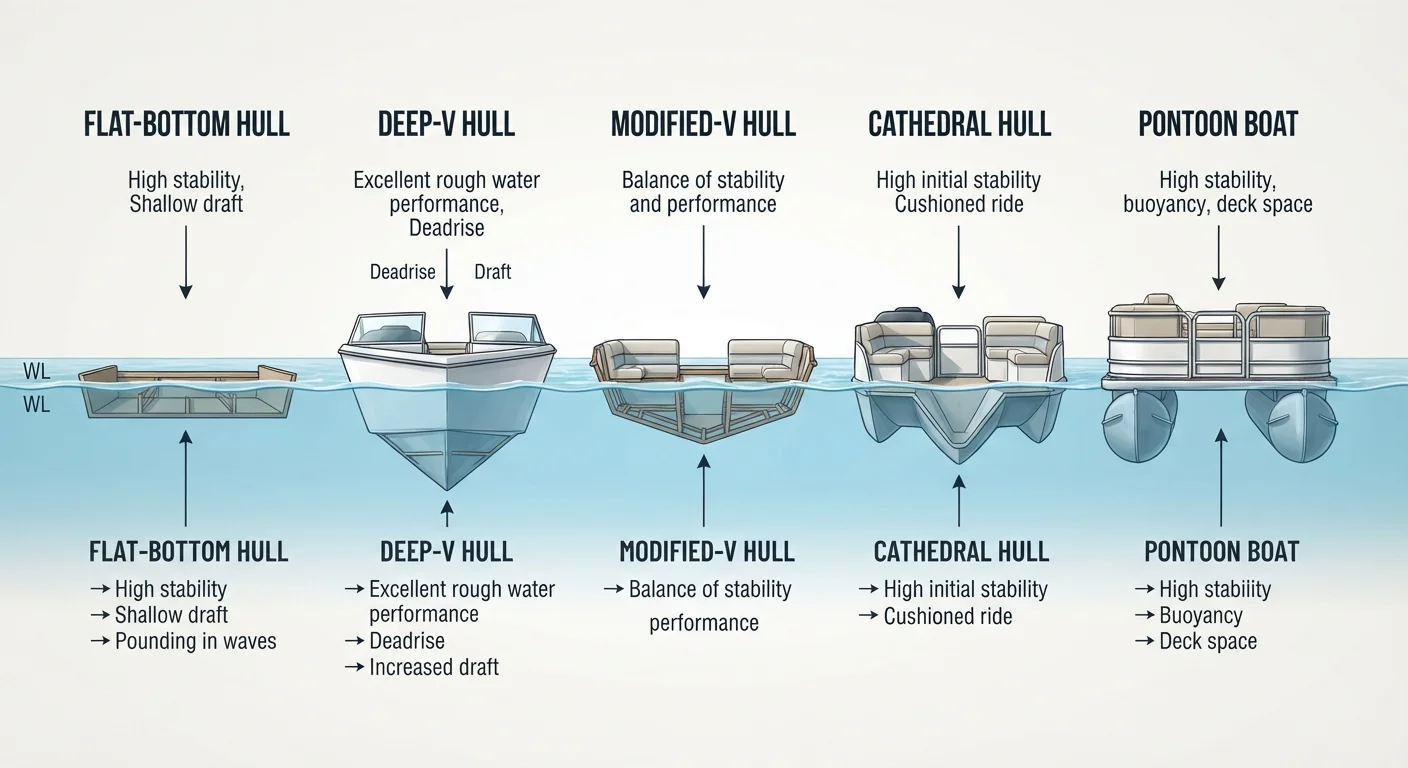
On a spec sheet, hull references typically cover hull type (deep-V, modified-V, flat-bottom, catamaran, pontoon) and hull material (fiberglass, aluminum, steel, composite). These two descriptors together tell you a great deal about intended use and maintenance expectations.
A deep-V hull cuts through chop effectively and is common on offshore and bay boats, while a flat-bottom hull prioritizes stability in calm, shallow water - typical of jon boats and skiffs. Pontoon and catamaran designs use twin hulls or tubes to maximize deck space and stability at the cost of rough-water performance. For a detailed breakdown of how shape translates to on-water behavior, see how hull design affects ride and stability and hull types and what they mean for handling.
Beam, Draft, and LOA: The Three Dimensions That Define Fit
Length Overall (LOA) is the most commonly cited size figure, but it includes everything bolted to the hull - swim platforms, bow pulpits, and outboard motors. Always verify LOA before reserving a slip or purchasing a trailer, as the listed length may exceed what fits.
Beam is your width measurement. It affects stability, interior volume, and marina slip compatibility. A wider beam generally improves the feeling of initial stability when boarding, but adds weight and can limit performance in certain hull designs. Beam is also the figure marina operators use to calculate slip fees.
Draft is where many buyers get caught off guard. A boat with 36 inches of draft cannot safely navigate a bay marked at 30 inches on a nautical chart. Sailboats with fixed keels often have drafts exceeding 5 feet, severely limiting the harbors and anchorages they can access. Understanding draft in relation to local waterway depths is critical - for help decoding depth soundings on charts, see how to read nautical charts.
Specs Are Measured Under Specific Conditions
Manufacturer-listed draft and displacement figures typically reflect a vessel in a baseline or 'dry' state - no fuel, water, crew, or gear aboard. Real-world figures will differ meaningfully once the boat is loaded. Always account for your intended load when evaluating whether a spec meets your waterway requirements.
Displacement: Weight as a Performance and Capacity Indicator
Displacement is simply the weight of the vessel. On US listings, you'll encounter two versions: dry displacement (the hull and permanently installed equipment only) and loaded displacement (dry weight plus fuel, water, gear, and passengers). The gap between these two figures can be substantial - sometimes several thousand pounds on larger cruisers.
Displacement matters for three practical reasons. First, it determines the power required to reach planing speed - high displacement relative to engine output means the boat may run in displacement mode (pushing through water rather than lifting onto a plane). Second, it directly informs trailer weight ratings; your tow vehicle and trailer must be rated for the loaded, not dry, displacement. Third, understanding how manufacturers calculate maximum capacity ratings - which are closely tied to displacement math - is worth reviewing separately. See what boat capacity ratings actually mean for a deeper look at those calculations and their safety implications.
For context beyond powerboats, the same spec framework applies to sail-driven vessels. If you're evaluating sailboats, the full spectrum of sailboat types offers useful framing alongside the watercraft features overview of key capabilities.