How the Two Classes Actually Differ
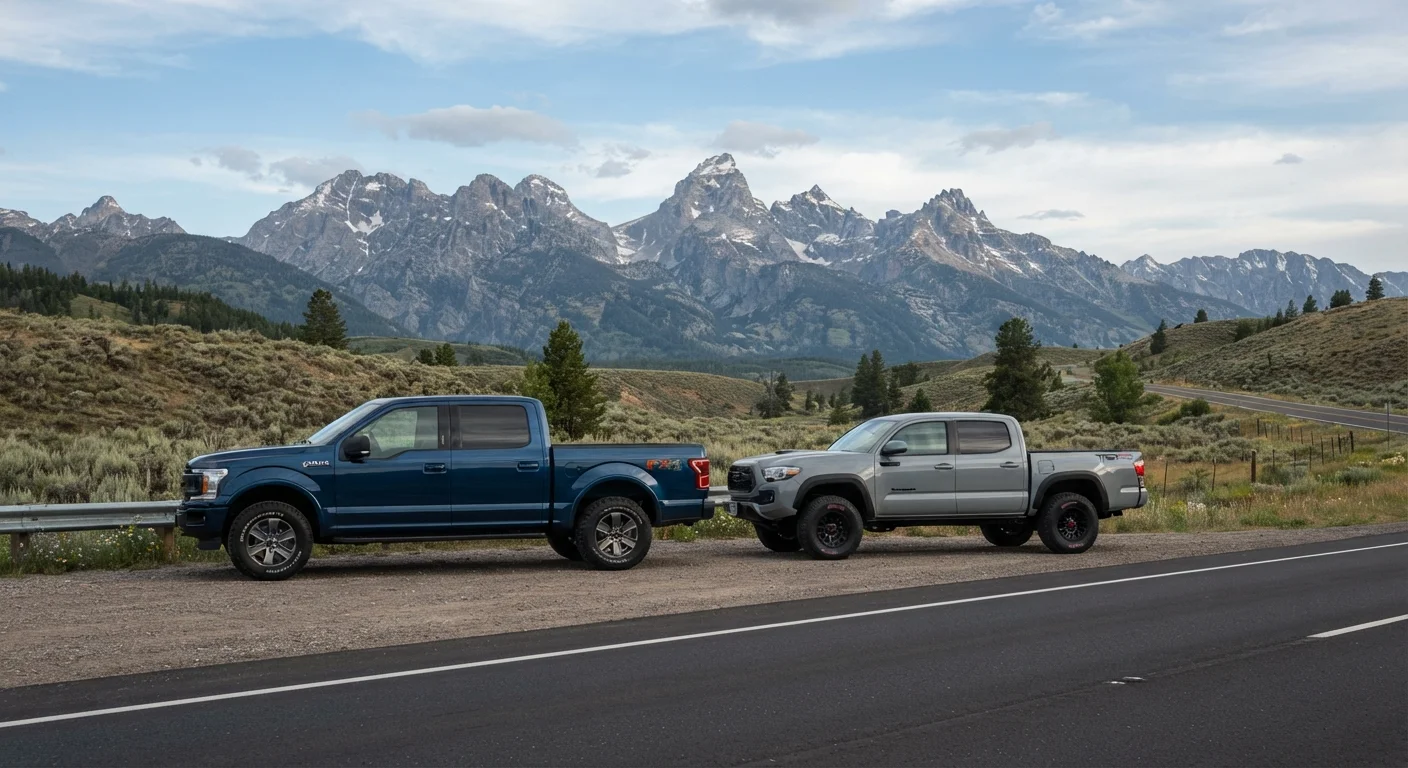
The distinction between full-size and mid-size trucks goes well beyond sheer physical dimensions. Both classes ride on body-on-frame architectures and offer four-wheel drive, crew cab seating, and short or long bed configurations - but the underlying engineering priorities diverge considerably.
Full-size trucks are built around maximum capability. Their frames are heavier, their engines larger, and their towing and payload ratings substantially higher. A properly equipped full-size truck can typically tow between 10,000 and 20,000+ lbs depending on configuration, while payload ratings commonly exceed 1,800-2,300 lbs. Mid-size trucks average towing ratings in the 3,500-7,700 lb range and payload figures around 1,000-1,500 lbs - meaningful numbers for most recreational and light-duty needs, but not for serious commercial hauling.
Physically, full-size trucks are longer, wider, and taller. A crew cab full-size can stretch past 230 inches in overall length, whereas most mid-size crew cabs fall in the 210-220 inch range. That gap directly affects garage fit, parking structure access, and urban maneuverability - topics worth weighing honestly. See our guide to living with a truck as a daily driver for a candid look at real-world implications.
| Criterion | Full-Size Trucks | Mid-Size Trucks |
|---|---|---|
| Typical max towing capacity | 10,000-20,000+ lbs | 3,500-7,700 lbs |
| Typical max payload rating | 1,800-2,300+ lbs | 1,000-1,500 lbs |
| Overall length (crew cab) | ~225-235 inches | ~210-220 inches |
| Fuel economy (combined est.) | 16-22 mpg | 19-26 mpg |
| Base price range | Higher entry point | Lower entry point |
| Powertrain options | Wider range incl. large V8, diesel | 4-cyl, V6, some diesel options |
| Rear passenger space | Class-leading legroom | Adequate for average adults |
| Off-road maneuverability | Capable, longer wheelbase | Better approach/departure angles |
Capability Trade-Offs: Where Each Class Excels
Towing and payload specs are the headline numbers, but capability involves more nuance. Full-size trucks can be equipped with diesel powertrains offering high torque at low RPM - ideal for sustained trailer pulls on grades. Mid-size trucks are increasingly available with diesel options too, but their frame and axle ratings cap what those engines can productively deliver. For a deeper look at how engine type affects real-world truck performance, see our diesel vs. petrol engine comparison.
Off-road performance is a genuine strength for mid-size trucks. Their shorter wheelbase improves approach and departure angles, and lower curb weight can be an advantage on soft terrain. Several mid-size models are purpose-built for off-road use with available locking differentials, skid plates, and suspension lift. That said, full-size trucks with off-road packages are not far behind - and they carry more recovery gear, water, and equipment when you need it. Explore how drive systems interact with terrain in our 4WD vs. AWD breakdown.
7,700 lbs
Top mid-size tow rating
Several mid-size trucks are rated to tow up to approximately 7,700 lbs when properly equipped, per manufacturer specifications.
20,000+ lbs
Top full-size tow rating
Certain full-size truck configurations - with appropriate packages and axle ratios - can exceed 20,000 lbs of towing capacity per published manufacturer specs.
2-5 mpg
Typical fuel economy advantage for mid-size
Mid-size trucks generally return 2-5 mpg more in combined EPA estimates compared to V6 and V8 full-size counterparts.
Daily Usability and Ownership Costs
For buyers who plan to use a truck as a primary vehicle, daily usability deserves as much weight as capability ratings. Mid-size trucks typically return better fuel economy - often 2-5 mpg more in combined driving - and carry lower base prices, which reduces both financing costs and insurance premiums in many cases.
Bed dimensions also matter practically. Full-size trucks with a standard 5.5-foot bed offer comparable cargo floor area to many mid-size short beds. However, full-size trucks with a 6.5- or 8-foot bed provide substantially more longitudinal space for long lumber, kayaks, or sheet goods. Understanding how bed size and accessories interact with real-world hauling is covered in our truck bed explainer.
Rear passenger space is another meaningful difference. Full-size crew cabs typically offer class-leading rear legroom - comparable to midsize SUVs - while mid-size crew cabs are comfortable for average adults but tight for taller passengers on longer journeys. If an SUV's passenger-focused layout appeals to you as an alternative, our SUV guide provides useful context.
Matching the Class to Your Actual Use Case
The most common mistake truck buyers make is sizing for a hypothetical maximum load rather than their realistic regular use. If the heaviest thing you tow annually is a small camper or a loaded utility trailer, a mid-size truck handles that comfortably - and rewards you with better fuel economy and easier daily handling every other day of the year.
Conversely, if your work requires hauling heavy equipment, or you regularly pull a large travel trailer or fifth-wheel, a full-size truck is the appropriate tool. Undersizing for those tasks stresses the drivetrain, degrades braking margins, and may void towing-related warranty coverage. For buyers considering truck-and-trailer combinations for recreational travel, our outdoor recreation truck guide addresses capability requirements by activity type.
Both classes have grown more refined and feature-rich in recent generations. Neither is a compromise in terms of interior quality or technology - the decision genuinely comes down to capability requirements and the physical realities of how and where you drive.
Always Verify Ratings for Your Configuration
Towing and payload ratings vary significantly by cab style, bed length, engine, axle ratio, and added packages - even within the same model line. Always consult the truck's specific towing guide or door-jamb payload sticker rather than relying on headline maximum figures. Exceeding rated limits affects vehicle safety and can void warranty coverage.